Things move fast in today’s propane market. Two weeks ago, Mont Belvieu propane was going for almost 95 cents/gal, up 86% from the mid-November price of only 51 c/gal. Midcontinent propane assessed in Conway, KS, spiked even higher, doubling over the same time frame to more than a dollar per gallon. But last week some air came out of the balloon, with Mont Belvieu and Conway prices pulling back to the low 80s. That didn’t last long either. This week, Mont Belvieu is back up to the high 80s c/gal. What gives? Is the market simply being bounced around by vacillating weather forecasts? Or is there more to it than that? Could it be that we are seeing symptoms of an export-driven transformation that is making propane markets behave quite different than they have in the past? Today, we’ll consider these questions and where the propane market may be headed in 2021 and beyond.
We’ve had this blog series about winter 2020-21 propane prices going since last November (Now You See It), when we warned of the possibility of a coming propane price squeeze. Even though we entered propane season with healthy inventories, exports were running at all-time highs, and it looked like stocks could be depleted at record rates. We were concerned that average days-supply, when calculated using both domestic demand and exports, had dropped to a five-year low, and that the market could get very tight. By January, as we detailed in Big Panama With A Purple Hat Band, that was just how it was playing out, with markets further complicated by long delays at the Panama Canal and, as a consequence, skyrocketing shipping rates due to a shortage of VLGCs — the vessels that move most U.S. propane to Asia and Europe.

Visualize the infrastructure behind U.S. NGL movement.
The U.S. NGLs Map provides a comprehensive view of the transport, processing, and export networks moving NGLs across the U.S.
Just as prices reached one-dollar-per-gallon territory in mid-January, the market came off hard, with Mont Belvieu propane (blue line in Figure 1) down by a dime in just over a week. Then the market bounced, recovering about half of the decline. But that may be nothing more than a short-term blip due to the surge of cold and snow hitting the U.S. Midwest and Northeast over the past few days. Because if we look at the forward curve for propane (green line), the market indicates that Mont Belvieu prices will soon be in steep decline, falling another dime over the next few weeks and sliding to the mid-60s c/gal by June (dashed red oval).
About the song
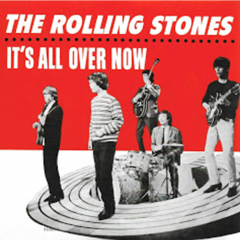
"It's All Over Now" was written by Bobby and Shirley Womack. It was first released in June 1964 by The Valentinos, which featured Bobby Womack, and went to #94 on the Billboard Hot 100 Singles chart. After hearing The Valentinos’ version on an advanced copy that New York City DJ “Murray the K” played for them, The Rolling Stones recorded their version nine days later at Chess Studios in Chicago with Andrew Loog Oldham producing. Releasing their version only 16 days after recording it in June 1964, the song went to #1 on the UK Singles chart and #26 on the Billboard Hot 100. The song would later appear as the sixth song on side one of The Rolling Stones' second American studio album, 12 x 5. Personnel on the record were: Mick Jagger (lead vocals), Keith Richards (lead guitar, backing vocals), Brian Jones (12-string guitar), Bill Wyman (bass), and Charlie Watts (drums).
12 x 5 was an expanded version of The Rolling Stones' British EP, Five by Five, geared for the American market. Produced by Andrew Loog Oldham, it was released in October 1964 and went to #3 on the Billboard Top 200 Albums chart. Two charting singles were included on the album. It has been certified Gold by the Recording Industry Association of America.
The Rolling Stones are an English rock band formed in London in 1962 by Mick Jagger, Keith Richards, Brian Jones, Bill Wyman, and Charlie Watts. Jones left the band one month before his death in July 1969. He was replaced by Mick Taylor, who left the band to be replaced by Ronnie Wood in 1974. Bill Wyman left the band in 1993, and Darryl Jones has been their bassist since that time. The Rolling Stones have released 30 studio albums, 33 live albums, 29 compilation albums, three EPs, and 121 singles. They have won one Billboard Music Award, four Grammy Awards, seven Grammy Hall of Fame Awards, three MTV Video Music Awards, and two World Music Awards. The Rolling Stones were inducted into the Rock and Roll Hall of Fame in 1989. They still record and tour.