Fourth of July skyrockets were not the only fireworks earlier this week. The price of propane skyrocketed up to 112 c/gal before the holiday weekend and held at that level through Tuesday, an increase of about 21 c/gal or 23% over the past month alone. To put that in perspective, that’s the highest price for propane since April 2014, back when crude oil was over $100/bbl. Although propane came off a few cents on Wednesday in sympathy with falling crude prices, both Mont Belvieu and Conway propane prices are still almost 135% higher than this time last year. Assuming crude prices don’t fall off a cliff, how high could propane prices go? Hard to say. The propane market is experiencing unusually low inventories, relatively modest production growth, near record-high export volumes, and unconstrained dock capacity. Consequently, if we continue to see strong demand, but U.S. producers stay focused on capital discipline, thus constraining production, propane prices could be headed considerably higher this winter. Today, we continue our series of deep dives into the U.S. propane market and, in a blatant advertorial, describe how you can keep up with this rapidly moving market with RBN’s new Propane Billboard report and dataset.

Visualize the infrastructure behind U.S. NGL movement.
The U.S. NGLs Map provides a comprehensive view of the transport, processing, and export networks moving NGLs across the U.S.
We’ve been worrying about propane on a regular basis for over a year now, and it’s all about exports. Here’s the backstory. Most propane is a byproduct of oil and gas production (blue bar segments and left axis in Figure 1), with a smaller volume a byproduct of oil refining (green bar segments). Years ago, as the Shale Revolution was kicking in, the production of propane ramped up, with volumes doubling between 2011 and 2019 (black arrows labeled “Double”). But propane demand in the U.S. consumer (retail etc.) and petrochemical sectors was flat, so there was only one way to balance the market: exports (red line and left axis). The problem was, in the early days of shale-driven propane production growth, U.S. dock capacity was insufficient to export all of the surplus and international demand was only experiencing modest growth. The result was restrained exports. That pushed U.S. propane prices into the doghouse. For the next five years, propane production tended to stay ahead of international demand and export dock capacity, resulting in surplus market conditions most of the time. U.S. propane consumers — everyone from backyard BBQ-ers to huge petrochemical plants — enjoyed cheap propane, for a while.

About the song
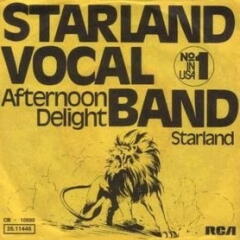
"Afternoon Delight" was written by Bill Danoff and appears as the eighth cut on Danhoff's band's debut album, Starland Vocal Band. The title of the song came from the happy hour menu at Clyde's restaurant in Washington, DC, where Danoff was eating dinner. "Skyrockets in flight, afternoon delight" was just one of the double-entendre couplets Danoff used throughout the lyrics. The song was released as a single in April 1976 and went to #1 on the Billboard Hot 100 Singles chart. It has been certified Gold by the Recording Industry Association of America, and won two Grammy Awards in 1977 for Best Arrangement for Voices and Best New Artist. Billboard magazine rated it #20 on its list of "The Sexiest Songs of All Time" in 2010. Personnel on the record were: Bill Danoff, Taffy Danoff, Jon Carroll, and Margot Chapman (vocals).
The album Starlight Vocal Band was recorded in November 1975 and was produced by Milt Okun. Released in April 1976, it went to #20 on the Billboard Top 200 Albums chart. Four singles were released from the LP.
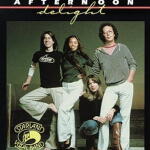
Starland Vocal Band started in 1969 as a Washington, DC, folk duo called Fat City, which was Bill Danoff and Taffy Nivert (later to become Danoff). They released two studio albums under the Fat City moniker: Reincarnation and Welcome to Fat City. The Danoffs also released two studio albums under the name Bill & Taffy: Pass it On and Aces. The pair had co-written songs with John Denver, included the hit, "Take Me Home, Country Roads," which led to Denver signing them to his label, Windsong Records. Now expanded to a quartet act, Starland Vocal Band, riding high on the success of "Afternoon Delight," hosted a weekly television variety show during the summer of 1977 called The Starland Vocal Band Show. One of the featured writers and performers on the show was a young David Letterman. The band released five studio albums and 10 singles before officially disbanding in 1981. All four members went on to pursue solo careers.