Producers in Alberta’s oil sands have been through good times and bad times the past few years. Sure, there’s been a lot of growth in output since 2010. But they’ve also seen wildfires that forced one-third of production offline. And pipeline takeaway constraints that sent prices tumbling and spurred government-imposed production cutbacks. And lately, they’ve been struggling through a global pandemic that slashed crude-oil demand and led to further curtailments. Despite it all, producers and the province of Alberta are hopeful about an oil sands rebound, and shippers are optimistic that they can source an increasing share of the diluent they would need to transport bitumen from Western Canada. There’s good news on that front: there appears to be plenty of diluent pipeline capacity already in place between Alberta’s diluent hubs and its oil sands production areas. Today, we continue our series by exploring the major pipeline systems that distribute diluent supply to the oil sands.
Diluent has become a catch-all word for any light liquid hydrocarbon that allows bitumen from Alberta’s oil sands to more easily flow through a pipeline or be shipped in a rail tank car. In Part 1 of this series, we began by exploring Western Canada’s rising demand for diluent resulting from the strong increase in bitumen production over the past decade. Bitumen production has climbed from 0.70 MMb/d in 2010 to 1.77 MMb/d in early 2020, pushing the demand for diluent from 300 Mb/d to more than 700 Mb/d over the same timeframe. Diluent demand has pulled back in the past few months due to bitumen production curtailments in response to record low heavy-oil prices and COVID-19 driven demand weakness. Nevertheless, the amount of diluent produced in Western Canada is still insufficient to meet all of the existing need, and two major diluent import pipelines, the Enbridge-owned Southern Lights pipeline and Pembina Pipelines-owned Cochin pipeline, have continued to make up most of the difference in needed diluent. (The remaining, small portion of the diluent demand is met by synthetic crude oil, or SCO; the resulting bitumen blend is referred to as “synbit.”)
To truly understand Cushing — what it does and how it works — you need to know the hub’s assets and how they fit together. RBN’s Cushing Crude Oil Playbook provides the first one-stop, comprehensive guide to the hub’s assets.
Part 2 delved into the nature of the diluent produced in Western Canada. About 92% is condensate (a.k.a. natural gasoline in the U.S.) that comes straight from the wellhead or is processed by gas processing plants and fractionators in Alberta, British Columbia (BC), and Saskatchewan. The remainder is primarily butane, also provided by the same array of gas processing and fractionation plants. We then considered the major pipeline systems that transport those liquids from the unconventional plays, dominated by the Montney, to the main distribution centers in Edmonton/Fort Saskatchewan and Hardisty. The largest of these is Pembina’s Peace Pipeline system, spanning across a wide swath of western Alberta and into northeastern BC. Two other pipeline and gas plant operators, Keyera and Plains Midstream Canada, handle most of the rest of the liquids transportation from other parts of western and central Alberta.
About the song
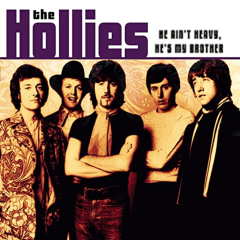
"He Ain't Heavy, He's My Brother" was written by Bobby Scott and Bob Russell. The song was originally released by Kelly Gordon in early 1969, but it was The Hollies’ release of the song as a single in September 1969 that made it a worldwide hit. “He Ain’t Heavy” was the second song on side two of the U.S. release of The Hollies’ ninth studio album of the same name. The song was recorded at Abbey Road Studios in London between June and August 1969, with Ron Richards producing. It went to #7 on the Billboard Hot 100 Singles chart. Personnel on the record were: Allan Clarke (lead vocal, harmonica), Tony Hicks (lead guitar, backing vocals), Terry Sylvester (rhythm guitar, backing vocals), Bernie Calvert (bass, keyboards), Bobby Elliott (drums), and Elton John (piano).
The album He Ain't Heavy, He's My Brother was released in the U.S. in December 1969. It was released in the UK one month prior, under the title Hollies Sing Hollies. The re-named U.S. version included the hit single, which was not included on Hollies Sing Hollies. It would be the first Hollies album released since the departure of Graham Nash in late 1968. The album went to #32 on the Billboard Top 200 Albums chart.
The Hollies are a British rock band formed in Manchester in 1962 by Allan Clarke and Graham Nash. They have released 21 studio albums, 22 compilation albums, seven EPs, and 67 singles. They have had 21 singles chart in the Billboard Hot 100 and 13 albums chart in the Billboard Top 200. They are members of The Rock and Roll Hall of Fame and Vocal Group Hall of Fame. The band still tours with founding members Tony Hicks and Bobby Elliot, joined by touring musicians.