The folks who transport bitumen from the Alberta oil sands to faraway markets depend on light hydrocarbons collectively known as diluent to help make highly viscous bitumen flowable enough to be run through pipelines or loaded into rail tank cars. The catch is — or was, we should say — that Western Canada wasn’t producing nearly enough condensate and other diluent to keep pace with fast-rising demand, so a few years ago, two pipelines from Alberta to the U.S. Midwest were repurposed to allow diluent to be piped north. More recently, though, Western Canadian production of diluent has been soaring and new pipeline capacity has been built within Alberta to deliver it to the oil sands. That has the potential to reduce the need for imports from the U.S. and may soon lead to at least one of the import pipes being repurposed yet again. Today, we continue our series on diluent with a review of the pipeline systems that collect locally produced light hydrocarbons that are eventually employed in the oil sands.
The production of bitumen, the very heavy oil that comes from Alberta’s oil sands, has undergone tremendous expansion in the past decade. While bitumen has become the workhorse of Canada’s oil supply growth, it poses a big challenge: bitumen’s extreme viscosity means that it needs help to allow it to flow in pipelines or be transported by rail. This is typically accomplished by blending diluent with bitumen to form a flowable mix called “dilbit” for transport by pipeline or, less frequently, “railbit” for loading into rail cars.

To truly understand Cushing — what it does and how it works — you need to know the hub’s assets and how they fit together. RBN’s Cushing Crude Oil Playbook provides the first one-stop, comprehensive guide to the hub’s assets.
This is the second part of what will be a four-part series on diluent, demand for which has been rising steadily over the past decade along with bitumen production growth in the Alberta oil sands. In Part 1, we indicated that diluent demand in Western Canada has more than doubled over the past decade, from about 300 Mb/d in 2010 to about 750 Mb/d in the first four months of 2020. Demand would have been even higher this year if it weren’t for curtailments in bitumen production tied to recent very low heavy oil prices and COVID-19. An increasing share of that demand is being met by diluent supply from Western Canada production, though the oil sands still depend to a significant degree on pipeline imports of diluent from the U.S.
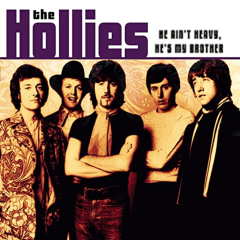
About the song
"He Ain't Heavy, He's My Brother" was written by Bobby Scott and Bob Russell. The song was originally released by Kelly Gordon in early 1969, but it was The Hollies’ release of the song as a single in September 1969 that made it a worldwide hit. “He Ain’t Heavy” was the second song on side two of the U.S. release of The Hollies’ ninth studio album of the same name. The song was recorded at Abbey Road Studios in London between June and August 1969, with Ron Richards producing. It went to #7 on the Billboard Hot 100 Singles chart. Personnel on the record were: Allan Clarke (lead vocal, harmonica), Tony Hicks (lead guitar, backing vocals), Terry Sylvester (rhythm guitar, backing vocals), Bernie Calvert (bass, keyboards), Bobby Elliott (drums), and Elton John (piano).
The album He Ain't Heavy, He's My Brother was released in the U.S. in December 1969. It was released in the UK one month prior, under the title Hollies Sing Hollies. The re-named U.S. version included the hit single, which was not included on Hollies Sing Hollies. It would be the first Hollies album released since the departure of Graham Nash in late 1968. The album went to #32 on the Billboard Top 200 Albums chart.
The Hollies are a British rock band formed in Manchester in 1962 by Allan Clarke and Graham Nash. They have released 21 studio albums, 22 compilation albums, seven EPs, and 67 singles. They have had 21 singles chart in the Billboard Hot 100 and 13 albums chart in the Billboard Top 200. They are members of The Rock and Roll Hall of Fame and Vocal Group Hall of Fame. The band still tours with founding members Tony Hicks and Bobby Elliot, joined by touring musicians.