The crude oil pipelines from the Permian to Corpus Christi have been maxed out since Q2 but two recent projects are expanding flows by nearly 200 Mb/d. Gray Oak wrapped up a two-part, 120-Mb/d expansion in May, and Plains All American just completed its 75-Mb/d expansion of Cactus III (formerly EPIC), providing a bit more breathing room for Permian production. In today’s RBN blog, we’ll discuss how the added capacity could impact flows to the critical export hub.

To truly understand Cushing — what it does and how it works — you need to know the hub’s assets and how they fit together. RBN’s Cushing Crude Oil Playbook provides the first one-stop, comprehensive guide to the hub’s assets.
There are four major pipelines that move crude from the Permian to Corpus Christi: Cactus I, Cactus II, Cactus III and Gray Oak. The quartet now provides 2.805 MMb/d of combined capacity. Let’s look at them one by one.
Gray Oak (green line in Figure 1 below) is an 850-mile system that moves crude from multiple West Texas receipt points to Corpus Christi and nearby Ingleside. It entered service shortly before the pandemic with a capacity of 900 Mb/d and has long operated at high utilization rates. Continued Permian supply growth prompted Enbridge to expand the line by 120 Mb/d in two phases (see I Want to Break Free). The first, an 80-Mb/d expansion from Crane to Corpus Christi and Ingleside, entered service in May 2025. The second, 40-Mb/d phase was completed in May 2026, bringing Gray Oak’s capacity to 1.02 MMb/d.
About the song
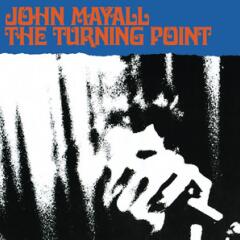
“Room to Move” was written by John Mayall and appears as the third song on side two of his 11th album, Turning Point. After the breakup of the latest version of his band, the Bluesbreakers, Mayall wanted to have an acoustically oriented band. Turning Point is a live album featuring his new group at the time. “Room to Move” was written about Mayall’s divorce from his wife, Pamela. It talks about heartbreak, personal freedom and the need to move on. The live song features breakdowns with funky handclaps, yelps and “hand percussion,” making for a unique presentation. It received heavy rotation on American “underground” FM radio stations at the time. Personnel on the record were: John Mayall (lead vocals, blues harp, hand percussion), Jon Mark (acoustic guitar), Steve Thompson (bass) and Johnny Almond (tenor and alto saxophone, flute, mouth percussion).
Turning Point was a departure album for Mayall, featuring an acoustic presentation that differed from his previous fully electrified blues bands. Recorded at the Fillmore East in New York City in July 1969, the album was produced by Mayall and engineered by Eddie Kramer. Mayall designed the album’s cover and artwork. Released in October 1969, it went to #32 on the Billboard 200 Albums chart, making it the first Mayall release to break into the U.S. Top 40. It has been certified Gold by the Recording Industry Association of America. No singles were released from the LP.
John Mayall was an English blues singer, songwriter, musician and record producer. He started playing blues music in England in 1956. He signed with Decca Records in 1964, and they released a live album and a single, “Crocodile Walk.” The ever-rotating lineup of the Bluesbreakers band included such iconic players as Eric Clapton, Peter Green, Mick Taylor, Harvey Mandel, Jack Bruce, John McVie and Andy Fraser. Ninety-four musicians played in Mayall’s bands over five decades. He has been referred to as the “godfather of British blues.” He released 36 studio albums, 34 live albums, 24 compilation albums, four EPs and 44 singles and has sold more than 10 million records worldwide. He was appointed an OBE in 2005 and inducted into the Rock and Roll Hall of Fame in 2024. John Mayall died at his home in Los Angeles’ Laurel Canyon in July 2024 at 90.
"About the Song" -- written by Mickey McMahan , RBN Director of Musicology