The pipelines carrying crude oil from the Permian Basin in West Texas to the Corpus Christi area have been as jammed as an urban highway on the Friday before Memorial Day weekend. The Gray Oak Pipeline, the largest from the Permian to Corpus, has just completed the 80-Mb/d first phase of a planned two-phase expansion that will add a total of 120 Mb/d of capacity. In today’s RBN blog, we’ll discuss what this project means for pipeline congestion and crude exports out of Corpus and nearby Ingleside.
The replay of our Fall 2026 School of Energy (September 9 & 10, Houston) is now available online!
Learn from RBN experts, participate in hands-on Excel modeling, connect with industry peers, and gain a stronger understanding of today's interconnected energy markets.
First, let’s offer a quick refresher on the state of the pipelines from the Permian to Corpus Christi. As we’ve frequently discussed in the RBN blogosphere, the Permian Basin has experienced rapid growth in crude oil production and now accounts for 49% of all U.S. output. As shown in Figure 1 below, there are four large pipelines that transport crude oil from the Permian to the Corpus Christi area — Cactus I (blue line), Cactus II (teal line), EPIC Crude (yellow line) and Gray Oak (green line) — which (as of April) collectively provide 2.64 MMb/d of capacity.

Figure 1. Permian-to-Corpus Crude Oil Pipelines. Source: RBN
That brings us to the subject of today’s blog, Gray Oak, an 850-mile crude oil pipeline system that originates from multiple points in West Texas (see Figure 2 below). The pipeline started up with a capacity of 900 Mb/d shortly before crude oil demand cratered as the pandemic hit in 2020. In response to COVID, Permian producers shut in a significant amount of production, but output from the basin quickly rebounded and it didn’t take long for Gray Oak to add volumes — its flows ramped up throughout 2020. Note that it is common for new pipelines to gain volumes from old pipelines as take-or-pay commitments are typical on new pipelines — meaning you pay for the capacity regardless of whether you use it. As discussed in our weekly Crude Oil Permian report, Gray Oak has long operated at high utilization rates, which means nearly every available barrel of capacity is spoken for on what is now a 980-Mb/d pipeline. Its recently completed 80-Mb/d expansion originates at Crane, TX, and flows to Corpus Christi and Ingleside, where it supports crude exports at Enbridge’s Ingleside Energy Center (EIEC; pink square in Figure 2). According to the recently published quarterly edition of our Crude Voyager report, EIEC accounted for just over 30% of total Gulf Coast crude oil exports in Q1 2025 — the highest share among all terminals. It also set daily and quarterly export records.
About the song
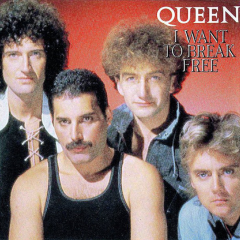
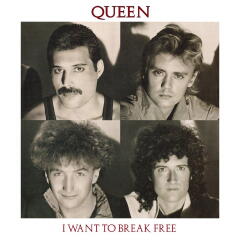
“I Want to Break Free” was written by Queen’s bassist, John Deacon. It appears as the second song on side two of Queen’s 11th studio album, The Works. Released as the second single from the album in April 1984, the song went to #45 on the Billboard Hot 100 Singles chart. Four different versions of the single were released. The video for “I Want to Break Free” was a parody of the long-running British television soap opera, Coronation Street, featuring the members of Queen dressed as women. MTV banned the video as they considered it too controversial. Personnel on the record were: Freddie Mercury (lead and backing vocals), Brian May (electric guitar), John Deacon (bass, acoustic guitar, synthesizer), Roger Taylor (drums), and Fred Mandel (synthesizer solo).
The Works was recorded between August 1983 and January 1984 at the Record Plant in Los Angeles and Musicland in Munich, Germany. The title of the album comes from a comment Roger Taylor made as they started recording it. Referring to the fact that the record would be a combination of old-style Queen hard rockers and newer-style Queen electronic synth-pop, he said, “Let’s give them the works.” The Works was produced by Queen and Reinhold Mack and was released in February 1984. It went to #23 on the Billboard Top 200 Albums chart. Four singles were released from the album. It has been certified Gold by the Recording Industry Association of America.
Queen is a British rock band formed in London in 1970 by singer Freddie Mercury, guitarist Brian May, drummer Roger Taylor and bassist John Deacon. May and Taylor had previously played together in the London-based rock band Smile. Queen has sold more than 250 million records worldwide and has released 15 studio albums, 10 live albums, 15 compilation albums, two soundtrack albums, two EPs, and 73 singles. The band has won four Brit Awards, four Ivor Novello Awards, a Grammy Award, and a Grammy Lifetime Achievement Award. They are members of the Rock and Roll Hall of Fame, Songwriters Hall of Fame, and UK Music Hall of Fame. Brian May and Roger Taylor have continued to tour with supporting musicians as Queen. The band has featured both Paul Rodgers and Adam Lambert as their lead vocalist since the death of Freddie Mercury in 1991. Founding member John Deacon retired from the band in 1997. Queen, with Adam Lambert on lead vocals, last appeared live at five concert dates in Japan in February 2024.