Since the start of 2022, more than 12 Bcf/d of new gas processing capacity has come online in the Permian, about half of it in the Midland Basin and half in the Delaware. That unprecedented, multibillion-dollar buildout will be continuing without let-up through early 2029, and the shift toward the gassier Delaware — seen by many operators as offering a longer runway for future growth — is picking up steam. In today’s RBN blog, we’ll discuss the latest tranche of gas processing plants under development in the Permian and what these projects reveal about production growth trends in the world’s most prolific stacked play.
Things are looking up for Permian natural gas. After an extended period of pipeline takeaway constraints and negative gas prices at the Waha Hub, the situation for producers and marketers has been improving as new takeaway capacity has come online, first in June with the official startup of the 570-MMcf/d expansion on the now-2.55-Bcf/d Gulf Coast Express (GCX). More recently, our weekly NATGAS Permian report has cited initial flows on both the Hugh Brinson Pipeline (Phase 1 capacity of 1.5 Bcf/d) and the Blackcomb Pipeline (ramping up to 2.5 Bcf/d of capacity over the next few months).

The RBN NATGAS Haynesville is a weekly natural gas fundamentals analysis focused on supply, flow, and LNG-driven demand dynamics within the Haynesville basin.
With the untangling of the takeaway logjam — and still more pipeline capacity on the way, including Hugh Brinson’s Phase 2 next year and Eiger Express in 2028 — Waha prompt-month and cash prices have turned positive, and we expect they will stay there for some time. (See our recent Fly Like an Eagle for more.)
All that’s given new confidence to crude-oil-focused producers in West Texas and southeastern New Mexico, whose wells also churn out massive volumes of associated gas that needs to be run through gas processing plants. As we’ve discussed in many a blog over the past several years, operators in the Midland and Delaware basins have been in a constant struggle to stay one step ahead on the gas processing front — that is, to be sure they will have sufficient processing capacity in place as new production starts up.
If anything, that challenge has become even more, well, challenging over the past couple of years as the lead time for key, in-demand processing plant components like brazed aluminum heat exchangers (aka “cold boxes”) and turbo-expanders has increased. “Lead times definitely have gotten extended,” Pat McDonie, Targa Resources’ president of gathering and processing, said during the midstream giant’s August 6 earnings call. “A lot of it is around the electrical infrastructure for the plant. ... Frankly, we’ve adapted to that.”
With takeaway constraints easing, Waha prices well north of zero, and dry-gas production in the Permian approaching a record 23 Bcf/d, we thought it would be a good time to discuss the latest round of gas processing project announcements and what they say about where things stand — and where they are headed.
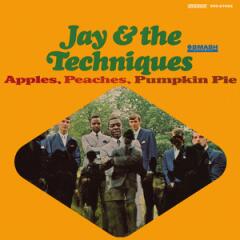
About the song
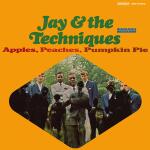
“Keep the Ball Rollin’” was written by Denny Rondell and Sandy Linzer and appears as the fifth song on side two of Jay & The Techniques’ debut studio album, Apple, Peaches, Pumpkin Pie. The upbeat pop/soul song is about keeping momentum going in a romantic relationship. It shares some instrumental similarities with the single “You Keep Me Hangin’ On,” released by The Supremes in October 1966. Released as a single in October 1967, “Keep the Ball Rollin’” went to #14 on the Billboard Hot 100 Singles chart and has been certified Gold by the Recording Industry Association of America (RIAA). Personnel on the record were: Jay Proctor (lead vocals), George “Lucky” Lloyd (backing vocals), Dante Dancho (guitar), Chuck Crowl (bass), Jimmy Wisner (keyboards), Karl Landis (drums), John Walsh (trumpet), and Ronnie Goosley (saxophone).
Apple, Peaches, Pumpkin Pie was recorded at Bell Sound Studios in New York City in 1967 and produced by Jerry Ross. It was released in September 1967 and went to #129 on the Billboard 200 Albums chart. The single from which the album is named was released in March 1967, went to #6 on the Billboard Hot 100 singles chart, and has been certified Gold by the RIAA. Two singles were released from the LP.
Jay & The Techniques was an American pop/soul band formed in Allentown, PA, in 1965 when vocalists Jay Proctor and George “Lucky” Lloyd joined forces with the pop band The Techniques, renaming the group Jay & The Techniques. They signed a deal with producer Jerry Ross, who got them a record deal with Smash Records in 1967. They released two studio albums, two compilation albums, and 11 singles. The group disbanded in 1969. Vocalist Jay Proctor went on to a solo career after Jay & The Techniques broke up.
"About the Song" -- written by Mickey McMahan , RBN Director of Musicology