It’s been an exciting and productive few years for Permian producers, but it’s also been a period fraught with challenges. Dealing with a mid-decade crash in crude oil prices. Struggling to improve yields from the Wolfcamp, Bone Spring and other hydrocarbon-rich formations to lower breakeven costs. Coping with major pipeline takeaway constraints — for crude and natural gas — and the resulting price discounts. Now, the challenge of produced water has come to the fore. Horizontal wells in some parts of the Permian generate six, eight, even 10 barrels of produced water per barrel of crude, and all of it needs to be either disposed of or treated. The volumes are enormous, the permitting and logistics mind-boggling, and the costs — well, you can imagine. Today, we consider the Permian’s produced-water conundrum as crude and gas production volumes ramp up. Warning!: Today’s blog is a blatant advertorial for new reports by B3 Insight on Permian produced water.
Crude oil production in the Permian now averages more than 4 MMb/d, and natural gas output tops 10 Bcf/d — extraordinary numbers. Over the next few months, new pipeline capacity (most of it from West Texas to the Gulf Coast) will reduce and then eliminate takeaway constraints that have plagued Permian producers for a year or two now, and enable production growth to accelerate. The catch is that, as production of crude (and associated gas) speeds up, so will the volumes of produced water generated.

Canadian crude output is rising, requiring new export routes. As traditional pathways face constraints, the U.S. Rockies—especially the Guernsey, WY hub—are emerging as key corridors for moving Canadian heavy crude to downstream markets, including the Gulf Coast.
As we said in our Drill Down report on Permian produced water last year, several million barrels a day of super-salty water emerges from wells in the play, and all that water needs to be gathered and safely disposed of. The task affects both legacy conventional (vertical) wells and newer unconventional (horizontal) wells. Because “water cuts” (the ratio of produced water to crude) increase over time, the large number of older vertical wells generate significant volumes of produced water — but most of that produced water can be re-injected into nearby pressure-depleted, conventional oil reservoirs for enhanced oil recovery (EOR). The re-injected water boosts pressure within the reservoirs and stimulates the production of still more crude. The thornier problem for Permian producers comes from all those new horizontal wells producing water and needing infrastructure capable of handling it to be developed. Large numbers of these wells are being drilled and completed, and in some areas — especially parts of the Permian’s Delaware Basin, but in the Midland Basin too — the water cuts can be quite high: as much as 10:1 (or even higher in a few cases), and the disposal of those water volumes is much more problematic.
About the song
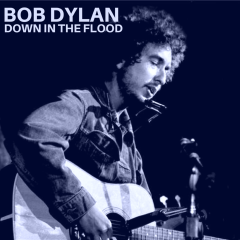
“Down in the Flood” was written by Bob Dylan and was originally recorded by Bob Dylan and The Band in Woodstock, NY, in 1967. The Band, formerly known as The Hawks, had been Dylan's backup band for his 1965-66 tours. Dylan's motorcycle accident (in July 1966) kept him out of the limelight for a while. During that period, The Band and Dylan recorded over 100 songs while they were all living in Woodstock. The song, also known as "Crash on the Levee (Down in the Flood)," was first released on Dylan's 1975 album, The Basement Tapes. It also appears on The Bootleg Series Volume II: The Basement Tapes Complete, which was released in 2014. In 1971, Dylan recorded a different acoustic version with folk singer Happy Traum that appears on Bob Dylan's Greatest Hits Volume II. The Derek Trucks Band, Sandy Denny, Flatt & Scruggs, and Blood, Sweat & Tears have all covered the tune. A live version with Dylan on vocals and guitar appears as a bonus track on the 2000 reissue of The Band's Rock of Ages live album, recorded in 1971.
Personnel on the original recording were: Bob Dylan (vocals, acoustic guitar), Rick Danko (bass, backing vocals), Levon Helm (drums, mandolin, bass, backing vocals), Garth Hudson (Hammond organ, clavinet, accordion, piano, tenor sax), Richard Manuel (piano, harmonica, backing vocals), and Robbie Robertson (electric and acoustic guitar, backing vocals). Bob Dylan continues to record and tour to this day; so do surviving members of The Band.