Financial pain, increasing regulatory scrutiny, and rising environmental mandates have been keenly felt across the entire energy industry in the past few years. When times are tough and companies are struggling to regain their footing, corporate mergers often increase in frequency. One recently announced merger between two large Canadian midstream providers, Pembina Pipeline and Inter Pipeline, has grabbed headlines and is also turning into a corporate dogfight with a prominent third party trying to scuttle the merger and take control of Inter Pipeline. Today, we examine the two companies and what the combined entity might look like and what it might mean for the energy industry in Canada.
The midstream sector provides many valuable functions for the oil and natural gas industries: gathering, long-haul, and distribution pipelines; other forms of energy transportation such as barges and trucking; gas processing plants; oil batteries; fractionation plants; and energy storage (gas and oil), to name just a few. And there are at least half a dozen midstream players of size in Canada whose footprints for such services overlap, especially regarding gathering pipes, fractionation, and gas processing. Two such companies, Pembina Pipeline Corp. and Inter Pipeline Ltd. announced June 1 that they had agreed to combine their operations in a deal that, if consummated, would create Canada’s largest energy midstream company. Although the transaction is described as a friendly merger, it is effectively an agreed-upon corporate takeover of Inter Pipeline by Pembina.
Before discussing what the combined entity might look like, let’s briefly touch on each company separately. Calgary, AB-based Pembina began life in the mid-1950s as an operator of oil and natural gas pipelines in, not surprisingly, the Pembina field of west-central Alberta. Over the decades, with expansions, acquisitions, and the transformation to a publicly traded company in 1998, Pembina has evolved into a big player. The company now operates a vast network of crude oil and NGL gathering pipelines across western Alberta and northeastern British Columbia (BC), as well as oil sands and ethane pipelines, and also natural gas transportation through its 50% ownership interests in the 1.7-Bcf/d Alliance Pipeline and the Ruby Pipeline, which connects the gas trading hubs of Opal, WY, and Malin, OR. Pembina also owns 6.1 Bcf/d of gas processing capacity, 354 Mb/d of fractionation capacity, and 32 MMbbl of storage capacity, plus its recently commissioned Prince Rupert LPG export terminal on BC’s coastline. Further, Pembina offers marketing and blending operations for producers and bulk marine exports through a terminal in Vancouver, BC, that it acquired from Kinder Morgan Canada in 2019.

Canadian crude output is rising, requiring new export routes. As traditional pathways face constraints, the U.S. Rockies—especially the Guernsey, WY hub—are emerging as key corridors for moving Canadian heavy crude to downstream markets, including the Gulf Coast.
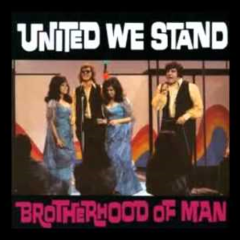
About the song
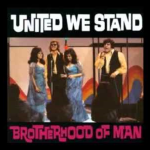
"United We Stand" was written by Tony Hiller and Peter Simons (a.k.a. John Goodison). It appears as the fifth song on side two of Brotherhood of Man's debut album of the same title. Released as a single from the upcoming album in January 1970, the song went to #13 on the Billboard Hot 100 Singles chart. Personnel on the record were: Tony Burrows, Sue Glover, Sunny Leslie, John Goodison, and Roger Greenaway (vocals).
The album United We Stand was recorded in 1969-70, with Tony Hiller producing. Released in the U.S. in June 1970, the LP went to #168 on the Billboard Top 200 Albums chart. Two singles were released from the album.
Hiller put together Brotherhood of Man in the UK from a selection of session singers, including the duo Sue and Sunny. Brotherhood of Man has released 16 studio albums, two compilation albums, and 31 singles. The band, with all new members since "United We Stand" had become a hit, won the Eurovision Song Contest in 1976 with their song, "Save Your Kisses for Me." They achieved their greatest success in their native UK, with three #1 singles and four Top 20 albums. The group has sold more than 15 million records worldwide. Brotherhood of Man still performs occasionally in Europe.