The U.S. Northeast’s reign on natural gas supply growth has factored heavily into broader U.S. gas supply-demand dynamics ever since the Marcellus/Utica shales burst onto the production scene. This year is no different. Lower-48 gas production in 2018 to date has averaged 8 Bcf/d higher year-on-year. Nearly 50% of that growth has come from the Northeast, and, what's more, the bulk of that incremental supply has flowed out of that region, flooding markets in neighboring areas. Now, the Marcellus/Utica is in the midst of yet another major inflection point. After years of perpetual pipeline constraints, pipeline utilization data indicates that some Northeast takeaway pipelines have a little bit of capacity to spare — a trend that has major implications for regional pricing relative to downstream markets. At the same time, more pipeline expansions are on the horizon that promise to bring on even more gas supply from Marcellus/Utica producers. (Just last Thursday, Energy Transfer’s Rover Pipeline was approved to begin service on two additional supply laterals — Majorsville and Burgettstown — and Williams’s Atlantic Sunrise expansion of Transco Pipeline is due for completion within weeks.) What does this new reality look like and what does it mean for the broader U.S. gas market? Today, we begin a short series providing our latest analysis of the Northeast gas market, starting with how it fits into the current U.S. supply-demand picture.

To fully grasp the Northeast’s influence on the macro U.S. gas market, it’s worth first putting it in the context of the current gas supply-demand balance. Few would disagree that the single most striking feature of the 2018 gas market has been the rampant supply growth that’s happened over the past six months or so, as shown by the red 2018 production line in Figure 1 below, based on data from RBN’s NATGAS Billboard daily gas supply-demand report.
After rallying in the second half of 2017 to more than 77 Bcf/d by December, dry gas production in the Lower 48 started 2018 well below that level and then spent the better part of January and February recovering from that dip. But production finished February 2018 on average at a record 77.7 Bcf/d, marking the first of a series of record-setting months. Monthly average volumes have climbed nearly 4.5 Bcf/d since then — an average of 700 MMcf/d per month — to just above 82 Bcf/d in August to date. The growth pace has accelerated in the past couple of months, with volumes increasing by more than 1 Bcf/d in July and August to date, and producers show no signs of slowing down (see Sky’s the Limit Part 1). Case in point: The most recent record of 83.6 Bcf/d was set just two days ago (August 27).
About the song
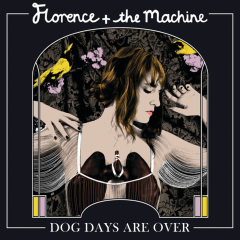
"Dog Days Are Over" was written by Florence Welch and Isabella Summers. It appears as the first song on Florence and the Machine's debut studio album, Lungs. The song was inspired by a giant art installation titled "Dog Days Are Over" that the singer Florence Welch used to see daily when she rode her bike over the Waterloo Bridge in London. Released as a single in December 2008, it went to #21 on the Billboard Hot 100 Singles chart. It has been certified 4x Platinum by the Recording Industry Association of America. Personnel on the record were: Florence Welch (vocals, percussion), Isabella Summers (piano, percussion), Rob Ackroyd (guitar), Tom Monger (harp), Christopher Lloyd Hayden (drums), James Ford (bass), and Ian Burdge (cello).
Lungs was recorded in 2007-08 at The Garden, The Pool, The Synagogue, Strong Room 33, Space Cave, The Smokehouse, and The Dairy in London. The album was produced by Paul Epworth, James Ford, Charlie Hugall, Stephen Mackey, Isabella Summers, and Eg White. Released in July 2008, it went to #14 on the Billboard 200 Albums chart and has been certified 2x Platinum by the RIAA. Six singles were released from the LP.
Florence and the Machine is a British indie rock group formed in London in 2007 by lead vocalist Florence Welch, keyboardist Isabella Summers, guitarist Rob Ackroyd, harpist Tom Monger, and drummer Christopher Lloyd Hayden. They feature the powerful vocals of Florence Welch, who layered over the baroque and art-pop music of the Machine. They have released five studio albums, three live albums, four compilation albums, six EPs, and 33 singles. They have sold over 4 million records worldwide. They have won two Brit Awards and a Meteor Award. Beyoncé cited the group as an influence on her album, 4. Twelve members have passed through the group since its formation. They still record and tour and will be releasing their sixth studio album, Everybody Scream, on Halloween.