The Northeast natural gas market turned a new leaf in 2018, when takeaway pipeline capacity to move supply out of the Marcellus/Utica producing region finally caught up to — and even began outpacing — production growth. More than 4 Bcf/d of takeaway expansions entered service in 2018. Prices at the region’s Dominion South supply hub improved relative to Henry Hub and other downstream markets. And for the first time in years, Appalachian gas producers and marketers caught a glimpse of what an unconstrained, balanced market driven by market economics (as opposed to transportation constraints) could look like. 2019 will be the first full year of operation for many of those takeaway expansions that came online in 2018. Northeast production growth flattened through the first few months of 2019, but has ticked up in the past couple of months, albeit modestly, and the slate of future takeaway expansion projects has shrunk to just a couple stalled projects. Where does that leave capacity utilization out of the region this summer, and how long will it be before production growth hits the capacity wall again? Today, we begin a series providing an update on the Northeast gas market and prospects for balancing takeaway capacity with production growth.
The Northeast gas market has come a long way since 2013, when it first began net exporting gas supply to the rest of the U.S. For years after that pivot, Marcellus/Utica producers were plagued by perpetual transportation constraints to move gas out of the region and depressed supply prices. The last five years were marked by dozens of pipeline expansions to relieve the constraints and balance oversupply conditions — primarily piecemeal modifications and reversals of legacy pipelines that were once needed to move gas into the Northeast before the Shale Era unlocked massive reserves in the Marcellus/Utica plays. But production continued to outpace those capacity additions — that is, until this past year, when some larger, long-term projects crossed the finish line.
When we looked into utilization of the available Appalachian takeaway routes in our Dog Days Are Over series in August/September 2018, things were finally looking up for producers. Production was soaring, yet prices were stronger than they had been in previous years, indicating constraints had eased. And, sure enough, an analysis of Appalachia’s daily outflows versus takeaway capacity suggested that, for the first time in years, there was room to spare on the outbound pipes. Northeast producers were heading into the winter season — and into 2019 — with the most favorable market conditions they had seen in a while. Regional cash basis (local prices minus national benchmark Henry Hub) ended 2018 nearly 50% stronger year-on-year at an average $0.47/MMBtu discount to Henry Hub, compared with a more than $0.80/MMBtu discount in 2017.
About the song
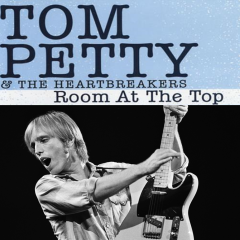
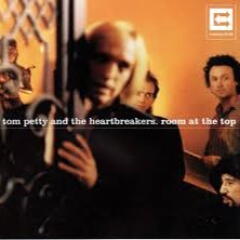
“Room at the Top” was written by Tom Petty and appears as the first cut on Tom Petty and the Heartbreakers’ 10th studio album, Echo. The single of “Room at the Top” went to #19 on the Billboard Top Mainstream Rock Songs chart. Personnel on the song were: Tom Petty (lead and backing vocals, rhythm guitars, harmonica), Mike Campbell (lead guitars), Benmont Tench (piano, organ, Chamberlain, clavinet), Scott Thurston (rhythm guitars, backing vocals), Steve Ferrone (drums) and Howie Epstein (bass guitar, backing vocals).
Echo was released in April 1999 and was produced by Tom Petty, Mike Campbell and Rick Rubin. It went to #10 on the Billboard Top 200 Albums chart and was certified Gold by the Recording Industry Association of America. Three charting singles were released from the album. Mike Campbell sang lead vocals on the song “I Don’t Wanna Fight,” making Echo the only Tom Petty and the Heartbreakers’ album on which Tom Petty didn't sing lead vocals on every song. It was also the last Heartbreakers album to feature bass guitar and backing vocal contributions from Howie Epstein, who left the band during its recording because of a heroin addiction.
Tom Petty and the Heartbreakers were an American rock band with roots in Gainesville, FL; the band officially formed in Los Angeles in 1976. They made 13 studio albums, three live albums, six compilation albums and 24 singles. Tom Petty and the Heartbreakers won two MTV Video Music Awards and were inducted into the Rock and Roll Hall of Fame in 2001. Howie Epstein died in 2003, and Tom Petty passed away in 2017, putting an end to the Heartbreakers. Lead guitarist and songwriter Mike Campbell has released three studio albums with his band, The Dirty Knobs, since that time.