Florida’s increasing demand for natural gas for power generation isn’t new, but like a young alligator in the Everglades, its appetite is voracious and growing. More and more gas-fired power plants have been coming online, increasing gas demand and spurring the development of new gas pipeline capacity into the state. And, because of big shifts in where gas is being produced and where it’s flowing, the Sunshine State will soon be receiving an increasing share of its gas needs from the Marcellus region. Today, we begin a two-part look at how rising generation-sector demand for gas and a new pipeline are changing gas-flow dynamics in the U.S. Southeast.

The Crude Oil Billboard keeps readers at the forefront of the U.S. crude oil market by offering access to data and information moments after its release. Say goodbye to PDF reports that come out after the market has already moved on.
Florida has very limited onshore reserves of crude oil and natural gas, and drilling in the Gulf of Mexico off Florida’s coast (where there is a lot of oil and gas) has been banned since the 1990s. Still, Florida has been an occasional topic in the RBN blogosphere, mostly because it is a leading generator of electricity — second only to Texas, in fact — and because gas in recent years has become far-and-away the preferred generation fuel in the state. Florida’s electric utilities have been particularly aggressive in their shift from coal (and nuclear) generation to gas, and that spurred the development of the state’s third major gas pipeline (we’ll get to the other two in a moment): the 1.1-Bcf/d Sabal Trail Pipeline, which runs more than 500 miles from an interconnect with Williams’s Transcontinental Gas Pipeline (Transco; orange line in Figure 1) in west-central Alabama to the Orlando area. [A related pipeline called Florida Southeast Connection delivers gas into South Florida (green line in Figure 1).] We first discussed Sabal Trail five years ago, in Mickey Mouse Gas Hub in Orlando?, then looked at the coming flows of gas from the Marcellus/Utica region four and a half years ago, in a blog called Miami 2017 and more recently — just before Sabal Trail started operating in June 2017 — in Mainline Florida. With more than a year of Sabal Trail operational history in the books and Florida’s mid-summer weather as hot and humid as modern man and woman can bear, we decided it was time for an update.
Florida is now served by three major gas pipelines: the 3.1-Bcf/d Florida Gas Transmission (FGT; pink line), the 1.3-Bcf/d Gulfstream Natural Gas System (Gulfstream; blue line), and Sabal Trail (yellow line), the last of which was co-sponsored by Enbridge and the corporate parents of Florida’s two largest electric utilities — NextEra Resources (parent of Florida Power & Light, or FPL), and Duke Energy (parent of Duke Energy Florida, or DEF).
About the song
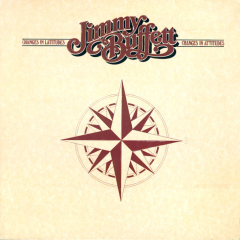
"Changes in Latitudes, Changes in Attitudes" is the title track on Jimmy Buffett’s 1977 album of the same name — and one of his most popular songs. The tune, written by Buffett, went to #37 on the Billboard Hot 100 and #11 on the Billboard Hot Adult Contemporary Tracks chart, and was the follow-up to his hit single, "Margaritaville," which is on the same LP. The album was produced by Norbert Putnum, and recorded at Criteria Studios in Miami, and Quadrafonic Sound Studios in Nashville in November 1976. It went to #12 on the Billboard Top 200 Albums chart, and #2 on the Billboard Top Country Albums chart. The personnel on the record were: Jimmy Buffett *(vocals and acoustic guitar), "Fingers" Taylor (harmonica), Michael Utley (keyboards), Harry Dailey (bass), "Barfullo" Buttrey (congas), Michael Jeffrey (electric guitar), Roger Bartlett (electric guitar), Farrell Morris (percussion), and Billy Puett (recorder and flute).
Jimmy Buffett is an American singer, songwriter, musician, author, actor, and businessman — Forbes magazine last year estimated his net worth at $550 million. Buffett has put out 27 studio albums, 11 live albums and 67 singles, and has sold over 20 million LPs worldwide. Buffett, who describes his musical stylings as "gulf and western," still tours to this day.