OK, we admit it. Our title may be a bit of an overstatement in early 2020, but it was absolutely true back in 2012, when the frac spread was $13/MMBtu. These days, the frac spread — the differential between the price of natural gas and the weighted average price of a typical barrel of NGLs on a dollars-per-Btu basis — is only $2.48/MMBtu as of yesterday. But with Henry Hub natural gas prices in the doghouse — they closed on February 11 at $1.79/MMBtu — getting $4.27/MMBtu for the NGLs extracted from that gas, or an uplift of 2.4x, is still a pretty darned good deal. And that’s Henry Hub. Natural gas prices are lower in all of the producing basins, and are likely headed back below zero in the Permian this summer. So even with NGL prices averaging 30% lower than last year, the value of NGLs relative to gas can be a big contributor to a producer’s bottom line — assuming, of course, that the producer has the contractual right to keep that uplift. Today, we begin a blog series to examine the value created by extracting NGLs from wellhead gas, including processing costs, transportation, fractionation, ethane rejection, margins, netbacks and the myriad of factors that make NGL markets tick. We will start with the frac spread — what it tells us in its simplest form, how we can improve the calculations so it can tell us more, and, just as important, the economic factors that the frac spread excludes.
In a way, the frac spread is best described by what it’s not. First of all, as we use the term, it is unrelated to hydraulic fracturing, the well-completion technique. You do hear the term “frac spread” used to describe a fleet of fractionation equipment, which includes all of the water trucks, sand haulers, pumps, etc. that an oilfield services company uses to complete a hydraulic fracturing job. But that has nothing to do with what we are talking about here. The term is actually a shortening of “fractionation spread,” but that’s a misnomer too, because frac spread does not refer to NGL fractionation either — fractionation being the process of splitting a mixed NGL stream (or “y-grade”) into purity products like ethane, propane, normal butane, isobutane and natural gasoline. Instead, the frac spread is simply a measure of the value of natural gas versus the value of a basket of NGLs. In other words, it is a rough-cut indication of the value added at natural gas processing plants by extracting NGLs from the raw natural gas stream from the wellhead.
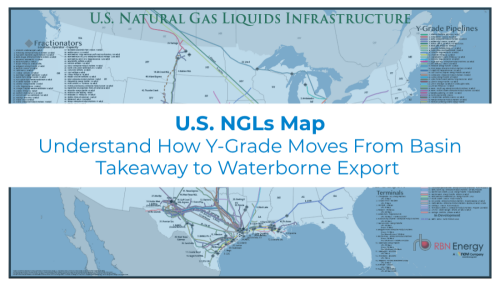
Visualize the infrastructure behind U.S. NGL movement.
The U.S. NGLs Map provides a comprehensive view of the transport, processing, and export networks moving NGLs across the U.S.
By convention at RBN, we use the front-month Henry Hub natural gas futures price versus a weighted average of Mont Belvieu NGL prices that’s converted from cents per gallon to dollars per Btu. We make that calculation each day and include it with our Spotcheck Indicators data, which is available to RBN Backstage Pass subscribers. This methodology is about as simple as you can get, and there are a lot of enhancements and refinements to the calculation that we’ll be addressing in this blog series. But for now, let’s start with the basics to see how the numbers fit together and what this statistic tells us about NGLs and gas processing.
About the song
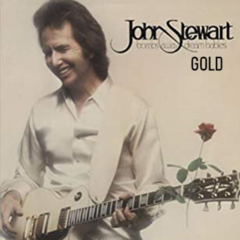
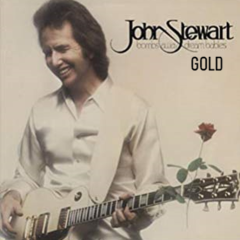
"Gold" was written by John Stewart and appears as the first song on Stewart's 10th studio album, Bombs Away Dream Babies. Released as a single in May 1979, the song went to #5 on the Billboard Hot 100 Singles chart. "Gold" features Fleetwood Mac's Stevie Nicks on harmony vocals. The song presents a lighthearted, cynical view of the music industry with its chorus of "people out there turnin' music into gold." In an ironic twist, Stewart later stopped performing the song in concert, claiming he had only made the song to make money and please his record company. To add to the irony, Bombs Away Dream Babies and the single "Gold" did not reach Gold status with the Recording Industry Association of America, despite being Stewart's most successful solo releases. Personnel on the record were: John Stewart (lead vocals, guitar, kalimba), Lindsey Buckingham (guitar, backing vocals), Joey Harris (guitar, backing vocals), Joey Carbone (keyboards), Bryan Garofalo (bass, backing vocals), Mike Botts (drums) and Stevie Nicks (backing vocals).
Bombs Away Dream Babies was recorded at Filmways, Wally Heider, Larrabee, and Village Recorders in Los Angeles during early 1979. Produced by John Stewart and Lindsey Buckingham, the album was released in May 1979, and went to #10 on the Billboard Top 200 Albums chart. A total of three singles from the album made it into the Top 40 charts, with "Gold" reaching the highest position at #5.
John Stewart was an American songwriter and singer. He started his career during the early ‘60s folk boom as a member of The Cumberland Three, and then, The Kingston Trio. His biggest hit as a songwriter was "Daydream Believer," which he penned for The Monkees; that became a #1 record for them in 1967. Stewart put out a staggering 67 solo records during his career. Many of these were live albums and collections of songs released on the prolific songwriter's own label. Stewart passed away in January 2008 at the age of 68.