Through a pair of newly announced, multibillion-dollar acquisitions, ONEOK is following up on its game-changing purchase of Magellan Midstream Partners by gaining additional scale, significantly increasing its role in NGLs and adding a huge crude oil gathering system in the Permian. The new deals are designed in large part to help ONEOK “feed and fill” its gas processing plants, takeaway pipelines and fractionators. In today’s RBN blog, we’ll discuss the details and implications of ONEOK’s newly announced plan to acquire EnLink Midstream and Medallion Midstream.
The replay of our Fall 2026 School of Energy (September 9 & 10, Houston) is now available online!
Learn from RBN experts, participate in hands-on Excel modeling, connect with industry peers, and gain a stronger understanding of today's interconnected energy markets.
If you wondered whether consolidation within the midstream sector had run its course, the answer is a hard and emphatic “No!” No sooner had we posted a blog about Enterprise acquiring Piñon Midstream and its Dark Horse sour-gas gathering and treatment system in the Permian’s Delaware Basin [see A Horse With (New) Name] — the latest among several recent blogs about one midstreamer buying another — than ONEOK announced August 28 that it had reached definitive agreements with Global Infrastructure Partners to acquire two of its largest U.S. holdings. (GIP, a large international infrastructure fund with more than $100 billion in assets under management, is itself in the process of being acquired by BlackRock.)
The slightly larger of ONEOK’s two deals call for the Tulsa, OK-based midstream company to acquire GIP’s entire interest in EnLink Midstream for a total cash consideration of about $3.3 billion, including $300 million for GIP’s 100% interest in EnLink’s managing member and $3 billion for 43% of EnLink’s outstanding common units at $14.90 per unit, a 12.8% premium to EnLink’s closing price on August 27. ONEOK said that following the close of the transaction in Q4 2024 it intends to pursue the acquisition of the other 57% of EnLink’s common units in a tax-free transaction through the exchange of EnLink units for ONEOK stock.
Under the second deal, also announced August 28 and expected to close in Q4 2024, ONEOK will pay GIP $2.6 billion to acquire Medallion Midstream, which owns and operates the largest privately held crude oil gathering and transportation systems in the Permian’s Midland Basin and owns other Permian assets as well.
Before we discuss EnLink’s and Medallion’s assets and how they complement — and add value to — ONEOK’s, we should take a moment to recap ONEOK’s transformational September 2023 acquisition of Magellan Midstream. That $18.8 billion deal, which we examined in Tulsa Time, created the second-largest U.S. midstream company by market capitalization and the fifth-largest by enterprise value. It also gave ONEOK — which until then had been focused exclusively on gathering, processing and transporting natural gas and NGLs (see map to left in Figure 1 below) — Magellan’s extensive portfolio of crude oil and refined-products pipelines and crude oil terminals (see map to right).
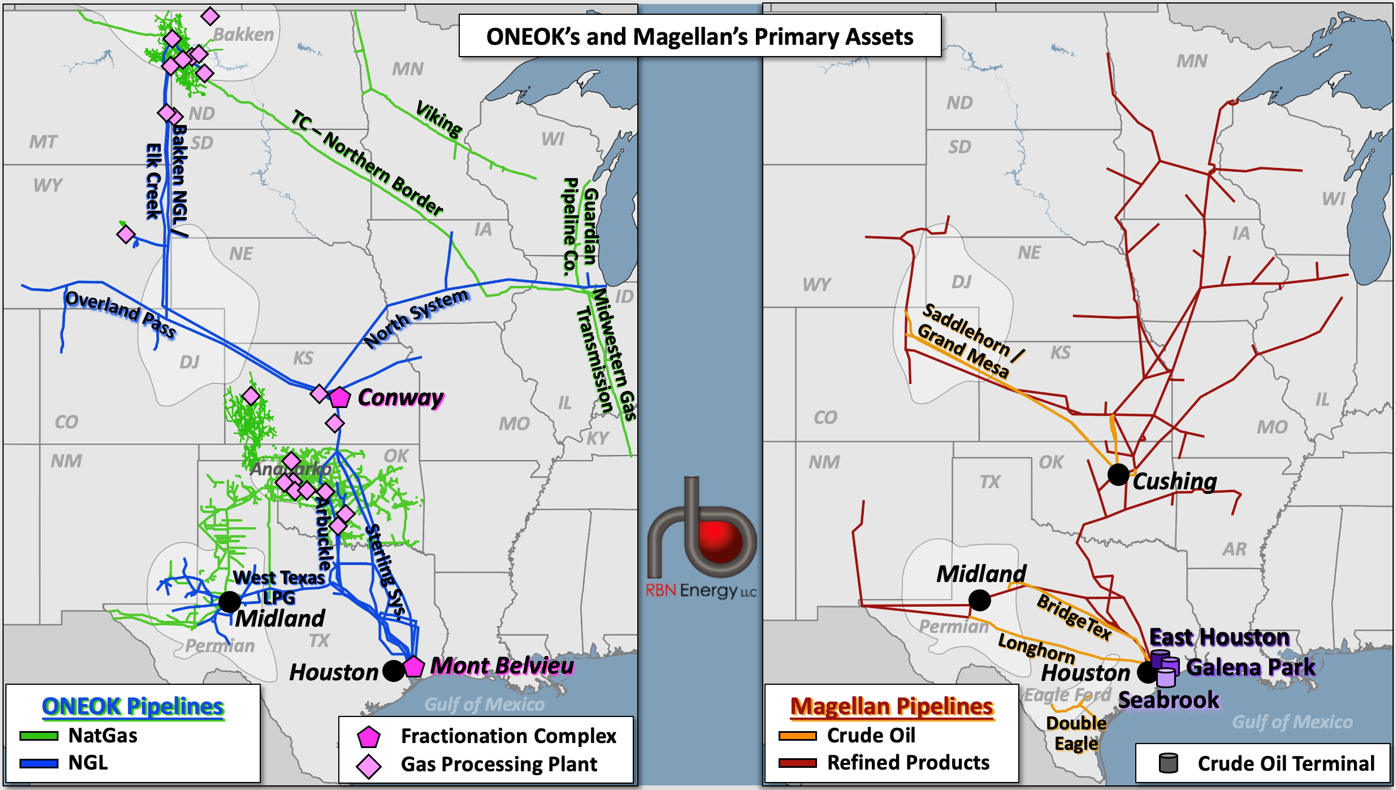
Figure 1. Primary Assets of ONEOK and Magellan Before Their Combination. Source: ONEOK
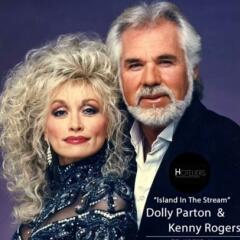
About the song
“Islands in the Stream” was written by Barry, Robin and Maurice Gibb (The Bee Gees) and recorded by Kenny Rogers and Dolly Parton. It was the first single from Rogers’s 15th studio album, Eyes That See in the Dark. Both the single and the LP were released in August 1983. The song, which rose to #1 on the Billboard Hot 100 Singles chart, was named after the title of an Ernest Hemingway novel and was originally written for Diana Ross in an R&B style. It was later rewritten for Rogers and Parton. The Bee Gees released a live version of the song in 1998 and a studio version in 2001. Personnel on the original Rogers/Parton version were Kenny Rogers and Dolly Parton (lead vocals), Albhy Galuten and George Bitzer (acoustic piano, electric piano, synthesizers), Maurice Gibb (synthesizers, guitar, bass, backing vocals), Barry Gibb (guitar, backing vocals, arrangements), Tim Renwich and George Terry (guitar), Larry McNeely (banjo), Ron Ziegler (drums), Joe Lala (percussion), Neal Bonsanti and Whit Sidener (saxophones), Peter Graves (trombone), Ken Faulk (trumpet), and Denise Decaro, Myrna Mathews and Marti McCall (backing vocals).
Kenny Rogers was an American singer and songwriter best known for country music but also accomplished in jazz, folk, pop and rock. Born in Houston in 1938, Rogers once said he was one of the first people in his family to graduate from high school. He started his recording career in the late 1950s with a Houston-based group called The Scholars, became a member of the folk ensemble The New Christy Minstrels in 1966, and helped form a new group, The First Edition, the following year. When that band broke up in the mid-1970s, Rogers began a long and successful solo career. He was inducted into the Country Music Hall of Fame in 2013. He died in March 2020.
Dolly Parton is an American country singer, songwriter, musician, record producer, actress and author. Born in Pittman Center, TN, in 1946, she moved to Nashville the day after she graduated from high school in 1964. Her early success was in songwriting, but she soon was given the chance to record. Her first single, “Dumb Blonde,” was released in 1966. After a stint on The Porter Wagoner Show and several duet singles with him, Parton broke through in 1974 with her first #1 hit single, “I Will Always Love You.” Parton is a member of the Country Music Hall of Fame, Songwriters Hall of Fame, Nashville Songwriters Hall of Fame and Grammy Hall of Fame. She has a National Medal of Arts and is a Kennedy Center Honoree. She still records and tours.