Natural gas futures prices have rocketed to 14-year highs in the past couple of months — during the lower-demand spring months, no less — and they are now trading at 3x where they were at this time last year. The CME/NYMEX Henry Hub futures for June delivery shot up to a high of $9.40/MMBtu in intraday trading last Thursday, the highest level we’ve seen since summer 2008, before expiring at $8.908/MMBtu, nearly $6 (~200%) higher than the June 2021 expiration settlement at just under $3/MMBtu. The newly prompt July futures retreated ~17 cents Friday to about $8.73/MMBtu, but that’s still nearly triple where July futures traded last year. It’s safe to say the low fuel cost of gas-fired power generation that defined the Shale Era has evaporated. Historically, at today’s sky-high prices, gas would have given up market share to coal in the power sector. However, the coal market is battling its own supply shortage and Eastern U.S. coal prices are at record highs. What does that mean for generation fuel costs and fuel switching? In today’s RBN blog, we break down the math for comparing gas vs. coal fuel costs.
As we said in our recent blog on power burn, Can’t Stop Me Now, a tight coal market and record-high coal prices in the Eastern U.S. have suppressed gas-to-coal switching in recent months, despite the gas market also contending with a supply squeeze and gas prices trading at Shale Era highs. The coal-market constraints have contributed to record, or near-record, gas demand in the power sector in most recent months, with gas gaining market share of total generation fuel demand — on top of wind and solar also increasing their share of the pie. Generation fuel dynamics were a driving factor in the tighter gas market balances this past winter and will continue to play a role during the injection season, including how power grids balance cost and reliability during times of extreme customer demand, such as the heat waves we’ve already seen this month in Texas and other parts of the country. With that in mind, it seemed a good time to revisit the basics of the fuel switching phenomenon, including the major factors behind it.

The Natural Gas Master Class is a one-day online event focusing on understanding flow analysis, interpreting pipeline data and forecasting future flows. This course is designed to equip you with the knowledge and skills to effectively analyze the complexities of natural gas markets, flow analysis, and pipeline modeling. Join us online
October 21 | Online
In Part 1, we walked through the concepts underlying how generation capacity is dispatched throughout the day, such as the daily load curve and the generation fuel stack. From there, we examined the economic and operational factors that can drive or constrain the dispatch of one fossil fuel over another, including weather conditions, the locations of competing generation capacity on the transmission grid, the operational requirements for keeping the grid reliable during high-demand periods, plant outages, and the fuels’ relative costs. As we concluded in that blog, of all the factors, fuel cost has the biggest influence on fuel switching decisions. So next, we need to understand how to calculate and compare fuel costs for a typical gas vs. coal plant on an apples-to-apples basis. To do that, I’m afraid we have to break out the calculators. Take a deep breath and grab an energy drink.
About the song
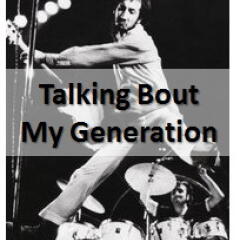
“My Generation” was written by Pete Townshend and appears as the sixth song on side one of The Who’s debut album of the same name. The song was released as a single in November 1965. It went to #74 on the Billboard Hot 100 Singles chart in the U.S., but soared to #2 on the UK charts, making it the highest-charting single for The Who in Britain, along with “I’m a Boy” in 1966. Personnel on the record were: Roger Daltry (lead vocals), Pete Townshend (guitar, backing vocals), John Entwistle (bass, backing vocals) and Keith Moon (drums).
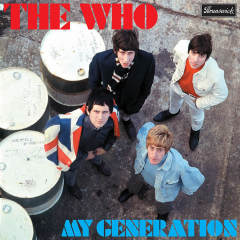
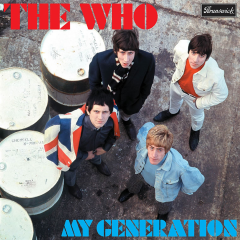
The album My Generation was recorded at IBC in London from April to November 1965, with Shel Talmy producing. Released in the UK in December 1965, the album was released in the U.S. in April 1966 with a different cover picture and a slightly different track listing under the title The Who Sings My Generation. It failed to chart in the U.S., which is ironic since many critics since its release have rated it as one of the best rock records of all time. It has been re-released in various versions and different formats over the years. Four singles have been released from the LP.
The Who are an English rock band formed in London in 1964 by Roger Daltry, Pete Townshend, John Entwistle and Keith Moon. They developed from an earlier mod R&B group with the same members called The Detours. The Who identified with both the mod and pop art movements in Britain in the 1960s. The group used the on-stage destruction of guitars, amplifiers, and drums as part of their performance art.
Pete Townshend and John Entwistle were among the earliest users of Marshall stack amplifiers, designed by Jim Marshall in his London shop in 1962. The Who have released 12 studio albums, 16 live albums, 27 compilation albums, four soundtrack albums, four EPs and 58 singles. They have sold more than 100 million records worldwide. The band was inducted into the Rock and Roll Hall of Fame in 1990 and the UK Music Hall of Fame in 2005. Daltry and Townshend received Kennedy Center Honors in 2008. Keith Moon died in 1978 and was replaced by Kenney Jones until 1988. (Jones also reunited with the band for a benefit concert in 2014.) John Entwistle died in 2002. Current touring musicians include Zak Starkey (drums), Simon Townshend (guitar, backing vocals), Loren Gold (keyboards, backing vocals), and Jon Button (bass). The Who continue to record and tour. They are currently on a North American tour — “The Who Hits Back!” — with dates booked until November.