A tight coal market and record-high coal prices in the Eastern U.S. have suppressed gas-to-coal switching in recent months, despite the gas market also contending with a supply squeeze and gas prices trading at Shale Era highs. The coal-market constraints have contributed to record, or near-record, gas demand in the power sector, with gas gaining market share of total generation fuel demand — in spite of wind and solar increasing their share of the pie. Generation fuel dynamics were a driving factor in the tighter gas market balances this past winter and also play a role in how power grids balance cost and reliability during times of extreme customer demand, such as the record-breaking heat wave expected to hit Texas in the coming days. In today’s RBN blog, we take a look at power generation fuel economics, particularly the fuel-switching phenomenon and its underlying drivers.

The Natural Gas Master Class is a one-day online event focusing on understanding flow analysis, interpreting pipeline data and forecasting future flows. This course is designed to equip you with the knowledge and skills to effectively analyze the complexities of natural gas markets, flow analysis, and pipeline modeling. Join us online
October 21 | Online
This is a reboot of our short 2012 blog series examining the economics of fuel switching. Back then — and for most of the Shale Era years — the conversations around fuel switching were primarily about how much gas the power generation sector could soak up. Gas supply abundance and a lower-price environment meant that gas was increasingly competitive with coal. The economics, along with environmental regulation, spurred a massive shift in power generation capacity — i.e., gas plant additions and coal plant retirements — to the point where the share of gas demand in the power sector has far surpassed coal. In 2012, we explored the question of whether there was sufficient gas-plant capacity for coal-to-gas switching to occur. Now, with the gas inventory at the lowest in three years and gas futures hitting 14-year highs during the lower-demand shoulder season, the question is more about whether and to what extent increased coal-fired generation can help balance the gas market this injection season.
Coal regained market share from gas through much of 2021 as gas prices rose, but, as we said in Can’t Stop Me Now, coal’s share of the power sector has slipped in recent months as the coal market has been dogged by its own supply shortages and record-high prices, particularly in the U.S. Northeast. As a result, gas market share (i.e., power burn) has maintained or increased on a temperature-adjusted basis in recent months. As we concluded in that blog, without that switching mechanism, gas burn for power is likely to remain elevated even at higher gas prices, which, in turn, raises the stakes for ongoing volatility and price spikes this injection season.
About the song
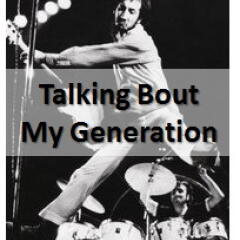
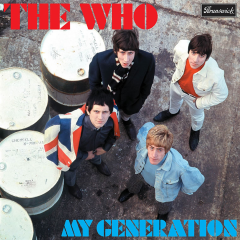
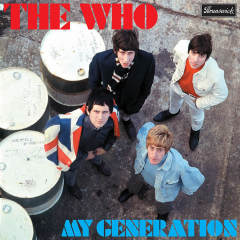
“My Generation” was written by Pete Townshend and appears as the sixth song on side one of The Who’s debut album of the same name. The song was released as a single in November 1965. It went to #74 on the Billboard Hot 100 Singles chart in the U.S., but soared to #2 on the UK charts, making it the highest-charting single for The Who in Britain, along with “I’m a Boy” in 1966. Personnel on the record were: Roger Daltry (lead vocals), Pete Townshend (guitar, backing vocals), John Entwistle (bass, backing vocals) and Keith Moon (drums).
The album My Generation was recorded at IBC in London from April to November 1965, with Shel Talmy producing. Released in the UK in December 1965, the album was released in the U.S. in April 1966 with a different cover picture and a slightly different track listing under the title The Who Sings My Generation. It failed to chart in the U.S., which is ironic since many critics since its release have rated it as one of the best rock records of all time. It has been re-released in various versions and different formats over the years. Four singles have been released from the LP.
The Who are an English rock band formed in London in 1964 by Roger Daltry, Pete Townshend, John Entwistle and Keith Moon. They developed from an earlier mod R&B group with the same members called The Detours. The Who identified with both the mod and pop art movements in Britain in the 1960s. The group used the on-stage destruction of guitars, amplifiers, and drums as part of their performance art.
Pete Townshend and John Entwistle were among the earliest users of Marshall stack amplifiers, designed by Jim Marshall in his London shop in 1962. The Who have released 12 studio albums, 16 live albums, 27 compilation albums, four soundtrack albums, four EPs and 58 singles. They have sold more than 100 million records worldwide. The band was inducted into the Rock and Roll Hall of Fame in 1990 and the UK Music Hall of Fame in 2005. Daltry and Townshend received Kennedy Center Honors in 2008. Keith Moon died in 1978 and was replaced by Kenney Jones until 1988. (Jones also reunited with the band for a benefit concert in 2014.) John Entwistle died in 2002. Current touring musicians include Zak Starkey (drums), Simon Townshend (guitar, backing vocals), Loren Gold (keyboards, backing vocals), and Jon Button (bass). The Who continue to record and tour. They are currently on a North American tour — “The Who Hits Back!” — with dates booked until November.