In many ways, the natural gas shortages and price spikes that came with last week’s Deep Freeze had nothing at all to do with hydrogen. There were no “green” hydrogen plants that froze up in the cold, no withdrawals of stored hydrogen into distributed local fuel cells backing the power grid, no shortages of fuel for hydrogen vehicles. None of that occurred because hardly any of that infrastructure exists just yet. But that doesn’t mean there was no link between last week’s natural gas market and existing forms of hydrogen production, namely “gray” hydrogen used to produce ammonia, most of which is used in the manufacture of fertilizers, and which makes up about a quarter of the hydrogen market. In fact, there was a strong connection, one that highlights the flexibility of industrial natural gas use during price spikes and possibly exposes a vulnerability in gray hydrogen production. Today, we continue our series on hydrogen with a look at how the ammonia industry responded to the recent spike in natural gas prices.
While many in Texas and neighboring states are still chasing down water leaks and scheduling time with their general contractors, natural gas prices have receded to levels seen before Winter Storm Uri hit last week. If you’re not sure what we’re talking about, then a review of our recent blogs will bring you up to date. We initially wrote about how natural gas prices across Texas and other areas west of the Mississippi River spiked into triple digits early last week in East is East, West is West. As you know, that wasn’t the end of the story for the energy market madness created by Uri as the chaos spread into power markets by the middle of last week, which we first detailed in Terminal Frost. We then followed that blog up with a closer look at the Texas power grid in Perfect Storm.

Now that the dust has settled, we thought it would be a good time to look at some of the natural gas market responses to the high prices. It’s also time for our every-other-week hydrogen blog, and as luck would have it, we might have found a way to accomplish both in the same space. As you’ll see, one of the largest natural-gas-consuming industries uses it to make hydrogen, which goes into the manufacture of ammonia. When natural gas prices spiked last week, many of those ammonia plants ramped down their operations or shut down entirely. How do we know? Though prices alone would suggest this was the case, pipeline flow data confirms it. We’ll take a look at that data later, but first let’s look at hydrogen and the ammonia industry.
About the song
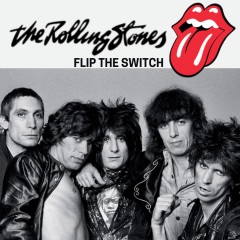
"Flip the Switch" was written by Mick Jagger and Keith Richards, and it appears as the first song on The Rolling Stones' 23rd American studio album, Bridges to Babylon. Personnel on the record were: Mick Jagger (lead vocal, guitar, keyboards), Keith Richards (guitar, backing vocals), Ronnie Wood (guitar, slide guitar, backing vocals), Charlie Watts (drums, percussion), and Darryl Jones (bass).
Bridges to Babylon was recorded between March and July 1997 at Ocean Way Recording in Los Angeles. Produced by Don Was, The Glimmer Twins, Rob Fraboni, Danny Saber, Pierre de Beauport, and The Dust Brothers, the album was released in September 1997. It went to #2 on the Billboard Top 200 Albums chart and has been certified Platinum by the Recording Industry Association of America. Three singles were released from the album.
The Rolling Stones are an English rock band formed in London in 1962. Eight members have passed through the group since its inception. The band still includes founding members Mick Jagger, Keith Richards, and Charlie Watts. Original guitarist Brian Jones died in 1969. Mick Taylor replaced Jones until 1974, when Ronnie Wood replaced him. Bassist Bill Wyman retired from the group in 1993, and Darryl Jones has been The Stones touring bassist since that time. The Rolling Stones have released 30 studio albums, 33 live albums, 29 compilation albums, three EPs, and 121 singles. They have sold more than 240 million records worldwide .They have won one Billboard Music Award, 11 Grammy Awards, three MTV Video Music Awards, and two World Music Awards. They were inducted into the Rock and Roll Hall of Fame in 1989 and the UK Music Hall of Fame in 2004. Mick Jagger was knighted for his services to popular music in 2003. The Rolling Stones continue to record and tour.