South Texas is emerging as the newest premium destination for natural gas supply in the U.S. Demand in the area is expected to grow much faster than local production, creating a supply shortage in the region by early 2018. New pipeline capacity will be needed to move incremental supply into South Texas. There are several projects planned to facilitate southbound capacity on pipelines running along the Gulf Coast Industrial Corridor. Today we examine the planned pipeline capacity and whether it will be enough to serve the coming demand.
We’ve blogged quite a bit recently about the growing natural gas demand for exports, in particular from South Texas. Demand there is expected to nearly double over the next four years, from an average 4.5 Bcf/d in 2016 to about 8.2 Bcf/d by late 2020, driven by pipeline export capacity to Mexico and liquefaction capacity for LNG exports. The new demand will change flow patterns and pricing in the region. And if sufficient supply isn’t available, these changes have the potential to create supply constraints and price volatility. To understand how much incremental supply the region will need, we looked at future changes in the supply and demand balance. First we examined the supply side of the balance in South Texas, 80% of which comes from the Eagle Ford Shale—and that’s where we would expect any local production growth to come from. The Eagle Ford was hit particularly hard by the oil price crash that began in mid-2014, but it looks to be poised for somewhat of a comeback. After nose-diving from a pre-crash level of about 200 to a low of just 29 rigs in June 2016, the Eagle Ford rig count has doubled in the past eight months or so, to more than 70 rigs this month (March 2017).
As we noted in Part 1, production flows from shale drilling in the area haven’t quite reflected the turnaround yet. But volumes out of the Eagle Ford are no longer in decline and have been lingering just under 4.4 Bcf/d in recent months, and total South Texas production, including non-shale drilling activity, has held near 5.5 Bcf/d. A conservative view of Eagle Ford production growth would put total South Texas production back up to an average 5.9 Bcf/d by 2020.
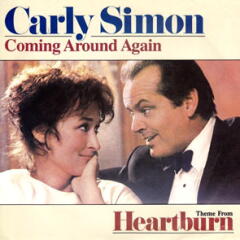
About the song
“Coming Around Again” was written by Carly Simon and first appeared in the end credits of the 1986 motion picture Heartburn. It later appeared as the first song on side one of Carly Simon’s 13th studio album, Coming Around Again. Released as a single in October 1986, it went to #5 on the Billboard Adult Contemporary chart and #18 on the Billboard Hot 100 Singles chart. The success of the single started a career resurgence for Simon, who was known for her hit singles in the 1970s. The song is included in multiple compilations of her work. Personnel on the record were: Carly Simon (lead, backing vocals, keyboards), Scott Martin (keyboards, backing vocals), Bill Payne (keyboards), Russ Kunkel (drums), and Paul Samwell-Smith and Terri Homberg (backing vocals).
The album, Coming Around Again, was recorded in 1986-87 at Right Track Recording, The Power Station, PinWheel Studio, Unique Recording Studios and Flying Monkey in New York City and Cliffhanger Studio in Vancouver. Produced by Clive Davis, Bryan Adams, John Boylan, Frank Filipetti, Russ Kunkel, George Massenburg, Rob Mounsey, Bill Payne, Richard Perry and Paul Samwell-Smith, the LP was released in April 1987. It went to #25 on the Billboard 200 Albums chart and has been certified Platinum by the Recording Industry Association of America. A cast of 42 (including Simon) musicians and 10 producers contributed to the album. Four singles were released from the LP.
Carly Simon is an American singer, songwriter, musician and author. Her father was Richard Simon, who co-founded the publishing house Simon & Schuster. In the 1970s Carly Simon had 13 Top 40 hits. Her professional career started in 1963 when she began performing with her sister Lucy as The Simon Sisters. Their 1964 Kapp Records debut album, Meet the Simon Sisters, reached #73 on the Billboard 200 Albums chart. Her first solo album was the highly successful 1971 release, Carly Simon. That album won her a Grammy Award for Best New Artist. She has released 23 studio albums, two live albums, 10 compilation albums, one soundtrack album and 41 singles. She has authored two memoirs and five children‘s books and has won an Academy Award, a Golden Globe Award and two Grammy Awards. Simon is a member of the Rock and Roll Hall of Fame, Songwriters Hall of Fame, and has a star on the Hollywood Walk of Fame. She continues to record and do occasional public appearances. Her last concert appearance was in 2018 at Carnegie Hall.