It’s coming. More Canadian heavy crude barrels are on their way to the U.S. Gulf Coast. It looks like some, if not most, of that oil could be taking a somewhat circuitous route — through PADD 4, the U.S. Rocky Mountain states. To understand why, you’ve got to grasp both Canadian and Rockies production trends, the complex web of crude oil pipes from Alberta down to the U.S. Gulf Coast, the delicate regional balances that must be navigated along the way, the implications for the major Rockies crude hub at Guernsey, WY, and, of course, the economics of making the trip.
That’s what we do in Roundabout – Canada-To-Rockies Crude Flows Reshaping the PADD 4 Guernsey Market, our new multiclient study developed in partnership with Plainview Energy Analytics. In today’s RBN blog, we discuss the contents of that comprehensive analysis and why the topics covered are so important to the crude market in North America. Be warned, this is an unabashed commercial plug for our new study. We hope you find it intriguing. (We also discussed the report during a webinar on Wednesday, April 1, which is now available for replay. Please note that you need to be signed in with your free RBN account to watch.)
Canadian crude oil production has been, is now, and will keep on growing, with almost all of the increase coming in the heavy, viscous, high-sulfur variety — what’s euphemistically called oil sands. But where’s it going to go? Not to the Midwest. Refineries there are full up with the stuff. Not to exports out of British Columbia. The new pipe that takes crude that way was delayed by a decade, required a Canadian government takeover to reach completion, and ultimately cost nearly six times its original budget. Ouch.
No, the barrels will be coming to the U.S. Gulf Coast, home to the largest concentration of heavy oil refineries in the world.
U.S. Rig Count Rebounds Five to 548; Eagle Ford Leads Recovery
U.S. oil and gas rig count gained five rigs to 548 for the week ending April 2 according to Baker Hughes data, published Thursday ahead of the Good Friday holiday, as gains in the Eagle Ford (+3), Haynesville (+1), Niobrara (+1) and Permian (+1) more than offset a one-rig decline in the Bakken.
But exactly how it is going to get there is a wide-open question. There are a number of midstream companies vying for the opportunity to move those barrels south. Several pipeline proposals are in the works that would move incremental Canadian crude through different corridors and hubs before ultimately linking into the systems that carry crude to the Gulf Coast. No single project lays out the entire route from origin to destination, but the various proposals point toward a chain of roundabout connections that could move those barrels step by step toward the Gulf, with many of those barrels flowing through the Rocky Mountains.
Before getting to some of our key findings, it will help to describe just how comprehensive this study truly is. This work is essentially the “bible” of Canadian crude flows to the U.S., especially through the Rockies: 20+ maps with receipt points, delivery points and interconnects; 25+ graphics of flow corridors, production trends, and price relationships; detailed regional balance calculations; 80+ pages in all. It is everything you need to know about how crude oil logistics and markets work from Alberta down to Cushing, and beyond. Here’s what can be concluded from all that analysis.
About the song
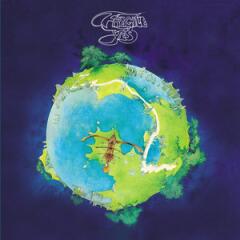
“Roundabout” was written by Jon Anderson and Steve Howe and appears as the first song on side one of Yes’s fourth studio album, Fragile. The song was written on Yes’s tour bus as it encountered many roundabouts on the road through the mountains from Aberdeen to Glasgow in Scotland. Jon Anderson said it was a cloudy day and you couldn't see the tops of the mountains, hence the line: “Mountains came out of the sky, and they stand there,” from which he drew the storyline for the 8:29-minute prog-rock song. It was released in an edited 3:27-minute version as a single in January 1972 and went to #13 on the Billboard Hot 100 Singles chart. It has been certified 2X Platinum by the Recording Industry Association of America (RIAA). Personnel on the record were: Jon Anderson (vocals), Steve Howe (guitars, backing vocals), Chris Squire (bass, backing vocals), Rick Wakeman (keyboards), and Bill Bruford (drums, percussion).
A defining element of the track is Chris Squire’s bass work, which features an aggressively picked attack and an unusually bright, trebly tone that cuts through the mix. Rather than remaining in a traditional supporting role, the bass line operates almost as a co-lead instrument, locking in with the guitar while adding a driving, percussive edge that gives the song much of its forward momentum.
Fragile was recorded in August and September 1971 at Advision in London and produced by Eddy Offord and Yes. Released in November 1971, it went to #4 on the Billboard 200 Albums chart and (like the “Roundabout” single) has been certified 2X Platinum by the RIAA. One single was released from the LP.
Yes is an English progressive rock band formed in London in 1968. They are regarded as among the genre’s pioneering bands. They have released 23 studio albums, 18 live albums, 15 compilation albums, one EP, and 44 singles and have sold more than 40 million records worldwide. Yes has won a Grammy Award, was inducted into the Rock and Roll Hall of Fame in 2017 and has a star on the Hollywood Walk of Fame. Twenty members have passed through the band since its inception. Original guitarist Peter Banks died in London in March 2013 at 65; founding member/bassist Chris Squire died in Phoenix in June 2015 at 67; and drummer Alan White died in Newcastle, WA, in May 2022 at 72. The band still records and tours with longtime guitarist Steve Howe at the helm. They are currently on their Fragile Tour in the U.K., performing the Fragile album (including “Roundabout”) in its entirety.
"About the Song" -- written by Mickey McMahan , RBN Director of Musicology