You might have thought the flurry of acquisitions and buyout deals that midstream companies entered into over the past couple of years would have satisfied their evident desire to refocus, expand and reshape their businesses. But you’d be wrong. In the first half of 2025 — a period of considerable uncertainty in the energy industry — midstream players continued to buy and sell pipelines and other important assets at a frenetic pace. In today’s RBN blog, we discuss some of the more interesting recent transactions and what they tell us about the midstream space.

The replay of our Fall 2026 School of Energy (September 9 & 10, Houston) is now available online!
Learn from RBN experts, participate in hands-on Excel modeling, connect with industry peers, and gain a stronger understanding of today's interconnected energy markets.
There’s been so much midstream M&A and asset trading in the post-pandemic era that we put together not one but two Drill Down Reports on the topic, the first in late 2023 and the second in February. Consider the magnitude and significance of the nine-, 10- and 11-figure deals we highlighted in those summaries, which included Enterprise Products Partners’ acquisition of Navitas Midstream and Piñon Midstream (total value $4.2 billion); Energy Transfer’s purchase of Crestwood Energy Partners, WTG Midstream and Lotus Midstream ($11.8 billion); and ONEOK’s deals to buy — get this — Magellan Midstream Partners, EnLink Midstream and the Midland Basin part of Medallion Midstream for a cool $29 billion.
And don’t forget Sunoco LP’s May 2024 acquisition of NuStar Energy ($7.3 billion). Or Plains All American, which in January announced three smaller deals (including the acquisition of Ironwood Midstream) totaling $670 million and oh, by the way, in mid-June reached an agreement to sell its Canadian NGL business to Keyera Corp. for C$5.15 billion (US$3.25 billion). And that’s not all Plains is up to. In February it acquired the remaining 50% interest in the Cheyenne Pipeline (a 94-mile crude oil pipeline in Wyoming) and in May it closed on the $55 million purchase of a crude oil gathering system in the Midland.
Today, we’re going to focus on a handful of deals that offer a representative sample of recent purchases and sales.
Brookfield Infrastructure Partners/Colonial Pipeline
We begin with a big one: the plan by Brookfield Infrastructure Partners (BIP) and its institutional partners to buy the Colonial Pipeline system from its five co-owners — Koch Industries, KKR, pension fund Caisse de Dépôt et Placement du Québec, Shell, and Australian investor fund Industry Funds Management — for about $9 billion. The deal is expected to close later this year.
The 5,500-mile Colonial system (green lines in Figure 1 below) is a critically important refined products delivery network. Its primary route (from Houston to Linden, NJ) consists of four distinct segments, which, like the “arms” and “legs” of an X, meet at Greensboro, NC. One of the two Houston-to-Greensboro lines moves gasoline (Line 1; capacity 1.4 MMb/d) and the other line (Line 2; capacity 1.2 MMb/d) is dedicated to moving middle distillates (diesel and jet fuel).
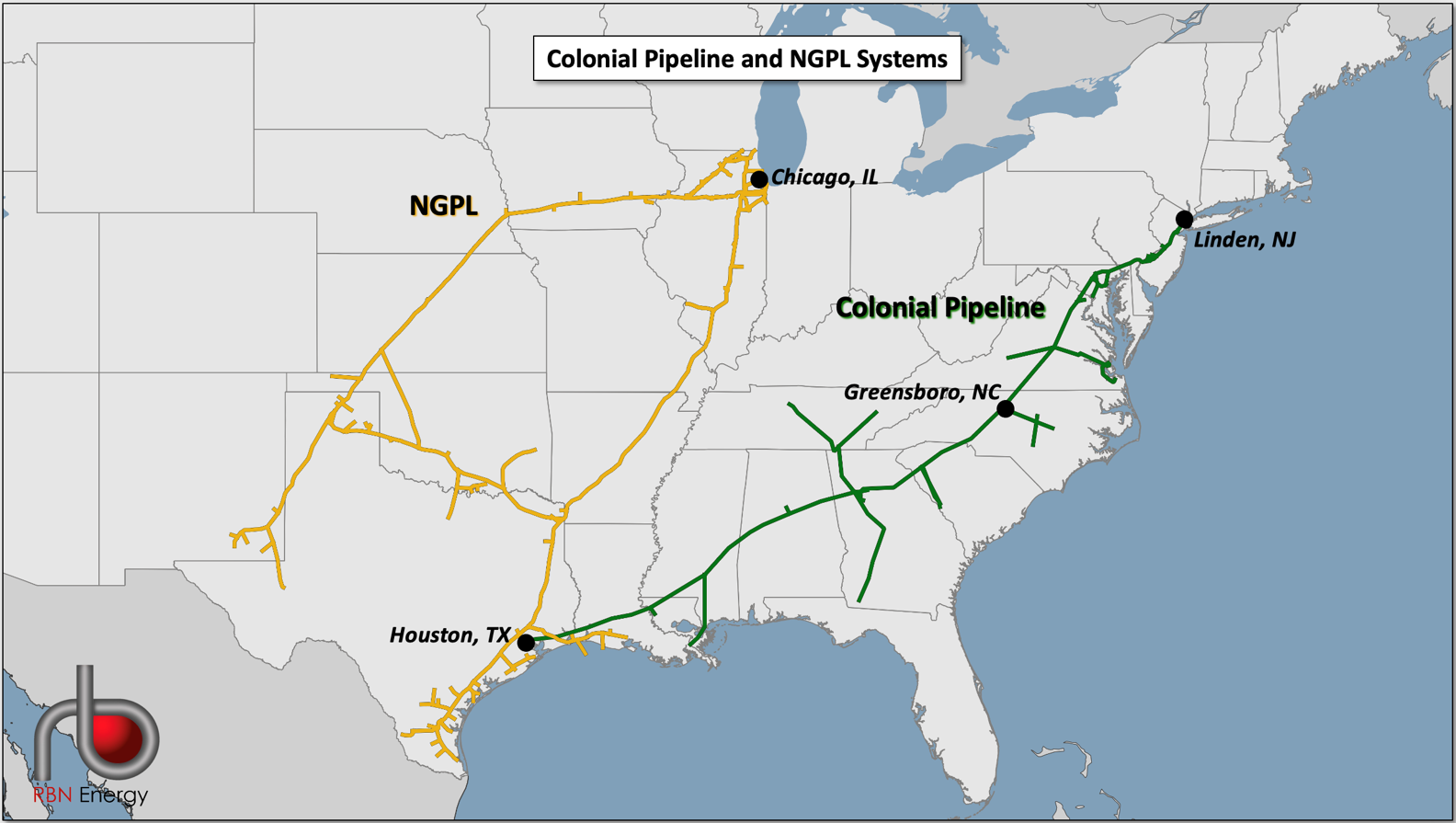
Figure 1. Colonial Pipeline and NGPL Systems. Source: RBN
About the song
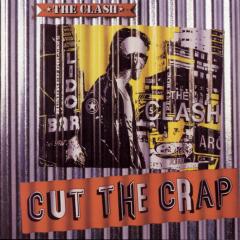
“Movers and Shakers” was written by Joe Strummer and Bernard Rhodes and appears as the fifth song on side one of The Clash’s sixth and final studio album, Cut the Crap. The song got ripped by critics at the time for using the guitar riff from Sham 69’s “Hurry Up Harry (Come On)” and the cheesy trumpet part played on the synthesizer. It also suffers from a poor mix, as does most of Cut the Crap. The only time The Clash played the song live was during their 1985 Busking acoustic tour. Personnel on the record were: Joe Strummer (lead vocals, guitar), Nick Sheppard (guitar), Vince White (guitar), Norman Watt-Roy (bass), Herman Weindorf (keyboards, synthesizer), and Michael Fayne, Bernard Rhodes (drum programming).
Cut the Crap was recorded between January and March 1985 at Weryton Studio in Vaterfahring, Germany, and produced by Jose Unidos (Bernard Rhodes). After the departure of guitarist Mick Jones, bassist Paul Simonon and drummer Topper Headon from the band, Clash manager Bernard Rhodes assumed the position of co-writer with Joe Strummer and producer for the album. Described by the British music press as “one of the most disastrous albums ever released by a major artist,” Strummer disowned the album and broke up the band a few weeks after its release. Released in November 1985, it went to #88 on the Billboard 200 Albums chart despite all the criticism. One single was released from the LP.
The Clash was an English punk band formed in London in 1976. Their main lineup consisted of lead vocalist and guitarist Joe Strummer, lead guitarist and vocalist Mick Jones, bassist Paul Simonon, and drummer Topper Headon. They released six studio albums, two EPs, two live albums, nine compilation albums and 31 singles and have sold over 6 million records worldwide. The Clash was inducted into the Rock and Roll Hall of Fame in January 2003. Ten members have passed through the band since its formation. Founding member Joe Strummer died at his home in Broomfield, U.K., in December 2002 at 50.