Natural gas and NGL production growth in the Marcellus/Utica slowed and then leveled off in the early 2020s, largely due to gas-pipeline takeaway constraints. Still, the Northeast remains a key supplier of natural gas and NGL “purity products,” and Energy Transfer’s NGL pipelines and Philadelphia-area marine terminal continue to play critical roles in balancing the region’s ethane and LPG markets. In today’s RBN blog, we continue our series on the U.S.’s robust-and-growing networks of NGL pipelines, fractionators and export terminals, this time with a look at Energy Transfer’s Mariner West and Mariner East pipeline systems and the company’s Marcus Hook terminal.
In Part 1 of this series, we said that the rise in U.S. NGL production in the 2010s was accompanied by a massive build-out of NGL-related infrastructure: everything from gas gathering systems and gas processing plants to NGL pipelines, fractionators, ethane-consuming steam crackers along the Gulf Coast (and in western Pennsylvania), and export terminals capable of loading and sending out ethane, propane, butanes and natural gasoline. While we wrote countless blogs about this build-out, what we haven’t done, at least until now, is discuss in holistic terms the NGL networks that a handful of large midstream companies own and operate.
Given that Energy Transfer (ET) owns major midstream systems for NGLs in both Texas and the Northeast, it seemed logical to start our new series with them. In Part 1, we focused on ET’s interconnected NGL-related assets in the Lone Star State, which include gas processing plants; pipelines for transporting mixed NGLs (a.k.a. Y-grade) to the Mont Belvieu fractionation center (where ET owns seven fractionators and is finishing an eighth); underground, salt-cavern storage; purity product pipelines from Mont Belvieu to Nederland, TX; and Nederland Terminal, which has product refrigeration capacity, dedicated refrigerated storage, and several export docks.
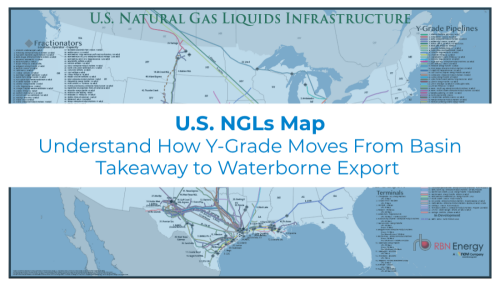
Visualize the infrastructure behind U.S. NGL movement.
The U.S. NGLs Map provides a comprehensive view of the transport, processing, and export networks moving NGLs across the U.S.

About the song
“… Ready For It?” was written by Taylor Swift, Max Martin, Shellback, and Ali Payami. The song appears as the first song on Taylor Swift’s sixth studio album, Reputation. Produced by Max Martin, Shellback, and Ali Payami, the electropop song was released as a single in October 2017. It went to #4 on the Billboard Hot 100 Singles chart and has been certified 2X Platinum by the Recording Industry Association of America (RIAA). The song won two awards at the 2019 BMI Awards ceremony. Personnel on the record were: Taylor Swift (vocals), Max Martin (keyboards, programming), Shellback (keyboards, programming), and Ali Payami (keyboards, programming).
Reputation was recorded in 2017 at Conway Recording Studios in Los Angeles; MXM in Los Angeles and Stockholm, Sweden; Rough Customer in Brooklyn, NY; Seismic Activities in Portland, OR; and Tree Sound in Atlanta. The album was produced by Taylor Swift, Jack Antonoff, Shellback, and Max Martin. Released in November 2017, it went to #1 on the Billboard Top 200 Albums chart and has been certified 3X Platinum by the RIAA. Five singles were released from the LP.
Taylor Swift is an American singer-songwriter. She has released nine studio albums, three live albums, two compilation albums, 10 EPs, and 54 singles. Swift has won 10 Grammy Awards, one Emmy Award, 32 American Music Awards, one Brit Award, 23 Billboard Music Awards, 12 Country Music Association Awards, eight Academy of Country Music Awards, two BMI Awards, and is a member of the Songwriters Hall of Fame. She recently completed a major U.S tour that will be followed up with international stops starting in November.