Since the start of the Shale Revolution 15 years ago, U.S. NGL production has increased by an extraordinary 260% to more than 6.5 MMb/d. And it’s not just NGL production that’s up sharply. So are exports of NGL purity products, especially LPG (propane and normal butane) and ethane. All that growth — and the growth that’s still to come — wouldn’t be possible without a seemingly non-stop expansion of NGL-related infrastructure. Everything from gas processing plants and NGL pipelines to salt-dome storage, fractionators and export docks. And much of that infrastructure is in the hands of just a few large midstream companies that over the years have developed “well-to-water” NGL networks that enable their owners to collect multiple fees along the NGL value chain. In today’s RBN blog, we discuss highlights from our new Drill Down Report on NGL networks.

To get what’s going on with U.S. production of the mixed stream of natural gas liquids collectively known as NGLs (ethane, propane, normal butane, isobutane and pentanes+), it’s important to understand the relationship between NGLs and the production of crude oil and natural gas — after all, they all come from the same holes in the ground in hydrocarbon-rich areas like the Permian, Bakken, and Eagle Ford. Because of their common origin, RBN refers to the three commodity streams (crude, gas and NGLs) as the “drillbit hydrocarbons.”
These days, about 80% of drilling in the U.S. is primarily directed at crude oil production, which makes sense because (generally speaking) crude is the most valuable of the drillbit hydrocarbons on a per-Btu basis. Crude doesn't emerge from shale plays on its own, of course — instead, it comes up with associated gas, a gurgling combination of methane (natural gas), mixed NGLs and various impurities. The composition of this oil/natgas/NGLs stew varies widely, not only between shale basins but within each basin and from well to well — and even within each well over time.
For a variety of technical reasons, production from oil-focused wells — and entire basins — tends to get gassier over time, with an increasing gas-to-oil ratio (known as the GOR and calculated as Mcf of gas per barrel of oil). Also, additional associated gas tends to be captured as gathering and processing infrastructure is built out and restrictions on flaring tighten. And in many basins, including the all-important Permian, the associated gas is saturated with NGLs — the NGL content in associated gas is often measured in gallons per Mcf of gas, or GPM. The recovered GPM across the U.S. has been rising steadily since 2008, from 1.3 GPM back then to more than 2.3 GPM today. A rising GOR coupled with a rising GPM means that now, on average, for every barrel of crude oil produced in the U.S., 9.4 Mcf of gross gas is produced and 22 gallons of mixed NGLs (9.4 x 2.3 = 22) — or about half a barrel of NGLs (22/42).
About the song
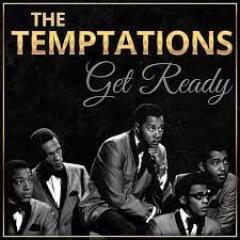
“Get Ready” was written by Smokey Robinson and appears as the fourth song on side one of The Temptations’ fourth studio album, Gettin’ Ready. The song was recorded in Detroit at Hitsville USA in Studio A during December 1965. The Smokey Robinson-produced song was released as a single in February 1966, a few months prior to the album being released. It went to #1 on the Billboard Rhythm & Blues chart and #29 on the Billboard Hot 100 chart. Personnel on the recording were: Eddie Kendricks (lead vocals), Melvin Franklin (lead vocals), David Ruffin, Melvin Franklin, Paul Williams and Otis Williams (background vocals). Instrumental accompaniment was provided by Motown’s house band, The Funk Brothers. The Supremes, Smokey Robinson and The Miracles, and Nancy Sinatra would later cover the song, but only fellow Motown artists Rare Earth would have a hit with the song again in 1970. Their version went to #4 on the Billboard Hot 100 and #20 on the Rhythm & Blues chart.
Gettin’ Ready was released in June 1966, where it went to #12 on the Billboard Top 200 Albums chart. Two charting singles were released from the album, the aforementioned “Get Ready” and “Ain’t Too Proud to Beg.” This album marks the transition from Smokey Robinson being The Temptations’ producer to having Norman Whitfield taking over the role.
The Temptations are an American rhythm and blues/soul music vocal group formed in Detroit in 1960. The “classic 5” version of the group included David Ruffin, Eddie Kendricks, Melvin Franklin, Paul Williams and Otis Williams, who were responsible for the majority of their hits in the 1960s. Ruffin was replaced by Dennis Edwards in 1968, and the group continued to have hits into the ’70s, such as psychedelic soul masterpieces “Cloud Nine,” “Psychedelic Shack” and “Ball of Confusion.” The group has released 43 studio albums, four live albums, 15 compilation albums, three soundtrack albums and 109 singles to date. They were inducted into the Rock and Roll Hall of Fame in 1989 and were inducted into the Vocal Group Hall of Fame in 1999. In 2013, the group received a Lifetime Achievement Grammy Award and was inducted into the R&B Music Hall of Fame. Twenty-four members have passed through the ranks of The Temptations over the years. Original member Otis Williams still tours with a version of The Temptations to this day.