Mexico’s natural gas market continues to evolve rapidly. New pipelines are being built to move increasing volumes of U.S.-sourced gas to Mexican power plants, industrial customers and other end users. Gas exports from the U.S. to Mexico already average 4.5 Bcf/d and those volumes are sure to rise as more pipelines and power plants come online. Just as important, the government of Mexico has been taking aggressive steps to undo what had been state-owned Petróleos Mexicanos’s (Pemex) near-monopoly on gas pipeline capacity and to encourage a large and diverse group of gas marketers to enter the fray. Today, we examine ongoing efforts to increase transparency, pipeline access and competition in the gas market south of the border, and look at how Comisión Federal de Electricidad’s (CFE) marketing affiliate, CFEnergía, is growing its gas marketing business within Mexico.
We last looked at Mexico’s gas infrastructure in Rio, where we took a deep dive into the Nueces header being built for CFE at the Agua Dulce Hub in South Texas. We also wrote about the status of gas pipelines in Mexico as well as the header system that was built by Energy Transfer Partners for CFE at West Texas’s Waha Hub in Part 4 of our Waha blog series, “It Was Good Living With You, (W)aha.” Both of those blogs were mostly focused on the pipeline infrastructure being built on both sides of the border to facilitate increased exports of gas from the U.S. at the Texas/Mexico border. However, structural changes have also been taking place within Mexico that are impacting how gas is bought and sold within the country. There are currently about 10 large capacity holders and almost two dozen smaller players actively marketing gas within Mexico. Although activity remains in a nascent phase compared to the U.S. market, the market in Mexico is developing along a path similar to its northern neighbor. In this blog, we detail the efforts of one of the largest current players in the Mexico natural gas market, CFE’s marketing affiliate, CFEnergía.

The NATGAS Appalachia weekly report provides the data and insights to monitor the northeast natural gas market’s twists and turns and identify the risks and opportunities along the way, including tracking supply-demand trends, outbound capacity and their impact on takeaway pipeline utilization, and regional prices.
Evolution of Mexico’s Natural Gas Transport Market
Prior to Mexico’s energy reform measures passed in 2013, almost all of the natural gas transport capacity within Mexico was owned by Pemex. Most of the pipeline system was also operated by Pemex and just about anyone looking to buy natural gas not only had to coordinate their efforts through that company but pay the going price for natural gas. This was usually a price called First Hand Sales (FHS) that was based on the Houston Ship Channel (HSC) and other South Texas indices, such as Tennessee Zone 0 South and Texas Eastern South Texas. Pemex only sold a “bundled price,” which basically meant that customers would have to pay the FHS formula to Pemex and pay for gas transport but have no rights on their transport. If a customer had operational issues for taking the gas, the only entity that could buy the gas was Pemex, and if a customer was short, the only one who could sell extra gas to the customer was Pemex. In a few isolated cases, other marketers could own capacity in Mexico in privately owned pipelines — one example being Sempra Energy’s contracts to supply much of CFE’s needs in Baja California. However, that type of arrangement was rare and only existed in Sempra’s case because the Baja California natural gas pipelines were not interconnected with the old Pemex system (then referred to as the National Gas Pipeline System) and received their supply entirely from pipelines on the U.S. side of the border.
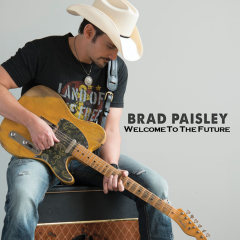
About the song
“Welcome to the Future,” co-written by Brad Paisley and Chris DuBois, was the second single from Paisley’s 2009 album, American Saturday Night. The song reached #2 on Billboard's Hot Country Songs chart and #42 on the Billboard Hot 100. Paisley was quoted as saying, “I wanted to show this world through my eyes, my kid’s eyes, and my granddad’s eyes, with this look of hope.” He performed the song for President Barack Obama and First Lady Michelle Obama in the East Wing of the White House in 2009.
Brad Paisley is an American singer/songwriter/guitarist born in Glen Dale, WV, in 1972. In 1995, Paisley received a full scholarship from ASCAP (the American Society of Composers, Authors and Publishers) to Belmont University in Nashville. After graduating with a B.A. in music business, Brad got a publishing deal with EMI Music Publishing, also in Nashville. He started his recording career with the release of his first album, Who Needs Pictures, in 1999.
Paisley has released 13 studio albums, three compilation albums, and 49 singles. He has sold more than 11 million records worldwide and has had 21 #1 singles. He has won two American Music Awards, 14 Academy of Country Music Awards, 14 Country Music Association Awards and three Grammy Awards, and is a member of the Grand Ole Opry. He has appeared on several television shows and is a spokesperson for Nationwide Insurance in their television ads. He continues to record and tour and will begin his Son of the Mountains World Tour 2024 in February 2024.