U.S. LNG export capacity has increased 40% in the last seven months, from 4.3 Bcf/d in April to about 6 Bcf/d now, and feedgas demand at the terminals already exceeds that, with more than 7 Bcf/d flowing to the facilities in recent weeks. With each new liquefaction train coming online, feedgas deliveries to export terminals have steadily climbed, and, for the most part, have sustained at rates that suggest consistently high utilization of the facilities’ capacity, particularly once they begin commercial operations and regardless of international market dynamics. And, that demand is expected to increase further as more liquefaction capacity comes online in 2020 and beyond. The emergence of this seemingly inelastic demand with a baseload-like pull on domestic gas supplies marks an underlying shift in the U.S. gas market that, along with the rising baseload demand from power generation, will make national benchmark Henry Hub prices more prone to spikes. Today, we explain how ever-increasing LNG exports will reshape the U.S. demand profile and, in turn, Henry price trends.

Canadian crude output is rising, requiring new export routes. As traditional pathways face constraints, the U.S. Rockies—especially the Guernsey, WY hub—are emerging as key corridors for moving Canadian heavy crude to downstream markets, including the Gulf Coast.
In Part 1 of this two-part series, we discussed the new reality that will increasingly influence U.S. natural gas prices, which is that the baseload, or minimum level, of demand for gas has grown significantly in recent years and become a larger portion of the overall gas market. That reality is making gas prices more vulnerable to periodic, short-term price spikes during times of extreme weather events or other market disruptions. That’s because, as gas is needed to serve more and more of that baseload-type demand, which is less flexible by nature, it leaves less wiggle room in the market for gas supply to respond to the incremental demand that comes with extreme weather or other short-term fundamental anomalies. We’ve seen evidence of this in historical Henry Hub futures prices in recent years, as well as at regional spot markets, such as the $200/MMBtu cash prices seen at Sumas, WA, in February 2019, and, the $100-plus prices in the Northeast in January 2018.
As we addressed in the previous episode, one big source of increasing baseload gas demand is the power-generation sector, where the market share of gas has catapulted from only 12% in 1990 to nearly 40% today, with gas replacing coal as the most cost-effective, go-to fuel for meeting baseload electricity demand. Next, we shift our focus to the other fast-growing demand component — exports — and how it fits into this demand picture.
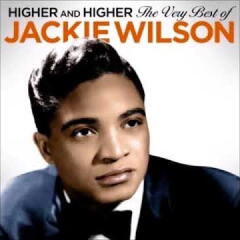
About the song
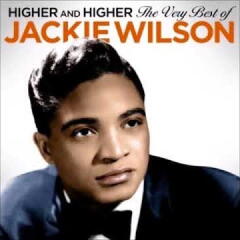
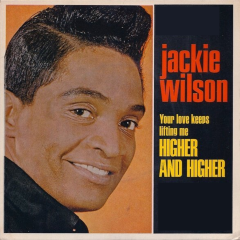
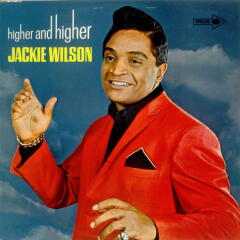
“(Your Love Keeps Lifting Me) Higher and Higher” was written by Gary Jackson and Carl Smith. It was recorded at Columbia Studio in Chicago in June 1967, with Jackie Wilson's vocals being recorded in a single take. The Carl Davis produced record was released as a single by Wilson in August 1967 and went to #1 on the Billboard R&B and #6 on the Hot 100 charts. The song was inducted into the Grammy Hall of Fame in 1999. It has been covered by several artists, with Rita Coolidge scoring a #2 on the Hot 100 in 1977. Bruce Springsteen and the E Street Band frequently use it in their live shows. A Jackie Wilson album titled Higher and Higher was released in November 1967 featuring the hit song. The album went to #26 on the Billboard R&B chart and #163 on the Billboard Top 200 Albums chart. Personnel on the record were: Jackie Wilson (lead vocals), James Jamerson (bass), Richard Allen, Maurice White (drums), Robert White (guitar), Johnny Griffith (keyboards), and The Andantes and Pat Lewis (background vocals).
Jackie Wilson (Jack Leroy Wilson Jr.) was an American soul singer and showman from Detroit. He was a tenor with a four-octave range. His voice and wild stage moves earned him the nickname “Mr. Excitement.” He released 25 studio albums, one live album, 10 compilation albums, and 78 singles. Wilson is a member of the Rock and Roll Hall of Fame, R&B Music Hall of Fame, and Michigan Rock and Roll Legends Hall of Fame. In September 1975, Wilson suffered a major heart attack on stage while singing his hit “Lonely Teardrops” at a Dick Clark rock and roll revue show. Lack of oxygen to the brain left him incapacitated and put in full-time care at the Medford Leas Retirement Center in Medford, NJ. Wilson died there in January 1984 at the age of 49. Motown founder Barry Gordy has stated that Wilson was “the greatest singer I've ever heard.”