U.S. natural gas prices are increasingly susceptible to periodic spikes and volatility as baseload demand for gas — or the minimum level of demand that must be met on a daily basis — specifically from power generators and liquefaction plants, has rapidly climbed in recent years, and is still rising. The power sector has upped the ante on its gas consumption, with gas replacing coal as the most cost-effective go-to fuel for meeting baseload electricity demand. On top of that, feedgas deliveries to LNG export terminals have added 7 Bcf/d of demand to the gas market in the past three years, much of which is flowing at high, baseload-like rates, and that demand is set to increase further as more liquefaction projects are completed. These two market components together — LNG exports and gas-fired power generation — will take a bigger slice of domestic gas supplies, making the gas market ever more sensitive to weather, maintenance and other factors that disrupt that baseload level of demand or the supplies that serve it. We’ve already begun to see the effects of this phenomenon on Henry Hub and other regional gas prices. Today, we delve into this fundamental shift and what it could mean for the gas market.

Crude Oil TradeView provides up-to-date data and insights into the behavior of differentials for 33 crude assessments across North America. Each week, it also walks you through the reasoning of why differentials widen, narrow, flip (premium vs. discount), or blow out.
The Henry Hub gas forward curve today looks nothing like Henry’s historical price trends (Figure 1). The latest forward curve, printed yesterday, November 19 (red line to right), settled within a relatively narrow, $0.50/MMBtu range between the summer and winter peaks, with the entire curve trading in less than a $1 range. In stark contrast, historical daily prompt-month settlements at the national benchmark hub (blue line to left) have demonstrated a propensity for swinging within a much wider annual range, and for periodically spiking (red circles).
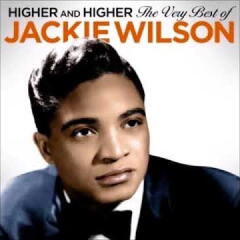
About the song
“(Your Love Keeps Lifting Me) Higher and Higher” was written by Gary Jackson and Carl Smith. It was recorded at Columbia Studio in Chicago in June 1967, with Jackie Wilson's vocals being recorded in a single take. The Carl Davis produced record was released as a single by Wilson in August 1967 and went to #1 on the Billboard R&B and #6 on the Hot 100 charts. The song was inducted into the Grammy Hall of Fame in 1999. It has been covered by several artists, with Rita Coolidge scoring a #2 on the Hot 100 in 1977. Bruce Springsteen and the E Street Band frequently use it in their live shows. A Jackie Wilson album titled Higher and Higher was released in November 1967 featuring the hit song. The album went to #26 on the Billboard R&B chart and #163 on the Billboard Top 200 Albums chart. Personnel on the record were: Jackie Wilson (lead vocals), James Jamerson (bass), Richard Allen, Maurice White (drums), Robert White (guitar), Johnny Griffith (keyboards), and The Andantes and Pat Lewis (background vocals).
Jackie Wilson (Jack Leroy Wilson Jr.) was an American soul singer and showman from Detroit. He was a tenor with a four-octave range. His voice and wild stage moves earned him the nickname “Mr. Excitement.” He released 25 studio albums, one live album, 10 compilation albums, and 78 singles. Wilson is a member of the Rock and Roll Hall of Fame, R&B Music Hall of Fame, and Michigan Rock and Roll Legends Hall of Fame. In September 1975, Wilson suffered a major heart attack on stage while singing his hit “Lonely Teardrops” at a Dick Clark rock and roll revue show. Lack of oxygen to the brain left him incapacitated and put in full-time care at the Medford Leas Retirement Center in Medford, NJ. Wilson died there in January 1984 at the age of 49. Motown founder Barry Gordy has stated that Wilson was “the greatest singer I've ever heard.”