IMO 2020, the mandate that ships plying most international waters slash their sulfur emissions starting in January of last year, was only another step in the International Maritime Organization’s long-running effort to ratchet down the shipping industry’s environmental impact. The group’s next focus, as you might expect, is reducing shippers’ carbon footprint — while no specific rules have been set, the IMO in 2018 laid out the goal of cutting ships’ carbon dioxide emissions by 40% from their 2008 levels by 2030. One way to move toward that goal would be fueling more ships with LNG, which emits 20-25% less CO2 than very low sulfur fuel oil. But as we discuss in today’s blog, shippers could augment those emission reductions by moving from the LNG trade’s traditional point-to-point model to optimization through cargo swapping.
In Part 1 of this series, we discussed the global push to decarbonize and the effects that it has been having on the U.S. LNG industry. Put simply, the long-term-contract, “take-or-pay” approach that helped provide financing for the first wave of liquefaction and LNG export facilities — mostly along the Gulf Coast — may need to be reworked for the second wave of projects now under development. Why? A number of factors, including COVID-19 and gas-versus-renewables competition, has made it much harder for buyers to predict how much LNG they will need 10, 15, or 20 years from now. Also, activists are now urging banks to restrict lending to projects that utilize fossil fuels. That may not prevent LNG projects from moving forward, but it does mean that new finance structures are likely to be needed in order for positive final investment decisions (FIDs) to take place.
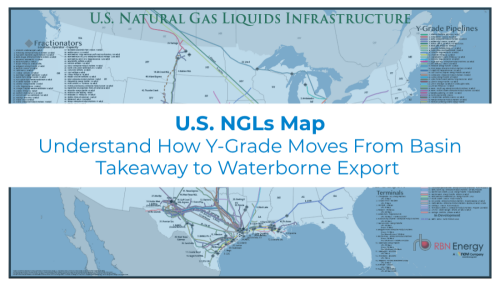
Visualize the infrastructure behind U.S. NGL movement.
The U.S. NGLs Map provides a comprehensive view of the transport, processing, and export networks moving NGLs across the U.S.
Today, we look at the future of LNG from a different angle, namely, what role the fuel might play in international shipping, particularly as the IMO moves toward implementing a new rule to reduce emissions of CO2 and other greenhouse gases (GHGs) by 2030. As we said a blog just before IMO 2020’s implementation, the IMO is a specialized agency of the United Nations that sets emissions and other rules for the 50,000-plus tankers, dry bulkers, container ships and other commercial vessels plying international waters. We also noted that, in anticipation of IMO 2020, many refineries had been reworking their facilities, operations, and crude slates to produce more high-value, low-sulfur products to help meet the new demand from shippers for rule-compliant bunker.
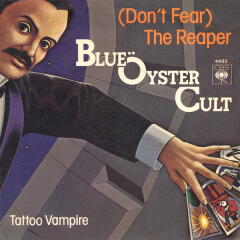
About the song
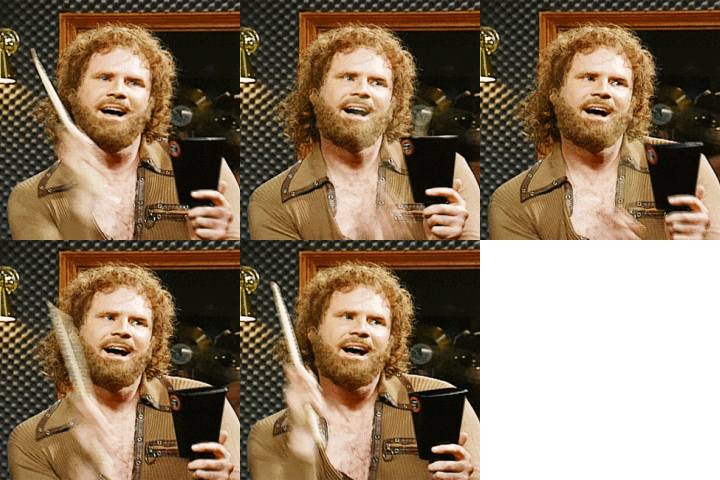
"(Don't Fear) The Reaper" was written by Donald "Buck Dharma" Roeser and appears as the third cut on side one of Blue Oyster Cult's fourth studio album, Agents of Fortune. Released in July 1976, the song went to #11 on the Billboard Hot 100 Singles chart. Personnel on the record were: Donald "Buck Dharma" Roeser (lead vocals, guitar), Eric Bloom (guitar, backing vocals), Allen Lanier (keyboards, guitar), Joe Bouchard (bass), and Albert Bouchard (drums, percussion, cowbell). The song was featured in a hilarious Saturday Night Live sketch in April 2000 entitled, "More Cowbell." Will Ferrell wrote the sketch, where he plays Gene Frenkle, an overweight cowbell player. Christopher Walken plays record producer Bruce Dickinson, who is overseeing the recording of "(Don't Fear) The Reaper." He tells everyone in the studio that "I got a fever, and the only prescription is more cowbell." Stephen King has stated that the song was the inspiration for his novel, The Stand. Live versions of the song have appeared on Blue Oyster Cult's 1978 album, Some Enchanted Evening, 1982's Extraterrestrial Live, 1991's Live 1976, and 2002's A Long Day's Night.
Agents of Fortune was recorded at The Record Plant in New York City in 1975-76, with Murray Krugman, Sandy Pearlman, and David Lucas producing. Released in May 1976, the LP went to #29 on the Billboard Top 200 Albums chart. It has been certified Platinum by the Recording Industry Association of America. Two singles were released from the album.
Blue Oyster Cult was formed in Stony Brook, NY, in 1967 under the name Soft White Underbelly. The group changed its name to Blue Oyster Cult in 1971. They have released 15 studio albums, seven live albums, 21 compilation albums, one soundtrack album, and 32 singles, and have sold more than 25 million records worldwide. Twenty-one members have passed through the band since its formation. Original members Eric Bloom and Donald "Buck Dharma" Roeser still tour as Blue Oyster Cult. Brothers Joe and Albert Bouchard now tour as Blue Coupe, a band that includes Alice Cooper bassist Dennis Dunaway. Albert Bouchard just finished recording the drums for punk rock pioneer The Dictators' upcoming album. Allen Lanier died in 2013. Blue Oyster Cult released their latest album, The Symbol Remains, in October 2020. They start touring again at the end of May 2021.