The next four years will reshape the future of North America’s natural gas market. LNG exports are set to surge as new terminals across the U.S., Canada and Mexico come online, causing ripple effects through global energy trade and fueling new demand from Europe and Asia. At the same time, the rise of AI and the data centers powering it are contributing to growth in electricity demand, much of which will be met by natural gas. And all of this growing demand is predicated on increasing supplies of affordable natural gas and the midstream infrastructure to get it to market. In today’s RBN blog, we preview our upcoming GasCon 2026 conference, where we’ll bring together expert analysis and leading executives from the upstream, midstream and downstream to show how all the pieces fit together.

The Natural Gas Master Class is a one-day online event focusing on understanding flow analysis, interpreting pipeline data and forecasting future flows. This course is designed to equip you with the knowledge and skills to effectively analyze the complexities of natural gas markets, flow analysis, and pipeline modeling. Join us online
October 21 | Online
Warning: Today’s blog is a blatant advertorial for our upcoming GasCon 2026 conference, to be held on Wednesday, February 25, in Houston. It’s a one-day deep dive into everything shaping the North American natural gas market.
The North American natural gas market began 2026 in high gear. Output in the Lower 48 (see Figure 1 below) reached 110.1 Bcf on January 9, not far from the record 112.6 Bcf set on November 30, 2025, according to RBN’s NATGAS Billboard. Although production fell to 86.6 Bcf on January 25, a result of freeze-offs and weather-related disruptions caused by Winter Storm Fern, output rebounded to 104 Bcf by January 30. To put those figures in context, that’s about double where Lower 48 production was before the Shale Revolution — it averaged 52.8 Bcf/d in 2007 .
About the song
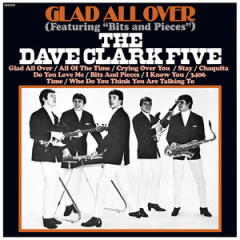
“Bits and Pieces,” written by Dave Clark and Mike Smith, appears as the first song on side two of The Dave Clark Five’s debut American album, Glad All Over. The up-tempo raver also incorporates elements of Jamaican bluebeat into it, perhaps the first example of it in an international hit record. (For a point of reference, check out Byron Lee and the Dragonaires’ 1961 record, “Dimples,” with its emphasis on the upbeat.) The DC5 song also introduces “the stomp,” the recorded sound of feet stomping along with the bass drum to accentuate the bottom end of the recording. The Supremes would follow with this technique on “Where Did Our Love Go,” and so would The Honeycombs on “Have I the Right,” both released in June 1964. The Honeycombs’ producer, the eccentric Joe Meeks, went to extremes and recorded people stomping in boots on the staircase of his recording studio on Holloway Road in London. “Bits and Pieces” was released as a single in March 1964 and went to #4 on the Billboard Hot 100 Singles chart. Personnel on the record were: Dave Clark (backing vocals, percussion), Mike Smith (lead vocals, Vox organ), Lenny Davidson (guitar, backing vocals), Rick Huxley (bass, backing vocals), Denis Payton (saxophones, backing vocals) and Bobby Graham (drums).
The album, Glad All Over, was produced by Dave Clark and released in the U.S. in March 1964. It went to #3 on the Billboard 200 Albums chart and has been certified Gold by the Recording Industry Association of America. Three hit singles were released from the LP.
The Dave Clark Five (also known as the DC5) were an English rock and roll beat band formed in Tottenham, London, in 1958 by entrepreneur, songwriter, drummer and background vocalist Dave Clark. After going through a rotating cast of members, Clark, along with lead vocalist/keyboardist Mike Smith, guitarist Lenny Davidson, bassist Rick Huxley and saxophonist Denis Payton, became the core band. Clark was a savvy businessman, managing and booking the group, writing or co-writing most of their songs, producing their music, and retaining control of their masters and publishing. He was astute enough to hire the #1 session drummer in London, Bobby Graham, to execute Clark’s drum arrangements to perfection on all their singles. They released 20 studio albums, 12 compilation albums, three EPs and 47 singles and were inducted into the Rock and Roll Hall of Fame in March 2008. The group officially disbanded in 1970. Denis Payton died in Dorset in December 2006 at 63. Mike Smith died in Aylesbury in February 2008 at 64. Rick Huxley died in Buckinghamshire in February 2013 at 72. Lenny Davidson owns an antique store and teaches guitar lessons in Buckinghamshire. Dave Clark is a successful entrepreneur and multi-millionaire who lives in West London.
"About the Song" -- written by Mickey McMahan , RBN Director of Musicology