Limetree Bay Refining’s plans to restart the former Hovensa plant in St. Croix, U.S. Virgin Islands, at the end of 2019 will add significant refining capacity to the North American stack, helping to offset the loss this year of the 335-Mb/d Philadelphia Energy Solutions plant in Pennsylvania. Limetree Bay is also poised to fill a void in Caribbean refining that’s been left by Venezuela’s economic collapse as well as the International Maritime Organization’s 2020 changes to the bunker fuel market. But the facility is not without its challenges, from high fuel costs and stiff competition from Gulf Coast refineries to tropical storms. Today, we conclude an analysis of the operation and potential markets for the refinery.
This blog is based on research from Morningstar Commodities and Energy. Click here for a copy.
To truly understand Cushing — what it does and how it works — you need to know the hub’s assets and how they fit together. RBN’s Cushing Crude Oil Playbook provides the first one-stop, comprehensive guide to the hub’s assets.
In Part 1, we recounted the history of the former Hovensa plant in St. Croix that was once the world’s largest refinery. New owner Limetree Bay, backed by a consortium of private equity groups led by ArcLight Capital and trader Freepoint Commodities, aims to restart the plant with 200 Mb/d of capacity by the end of 2019. The refinery is ideally situated to fill the void in the Caribbean refining market left by the meltdown of Venezuelan national oil company PDVSA. Subject to U.S. sanctions since the start of the year, PDVSA no longer supplies crude and refined products to its neighbors — leaving the Caribbean market reliant on U.S imports. Limetree also hopes to tap into Central and South American markets –– particularly Mexico –– that are currently supplied by exports from U.S. Gulf Coast refineries. Limetree has reduced its exposure to market risk by entering into a long-term processing agreement with BP Trading under which the latter supplies crude and offtakes product for a fixed margin. This time we look at the refinery’s prospects for sales to the U.S. East Coast and the market opportunities created by the IMO 2020 regulations.
U.S. East Coast Market
Limetree Bay represents a possible new source of refined product supply into the U.S. East Coast market, defined by the Department of Energy (DOE) as Petroleum Administration for Defense District 1 (PADD 1). This region is net short of refined products due to poor refining margins that have led to the closure of several plants in the past decade, the latest being the 335-Mb/d Philadelphia Energy Solutions (PES) refinery. Apart from local refineries that supplied 16% of gasoline and 24% of diesel demand in PADD 1 in 2018, according to the Energy Information Administration (EIA), another 50% of gasoline and 56% of diesel needs were supplied by pipeline systems like Colonial from the Gulf Coast, or PADD 3. The balance of product — 34% of gasoline and 20% of diesel — came from overseas imports and tanker and barge shipments from the Gulf Coast. That meant PADD 1 imported an average 146 Mb/d of distillate and 586 Mb/d of gasoline in 2018, according to EIA, as well as shipping in another 119 Mb/d of distillate and 460 Mb/d of gasoline by barge and tanker from the Gulf Coast (Figure 1). Together, these net inbound shipments to the East Coast represent over 1 MMb/d of gasoline and 265 Mb/d of distillate.
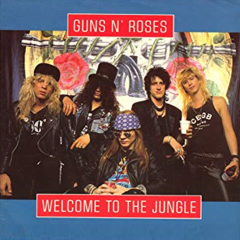
About the song
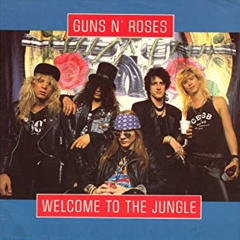
"Welcome to the Jungle" was written by Guns N' Roses, and was the first cut and second single from the band’s 1987 debut album, Appetite for Destruction. The video that accompanied the song caused controversy when initially submitted to MTV, but due to popular demand by viewers quickly went into regular rotation. The single was released in October 1987 and went to #7 on the Billboard Hot 100 chart. In 2009, VH1 named it "the greatest hard rock song of all time."
Appetite for Destruction was recorded between January and June 1987 at four southern California locales: Rumbo Studios in Canoga Park, Take One Studio in Burbank, The Record Plant in Los Angeles, and Can Am Studio in Tarzana, with Mike Clink producing. It was released in July 1987 and went to #1 on the Billboard Top 200 Albums chart. It has been certified 18x Platinum by the Recording Industry Association of America. The original artwork for the album cover, and the inspiration for the title of the record, came from Los Angeles artist Robert Williams, and his painting, “Appetite for Destruction.” Personnel on the record were: W. Axl Rose (lead vocals), Slash (lead guitar, backing vocals), Duff McKagan (bass, backing vocals), Izzy Stradlin (rhythm guitar, backing vocals) and Steven Adler (drums, percussion).
Guns N' Roses is an American hard rock band formed in Los Angeles in 1985. They have made six studio albums, one live album, two compilation albums and 19 singles. They have sold over 100 million records worldwide. The band has won five American Music Awards, four MTV Video Music Awards, and was inducted into the Rock and Roll Hall of Fame in 2012. Although the group has not recorded or released any new material for over a decade, Guns N' Roses still tours with original members Rose, Slash and McKagan, accompanied by touring musicians, playing songs mainly from their early releases. They are currently on the road in the U.S. supporting their extended “Not In This Lifetime Tour” through November of this year.