The Caribbean is strategically located at the crossroads of international trade routes between the Northern and Southern hemispheres, as well as the Atlantic and Pacific oceans. It has traditionally attracted oil trading, blending, and refining activity to meet the needs of local and international markets. Lately, the meltdown of Venezuelan national oil company Petróleos de Venezuela SA (PDVSA) — previously a dominant player in the region — has left refineries and storage terminals underutilized and starved of investment. U.S. Gulf Coast refineries have partially filled the gap by increasing product exports to the region, but an opportunity now exists for private investment to fill the refining and storage void left by PDVSA, and also to meet new demand for low-sulfur bunker fuel arising from stricter International Maritime Organization shipping regulations, which will come into effect in January 2020. Today, we review the impact of the PDVSA meltdown and new investment projects being pursued.
PDVSA Meltdown
Two years ago, in A Pirate Looks At Storage?, we described the nine operational crude and refined product terminals in the Caribbean islands, whose combined nameplate storage capacity tops 140 MMbbl. At that time, the largest tenant for these storage facilities was PDVSA, which used the tanks for crude storage, blending, bulk building, trans-shipment, and refining. Fast forward to today and much of that activity has been decimated by the company’s financial meltdown, a disaster tied to lower production, rising debt, pursuit of its physical assets in the islands by ConocoPhillips (as liens against an unpaid $2 billion arbitration award), and U.S. sanctions restricting the PDVSA’s flexibility. Venezuela’s oil production continues to plunge — it’s down by more than 900 Mb/d in the past year to 1.36 MMb/d in May 2018, according to a Platts survey.
Join Backstage Pass, your gateway to exclusive industry insights, connections, and resources across energy markets. Gain direct access to RBN's extensive archive covering crude oil, NGLs, LNG, natural gas, refined products, renewables, and energy transition.
In addition to oil storage terminals, the Caribbean also boasts 943 Mb/d of nameplate refining capacity — at least on paper. However, much of that capacity relies on PDVSA for feedstock and has faced shortages as Venezuela’s crude output has declined. PDVSA’s interests in refineries in Cuba (the 65-Mb/d Cienfuegos plant) and Jamaica (the 35-Mb/d Petrojam Kingston plant) were taken over by their respective governments during 2017, in frustration at a lack of investment. The government of the Island of Curacao (part of the Kingdom of the Netherlands, and located 60 miles north of Venezuela) is searching for new investors to replace PDVSA, whose lease over its 335 Mb/d Isla refinery ends in December 2019. The refinery processed a paltry 29 Mb/d in June 2018, owing to PDVSA’s failure to supply crude and maintain the facility. A 2016 agreement between the government of Aruba (another nearby Dutch island) and Citgo (PDVSA’s U.S. subsidiary) promised a major upgrade investment and restart by 2018 of that island’s 235-Mb/d refinery, previously shuttered in 2012. That investment has not materialized, leaving Aruba searching for alternative supplies and investors. In June 2018, PDVSA suspended subsidized shipments of crude and products to 11 Caribbean nations under its 2005 Petrocaribe Agreement, choosing only to continue supporting select countries, including Cuba.
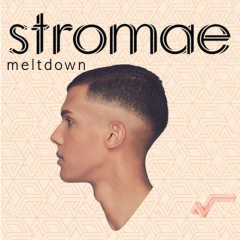
About the song
"Meltdown" is a song by Belgian artist Stromae featuring vocals from New Zealand singer Lorde, American hip hop artist Pusha T, American rapper Q-Tip and indie rock band Haim. Written by Stromae, Lorde, Joel Little, Q-Tip, Terrence Thornton, Este Haim, Danielle Haim and Alana Haim, the song was released in November 2014 as the opening track on the soundtrack album to the hit movie “The Hunger Games: Mockingjay, Part 1.” The tune went to #1 on the charts in Stromae's native country of Belgium.
Stromae (real name, Paul Van Haver), born to a Rwandan father and Belgian mother, is a musician, rapper, singer and songwriter. He is well-known in Europe and has sold more than 8.5 million records worldwide.