When fully loaded, a Very Large Crude Carrier (VLCC) sits so low in the water that it almost resembles an alligator swimming along the surface of a lagoon. Bearing the weight of 2 MMbbl of crude oil, plus ballast, fuel, crew, and provisions — not to mention the ship itself — two-thirds of an oil-laden VLCC is literally out of sight. You could say the same about the development of crude export terminal projects along the Gulf Coast: not much to see, maybe, especially during the disturbingly enduring COVID-19 era, but a lot is happening under the surface. In today’s blog, we discuss the status of onshore and offshore projects aimed at streamlining the shipment of U.S. crude oil to overseas buyers.

Join Backstage Pass, your gateway to exclusive industry insights, connections, and resources across energy markets. Gain direct access to RBN's extensive archive covering crude oil, NGLs, LNG, natural gas, refined products, renewables, and energy transition.
Considering all that’s been going in the world — and in the oil-and-gas part of it — over the past year and a half, U.S. crude oil exports have fared pretty well. While the pandemic and COVID-related lockdowns crushed demand for refined products and spurred a quick rollback in crude oil production in the spring of 2020, oil exports out of Gulf Coast terminals held relatively steady through the balance of last year and the first eight months of 2021. According to RBN’s weekly Crude Voyager report, terminals in Texas and Louisiana exported a record 1.1 billion bbl of crude in 2020, an average of just over 3 MMb/d and almost 0.5 MMb/d more than in 2019 (stacked colored bars in Figure 1). So far in 2021, export volumes have been near 3 MMb/d every month except February, when the Deep Freeze shut in a lot of Permian production, disrupted Texas pipeline flows, and trimmed exports to only 2.3 MMb/d.
Throughout 2020-21, Corpus Christi-area terminals have continued to account for the largest share of U.S. crude oil exports (yellow bar segments). So far this year, Corpus loadings have averaged about 1.6 MMb/d — twice the 800 Mb/d or so being shipped out of Houston-area terminals (green bar segments). In the Corpus area, Moda Midstream’s Ingleside terminal — soon to be acquired by Enbridge, as we discussed in a blog last week — has been the stand-out, loading an average of 665 Mb/d in the first eight months of 2021. Louisiana terminals as a whole have been exporting just under 300 Mb/d (orange bar segments), with the Louisiana Offshore Oil Port (LOOP) accounting for almost 70% of the state’s volumes. The Beaumont, TX, area has averaged about 160 Mb/d this year (blue bar segments), but its export volumes have picked up in recent weeks, likely due to recently enhanced pipeline connectivity from the Cushing, OK, hub.
About the song
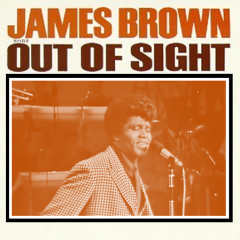
"Out Of Sight" was written by James Brown under the pseudonym "Ted Wright," and was the third single he recorded for Smash Records during his contract dispute with his main label, King Records. Recorded in May 1964 and released in July the same year, the single went to #24 on the Billboard Hot 100 Singles chart. When the courts ruled in his label dispute that Brown could not record for Smash Records again, this would be his last recording for over a year.
"Out of Sight" was one of Brown’s first recordings to feature Maceo Parker on baritone sax. The song was later featured on an album King Records cobbled together and released in 1968, called James Brown Sings Out of Sight. Personnel on the record were: James Brown (lead vocals), McKinley Johnson, Ron Tooley, Robert Knight, Joe Dupars (trumpet), Wilmer Milton (trombone), Eldee Williams, St. Clair Pinckney, Al Clark (tenor sax), Maceo Parker (baritone sax), Lucas Gonder, Bobby Byrd (organ), Les Buie (guitar), Bernard Odum (bass), and Melvin Parker (drums).
James Brown was an American singer, songwriter, musician, dancer, record producer, and band leader. He began his career as a gospel singer in Toccoa, GA, but came to national attention in the late 1950s as the lead singer for The Famous Flames. Building his reputation in the 1960s as a dynamic live act, he helped invent what would later be called funk music, with its interlocking rhythms that made people want to dance. Brown released 59 studio albums, 15 live albums, 49 compilation albums, two soundtrack albums, and 144 singles. He is a member of the Rock and Roll Hall of Fame, Rhythm and Blues Hall of Fame, UK Music Hall of Fame, and Songwriters Hall of Fame. Brown was a recipient of Kennedy Center Honors and a Grammy Lifetime Achievement Award. There is a life-size bronze statue of Brown on Broad Street in his hometown of Augusta. Brown died in December 2006 at the age of 73.