For the past, year many shale oil producers have defied the expectations of many and kept output at or near to record levels in the face of falling oil prices and much tougher economics. Improvements in productivity, cost cutting and a concentration on “sweet spot” wells that generate high initial production (IP) rates have all helped cash strapped producers survive. But with oil prices so far in 2016 stuck in the $35/Bbl and lower range and with the worldwide crude storage glut still weighing on the market – producers are finally pulling back. Today we look at how increased pressure on North Dakota producers is putting the brakes on Bakken crude production.
In December 2015, crude production in North Dakota Bakken fell by 2.5% to 1,152 Mb/d (from 1,182 Mb/d in November). That December output is down 6% from the record 1,227 Mb/d produced a year earlier in December 2014. Lynn Helms – Director of the North Dakota Industrial Commission (NDIC) Department of Mineral Resources commented in a February 2016 press conference that the December 2015 drop in production was the first significant decline in North Dakota crude output not explained by other factors such as weather. A number of signs point to the decline in production continuing during the rest of 2016 unless there is an extended oil price recovery. For a start, the number of new permits to drill wells in North Dakota is at a seven year low – indicating a low appetite for drilling (more on that in a minute). Second, there were 1183 inactive wells in the state in December - about 30% above normal for this time of year. The operators have essentially abandoned these inactive wells – usually because they are losing money. Many of these inactive wells are older and had very low production rates - less than 35 b/d. Such older wells are known as “stripper” wells and their costs are long ago written off – so operators usually keep them running unless transport and maintenance costs exceed the value of the crude – i.e. prices get too low. A third indicator of declining producer interest in the Bakken is the large number of producing wells in North Dakota currently being transferred (sold) by one operator to another – 697 wells as of February 17, 2016 according to Helms. Some large producers such as Occidental Petroleum that is selling 346 wells - are leaving the North Dakota Bakken oil patch altogether. Others that are staying in the Bakken have sold off wells to other operators to raise cash – including Whiting Petroleum Corp (the largest Bakken producer – selling 331 wells) and EOG Resources, grandfather of the crude-by-rail phenomenon.
The strongest indicators of a slowdown in Bakken production come in the reduction in drilling rigs operating in North Dakota and a parallel decline in the number of well completions. We’ll look at the rig count first then get to completions. As of March 8, 2016 the rig count in North Dakota stood at 33 – down 85% from the all time high (218) in May 2012. The green shaded area in Figure #1 shows the North Dakota rig count since January 2013 (right axis). The number of rigs operating hovered between 180 and 195 from January 2013 to December 2014 before dropping off a cliff from January 2015 onwards. By the end of 2015 the average rig count was down to 64 and the number fell to an average of 52 in January 2016. The NDIC has not released the February average rig count yet – but their daily count was down to 35 at the end of February. Just 16 producers operated those 35 rigs with only eight companies operating more than one rig – headed by ExxonMobil affiliate XTO who still had 5 rigs and followed by Continental Resources, Hess and Conoco Phillips running 4 each. In the past week XTO and Hess have each dropped one more rig.
About the song
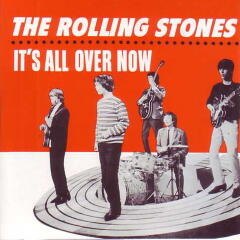
"It's All Over Now" was written by Bobby and Shirley Womack. It was first released in June 1964 by The Valentinos, which featured Bobby Womack, and went to #94 on the Billboard Hot 100 Singles chart. After hearing The Valentinos’ version on an advanced copy that New York City DJ “Murray the K” played for them, The Rolling Stones recorded their version nine days later at Chess Studios in Chicago with Andrew Loog Oldham producing. Releasing their version only 16 days after recording it in June 1964, the song went to #1 on the UK Singles chart and #26 on the Billboard Hot 100. The song would later appear as the sixth song on side one of The Rolling Stones' second American studio album, 12 x 5. Personnel on the record were: Mick Jagger (lead vocals), Keith Richards (lead guitar, backing vocals), Brian Jones (12-string guitar), Bill Wyman (bass), and Charlie Watts (drums).
12 x 5 was an expanded version of The Rolling Stones' British EP, Five by Five, geared for the American market. Produced by Andrew Loog Oldham, it was released in October 1964 and went to #3 on the Billboard Top 200 Albums chart. Two charting singles were included on the album. It has been certified Gold by the Recording Industry Association of America.
The Rolling Stones are an English rock band formed in London in 1962 by Mick Jagger, Keith Richards, Brian Jones, Bill Wyman, and Charlie Watts. Jones left the band one month before his death in July 1969. He was replaced by Mick Taylor, who left the band to be replaced by Ronnie Wood in 1974. Bill Wyman left the band in 1993, and Darryl Jones has been their bassist since that time. The Rolling Stones have released 30 studio albums, 33 live albums, 29 compilation albums, three EPs, and 121 singles. They have won one Billboard Music Award, four Grammy Awards, seven Grammy Hall of Fame Awards, three MTV Video Music Awards, and two World Music Awards. The Rolling Stones were inducted into the Rock and Roll Hall of Fame in 1989. They still record and tour.