Permian natural gas markets have never been more interesting, if you ask us. Sure, there are no negative prices at the Waha hub these days, and the triple-digit prices produced by Winter Storm Uri are starting to fade in the rear view. But there’s plenty of action ahead for Permian gas this year and next. For starters, sometime in the next few weeks the 2.0-Bcf/d Whistler Pipeline is scheduled to begin moving natural gas from the Permian to South Texas, further enhancing takeaway options for the basin’s continually growing supply of gas. That’s good news, considering Permian gas production is at record highs and set to grow to over 14 Bcf/d by the end of 2022. Speaking of records, gas exports from the Waha Hub to Mexico have never been higher and should increase further this summer, as power demand increases and a new pipeline across the border is expected to come online. Topping all that off is the recent news that the Permian will soon see a major gas storage facility start up right in the middle of the Waha hub. The latter is the focus of today’s blog, in which we detail the latest addition to the Permian gas infrastructure puzzle.

The Natural Gas Master Class is a one-day online event focusing on understanding flow analysis, interpreting pipeline data and forecasting future flows. This course is designed to equip you with the knowledge and skills to effectively analyze the complexities of natural gas markets, flow analysis, and pipeline modeling. Join us online
October 21 | Online
It’s been an eventful last year for the Permian, to say the least. About 12 months ago, producers in the basin were sitting on the edge of their seats, holding their breath, and shutting in a significant portion of Permian production while crude oil prices languished after going negative in April 2020. As if that weren’t wild enough, the Permian then had to slash its way through the trouble created by Winter Storm Uri back in February, when frigid temperatures and widespread power outages knocked off far more production than was curtailed during the spring of 2020. We won’t rehash all those details here today, as we just covered them in Crazy – A Year Like No Other, but it’s safe to say that the Permian should be a more stable place to operate in the weeks ahead (knock on wood). However, that doesn’t mean it will be boring — far from it! In fact, in the midst of Uri’s insanity, the latest gas infrastructure development in the Permian was announced, when Enstor agreed to sell its Waha Gas Storage assets to a newly formed joint venture entity, Waha Storage LLC. The new company is jointly owned by Whistler Pipeline LLC (“Whistler”) and Delaware Basin Residue, LLC (“Agua Blanca”). Agua Blanca is a joint venture between MPLX LP (NYSE: MPLX) and WhiteWater Midstream. Whistler is a joint venture between MPLX LP (NYSE: MPLX), WhiteWater Midstream, and a joint venture between affiliates of West Texas Gas, Inc. and Stonepeak Infrastructure Partners. Though it might have been lost in the news of $200/MMBtu prices at Waha back in February, we sense that this latest announcement has been met with an elevated level of interest by Permian gas marketers. Let’s take a look at the project’s details.
About the song
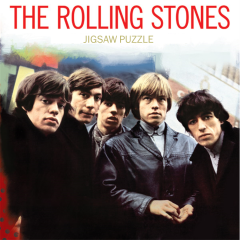
"Jigsaw Puzzle" was written by Mick Jagger and Keith Richards and appears as the fifth cut on side one of The Rolling Stones' 10th studio album, Beggars Banquet. Rolling Stone magazine called the song "a country-rock blast of Highway 61 Revisited surrealism" –– a reference to Bob Dylan's classic 1965 album. Personnel on the recording were: Mick Jagger (lead vocals, acoustic guitar), Keith Richards (electric slide guitar), Brian Jones (Mellotron), Bill Wyman (bass), Charlie Watts (drums), and Nicky Hopkins (piano). The Stones have never performed the song live.
Beggars Banquet was recorded between March and July 1968 at Olympic Sound in London and Sunset Sound in Los Angeles, with Jimmy Miler producing. It was released in December 1968 and went to #5 on the Billboard Top 200 Albums chart. The LP has been certified Platinum by the Recording Industry Association of America. One single, "Street Fighting Man," was released from the album in August 1968 and went to #48 on the Billboard Hot 100 Singles chart.
The Rolling Stones are an English rock band formed in London in 1962. Eight members have passed through the band since its inception. Founding members Mick Jagger, Keith Richards, and Charlie Watts are still in the band today. Brian Jones died in 1969. His replacement was Mick Taylor, who was with the band until 1974, when Ronnie Wood joined. Bill Wyman retired from the band in 1993. Darryl Jones has been The Stones' touring bass player since Wyman's retirement. The Rolling Stones have released 30 studio albums, 33 live albums, 29 compilation albums, three EPs, and 121 singles. They have sold more than 240 million records worldwide and have won one Billboard Music Award, 11 Grammy Awards, three MTV Video Music Awards, and two World Music Awards. The Stones were inducted into the Rock and Roll Hall of Fame in 1989 and the UK Music Hall of Fame in 2004. They continue to record and tour.