Prior to COVID, crude oil and natural gas production in the U.S. had been on a tear, surging in tandem in the years following the 2014-15 price meltdown. But then the pandemic decimated domestic demand, crushing prices. Predictably, producers cut back production, particularly in crude-focused basins, and it was widely expected that associated gas from those regions would suffer in proportion. But that didn’t happen. Gas volumes have dropped somewhat, but not nearly to the extent that crude did. Said another way, the ratio of gas production to oil production has risen — and that’s been true at both the total U.S. level and in the primary unconventional basins for oil production. In today’s blog, we will look at the factors driving the trend of higher gas-to-oil ratios.
The 2010s was an exhilarating time to be involved in the oil and gas industry, with both commodities (and NGLs too) experiencing unprecedented production growth. That timeframe can be divided, roughly down the middle, into two distinct periods of development before and after the mid-decade oil and gas price collapse. An awful lot of words were written at the time — by us included (see Summer in the City) — about the cost-cutting measures and productivity improvements producers developed that enabled production to surge once again when prices returned to a range economic for producers. Things really picked up steam in 2017 and, in the two-and-a-half years from June 2017 to the end of the decade, total U.S. crude production increased by 40% to a record 13 MMb/d (green arrow in left graph in Figure 1) and gross gas production increased 30% to 117 Bcf/d (green arrow in right graph). Those gains were driven, of course, by the major unconventional plays shown in Figure 1: the Anadarko (red layer), Bakken (purple layer), Eagle Ford (orange layer), Niobrara (light blue layer), and Permian (green layer) for crude (left graph), along with the Haynesville (yellow) and Marcellus/Utica in Appalachia (dark blue) for gas (right graph). The increases more than offset production declines in legacy basins (gray layers), though it bears mentioning for this conversation that conventional gas had been falling off faster than conventional oil production.
About the song
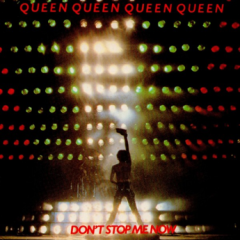
“Don’t Stop Me Now” was written by Freddie Mercury and appears as the sixth song on side two of Queen’s seventh studio album, Jazz. Recorded at Super Bear Studio in Berre-les-Alpes, France, in August 1978, the song was released as a single in January 1979. It reached #9 on the UK charts and went to #86 on the Billboard Hot 100 Singles chart. Due to its extensive use in advertisements, TV shows and films, "Don't Stop Me Now" has become one of Queen’s most popular songs over the years. Claimed by some to be the perfect “happy song,” some of us will always remember it, among other reasons, for the prominent scene in the classic zombie comedy Shaun of the Dead, where the protagonists pummel a zombie with pool cues to the beat of the song. The song has been certified 3X Platinum by the Recording Industry Association of America (RIAA) since its first release. Personnel on the record were: Freddie Mercury (lead vocals, piano), Brian May (guitar, backing vocals), Roger Taylor ( drums, backing vocals), and John Deacon (bass, backing vocals).
Jazz was produced by Roy Thomas Baker and recorded between July and October 1978 at Mountain in Montreux and Super Bear Studios in Berre-les-Alpes, France. Released in November 1978, the LP went to #6 on the Billboard Top 200 Albums chart. It has been certified 3X Platinum by the RIAA. Four singles were released from the album.
Queen is a British rock band formed in London in 1970 by singer Freddie Mercury, guitarist Brian May, drummer Roger Taylor and bassist John Deacon. May and Taylor had previously played together in the London-based rock band Smile. Queen has sold more than 250 million records worldwide and has released 15 studio albums, 10 live albums, 15 compilation albums, two soundtrack albums, two EPs, and 73 singles. The band has won four Brit Awards, four Ivor Novello Awards, a Grammy Award, and a Grammy Lifetime Achievement Award. They are members of the Rock and Roll Hall of Fame, Songwriters Hall of Fame and UK Music Hall of Fame. Brian May and Roger Taylor have continued to tour with supporting musicians as Queen. The band has featured both Paul Rodgers and Adam Lambert as their lead vocalist since the death of Freddie Mercury in 1991. Founding member John Deacon retired from the band in 1997. Queen, with Adam Lambert on lead vocals, last appeared live at five concert dates in Japan in February 2024.