Over the past year, we have witnessed a sort of slow-motion meltdown among the second wave of North American LNG export projects. Appetite for new LNG expansions was already waning due to oversupply even before the pandemic affected demand, but COVID-19 brought project developments to a standstill. Offtake agreements have expired, final investment decisions (FIDs) delayed, and projects have lost funding or been officially put on hold or even cancelled. Just one project, Sempra’s ECA LNG in Mexico, was able to reach an FID last year, and with the pandemic still raging, for a while it looked as if that would be the last project in North America to take FID in the foreseeable future. It’s abundantly clear that many more of the remaining proposed projects will be postponed indefinitely, and probably never be built at all. However, the news isn’t all bad. With the worst of COVID-19’s impacts on international gas demand appearing to be over and the ongoing extended run of high global gas prices, all eyes are back on the second-wave projects that are in various stages of pre-FID development. The pandemic may have forced a culling of the proposed projects, but those near the top now have a clearer path ahead. In fact, several projects could realistically achieve FID in the next few years. Today, we begin a short series providing an update on the second-wave projects.
As we’ve discussed extensively in the LNG Voyager report and recent blogs, 2021 is shaping up to be a stellar year for U.S. LNG. Prolonged high global gas prices and strong margins for U.S. cargoes are creating stable demand for the existing terminals, allowing them to operate at fully contracted capacity whenever operationally possible. Some U.S. facilities are potentially even producing additional cargoes for the spot market. As a result, outside of short-term maintenance periods, domestic feedgas demand is expected to remain relatively steady at around 11 Bcf/d — the amount needed for full utilization at the terminals — and is poised to head even higher later this year as Calcasieu Pass and Sabine Pass Train 6 come online (see Such Great Heights Pt. 2 for more on the commissioning and timing of those projects).
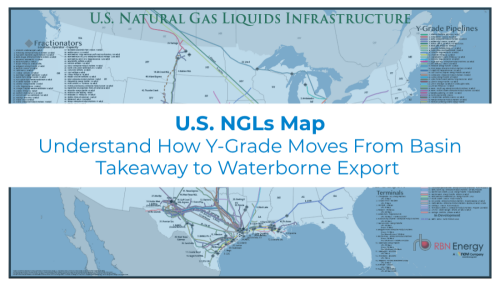
Visualize the infrastructure behind U.S. NGL movement.
The U.S. NGLs Map provides a comprehensive view of the transport, processing, and export networks moving NGLs across the U.S.
The fundamentals remain incredibly bullish. High prices are likely to persist into at least this winter. Apart from being great for existing U.S. terminals, the wild swing of the market from the uncertainty and sense of doom last summer to sustained high prices now has shown that perhaps the global market was not as oversupplied as previously thought. This is the longest and strongest bull run the global gas market has seen since 2018, and at that point, only 25.25 MMtpa of LNG export capacity was online in the U.S., compared with 75 MMtpa now. The past year has shown how quickly the market can swing from being oversupplied to being undersupplied, and that is bringing renewed interest in offtake agreements.
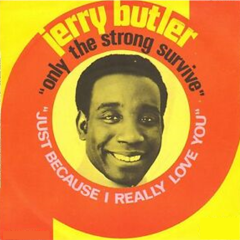
About the song
“Only the Strong Survive” was written by Jerry Butler, Kenny Gamble and Leon Huff. It was the third song on Butler’s 11th studio album, The Ice Man Cometh. It was released as a single in March 1969 and went to #1 on the Hot R&B Singles chart and #4 on the Billboard Hot 100 Singles chart. It was the most successful single of Butler’s career and it has been certified Gold by the Recording Industry Association of America. Artists such as Elvis Presley, Skeeter Davis, Billy Paul, and The Trammps have covered the song. Personnel on the record were: Jerry Butler (lead vocals), Curtis Mayfield (lead guitar), Norman Harris, Bobby Eli (guitar), Ronnie Baker (bass), Earl Young (drums), Leon Huff (piano) and Vince Montana (vibes).
The Ice Man Cometh was recorded between September 1967 and September 1968 at Bell Sound Studio in New York City and Cameo-Parkway Studios and Sigma Sound Studio in Philadelphia. Kenny Gamble and Leon Huff produced the record. Released in November 1968, it went to #2 on the R&B Album chart and #29 on the Billboard Top 200 Albums chart. Three singles were released from the album.
Jerry Butler is an American soul singer, songwriter, record producer, musician and retired politician. He was the original lead vocalist for The Impressions and was inducted with the R&B group into the Rock and Roll Hall of Fame in 1991. Since leaving the group in 1960 to pursue the career of a solo artist, Butler has had over 50 charting Billboard hits. He was inducted into the Rhythm and Blues Hall of Fame in 2015. From 1985 to 2018, he served as a commissioner for Cook County, Illinois. He has released 34 studio albums and 75 singles as a solo artist. Butler, 84, is now retired and lives in Chicago.