


The high-demand season for propane is just around the corner: crop drying, then winter heating demand. This is when propane marketers make most of their money; so under normal circumstances it’s a happy time, when all participants across the supply chain are making last-minute preparations for the season of peak propane demand. But this year is different. There is palpable concern in the market about the level of inventories available to meet demand, and the possibility that propane could be in short supply. How could this be? As we have covered many times in the RBN blogosphere, U.S. propane production is more than double domestic demand. So how could a shortage possibly happen? The answer is pretty simple: exports. The U.S. exports more of its propane production than it uses here at home. This year the domestic market needs more barrels, so all that needs to happen is for U.S. prices to increase enough to shut off exports, right? Wrong. Propane prices have been spiraling up all year, and August prices are higher than they’ve been since 2013. But exports are still running strong, and so far, inventories are not building fast enough. In today’s blog, we’ll look at the drivers behind this seeming market aberration and consider why the upcoming winter season looks like uncharted territory for propane marketers.
This blog is based on Rusty Braziel’s presentation to the National Propane Gas Association’s virtual conference, ”Preparing for Peak Demand 2021,” held on August 19, 2021. We have written several blogs on a potential inventory shortfall during the 2021-22 propane heating season, most recently Skyrockets in Flight, Higher, and Running on Empty. Through all of these blogs, our #1 concern has been consistent: What happens if we go into the winter season with low inventory levels and we hit a sustained period of very cold weather? As we see it, the propane market is at greater risk of that happening in the upcoming season than it’s been in a long time.
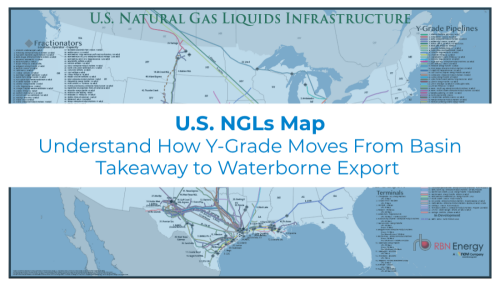
Visualize the infrastructure behind U.S. NGL movement.
The U.S. NGLs Map provides a comprehensive view of the transport, processing, and export networks moving NGLs across the U.S.
Ever since we first started wringing our hands over this year’s propane inventories, the pushback from some market observers has been equally consistent. Their basic thinking goes like this: “Not to worry. In a free, unconstrained market, price solves all problems. If we need the barrels here in the U.S., the price here will just rise high enough so that exports to overseas markets are no longer profitable. At that point, exports will dry up and everything will be fine.”
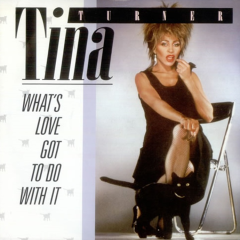
About the song
"What's Love Got to Do With It" was written by Terry Britten and Graham Lyle, and appears as the second song on Tina Turner's fifth solo album, Private Dancer. The song was released as a single in May 1984, and went to #1 on the Billboard Hot 100 Singles chart. At the time of its release, Turner, aged 44, became the oldest female solo artist to have a #1 record on the Hot 100 chart. The single sold over 1.5 million copies worldwide, and has been certified Gold by the Recording Industry Association of America (RIAA). In 2012, the song was inducted into the Grammy Hall of Fame. The name of the song was used as the title for the 1993 biopic based on Turner's life. Released in June 1993, the film starred Angela Bassett as Tina Turner, and Laurence Fishburne as Ike Turner. The film grossed over $56 million, and Bassett won the Golden Globe Award for Best Actress in a Motion Picture Comedy or Musical for her role in the film. Personnel on the record were: Tina Turner (lead vocals), Terry Britten (guitar, backing vocals), Nick Glennie-Smith (keyboards), Graham Jarvis (Oberheim DX), Bill Livsey (Yamaha DX7), and Tessa Niles (backing vocals).
Private Dancer was recorded at Farmyard, Mayfair, Wessex, Good Earth, Abbey Road, and CBS in England in 1983-84. Produced by Terry Brittan, Carter, Leon Chancler, Wilton Felder, Rupert Hine, Joe Sample, Greg Walsh, and Martyn Ware, the album was released in May 1984, and went to #1 on the Billboard R&B/Hip-Hop Albums, and #3 on the Billboard Top 200 Albums charts. It has been certified 5x Platinum by the RIAA.
Tina Turner (Anna Mae Bullock) is an American singer, songwriter, and actress. She initially rose to prominence as the lead singer of the Ike and Tina Turner Revue before launching her solo career in the late 1970s. As a part of the Ike and Tina Turner Review, she released 22 studio albums, eight live albums, 31 compilation albums, two soundtrack albums, and 70 singles. As a solo artist, she has released 10 studio albums, two live albums, six compilation albums, two soundtrack albums, and 72 singles. Turner has sold more than 100 million records worldwide, has won 12 Grammy Awards, and was inducted into the Rock and Roll Hall of Fame as part of the Ike and Tina Turner Review in 1991, and as a solo artist in 2021. She also received a Grammy Lifetime Achievement Award. Now 81, Turner is retired, and lives with her husband in Kusnacht, Switzerland.






Comments
Great article with the punchline being ' for every penny MB goes up the price in Europe or Asia goes up by the same so exports have held steady'
The follow up question is then, can this trend continue? European/Asian demand (especially in summer) is predominantly for the petchem industry and so is the assumption that propylene prices also keep going up to keep propane cracking margins intact?