In the stormiest market environment for crude oil in many years, it’s hard to find a spot where the sailing is smooth. If even-keel conditions exist anywhere in the oil-producing world today, it might be the offshore Gulf of Mexico, where producer decisions to invest in new platforms or subsea tiebacks are based on very long-term oil-price expectations and the production, once initiated, is steady. In the second half of the 2010s, Gulf producers significantly reduced the average breakeven prices needed to justify their most promising new investments — from more than $55/bbl back in 2015 to less than $35/bbl today. Given what’s happened to crude oil prices the past few days, however, it’s logical to wonder whether any of even the best prospective Gulf of Mexico projects will be sanctioned this year. Today, we discuss how cost-cutting and efficiency improvements have made the offshore Gulf a comparatively steady, growing base of U.S. crude oil production that so far has been less vulnerable than shale output to oil-price gyrations.

Canadian crude output is rising, requiring new export routes. As traditional pathways face constraints, the U.S. Rockies—especially the Guernsey, WY hub—are emerging as key corridors for moving Canadian heavy crude to downstream markets, including the Gulf Coast.
As we said last spring in Take a Look at Me Now, crude oil production in the federal offshore Gulf of Mexico is a topic that generally flies below the radar, unless there’s a major hurricane that causes a big, downward spike in output or a man-made disaster like the Macondo/Deepwater Horizon blowout in April 2010, which effectively halted drilling in the Gulf for more than a year. Crude production in the federal GOM dropped by ~500 Mb/d (to ~1.1 MMb/d) between March 2010 (the month before the blowout) and September 2011, and it took almost four years (until August 2015) for Gulf production to return to pre-Macondo levels. (All data is from the Energy Information Administration, or EIA.) And it took another year and a half — until February 2017 — for GOM output to top the all-time record of 1.75 MMb/d hit in September 2009 (see Don’t You Forget About Me). GOM production has continued rising since then, topping 2 MMb/d for the first time ever last August and hanging out in the ~1.9-to-2-MMb/d range ever since — see Figure 1.
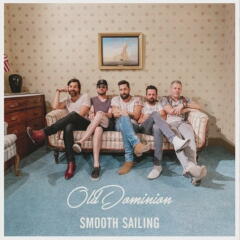
About the song
"Smooth Sailing" was written by Matthew Ramsey, Trevor Rosen, Brad Tursi and Jesse Frasure, and it appears as the second cut on Old Dominion's third studio album, Old Dominion. The album was recorded in Nashville, and produced by Shane McAnally. Released in October 2019, Old Dominion went to number nine on the Billboard Top 200 Albums chart. Three singles have been released so far from the album. "One Man Band," the second single from the album, went to #20 on the Billboard Hot 100 Singles chart, becoming the band's highest-charting single. Personnel on the album were: Matthew Ramsey (lead vocals), Trevor Rosen (guitar, keyboards), Whit Sellers (drums), Geoff Sprung (bass) and Brad Tursi (lead guitar).
Old Dominion is a country rock band formed in Nashville in 2007. The group was formed to showcase the songwriting talents of band members Ramsey, Rosen and Tursi, who had already made a name for themselves writing songs for many popular Nashville artists. The name "Old Dominion" was chosen because it's a nickname for Virginia, the state where four of the band members were originally from. They have released three studio albums, two EPs and 10 singles. They have won three Academy of Country Music Awards and one Country Music Association Award. The band still records.