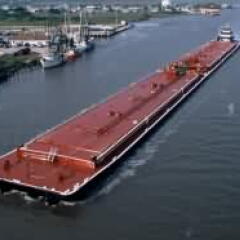
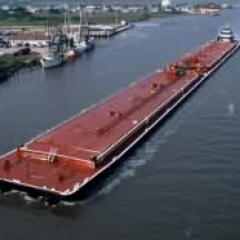
Tank barge utilization rates in US coastal and inland waterways are running at 80 to 90 percent of capacity this year. Those are really good numbers.The logistic challenges raised by transporting growing US domestic onshore crude production to refineries on the East Coast and in the Gulf Coast Region have led to greater tank barge utilization. These vessels could also soon be moving crude down the West Coast from Washington State to California. Today we dive into this niche waterborne market.
Barge distribution of refined petroleum products along inland rivers, intra coastal waterways, the east coast and the west coast is standard practice. In contrast, shipping crude oil by barge along these same routes is far less common. There have been some waterborne movements of crude oil to US terminals on tankers for years as well as transportation of crude from Alaska down the West Coast (although that trade is declining along with Alaskan North Slope crude production). We highlighted crude oil and refined products voyages in larger ocean going tankers in our blog about the restrictions that the Jones Act places on vessels used for shipment between US ports (see The Sea And Mr. Jones). There is however a new and growing business using smaller tank barges to get crude from producing regions or strategically located port rail terminals to refineries. The tank barges used for these shipments vary in size from large 185 MBbl vessels that operate in coastal waters to 10 MBbl barges used on the Upper Mississippi River.
The quantity of crude oil being transported by tank barge is currently hard to estimate. One problem is that the only crude movements the US Energy Information Administration (EIA) keeps track of are between Petroleum Administration Defense Districts (PADDs). Since a lot of waterborne crude traffic occurs within these PADDs not between them it is not captured. For example crude oil from North Dakota arriving by rail tank car at the Port of Albany, New York and transferred to barges for the trip down the Hudson River to East Coast ports is travelling by water within PADD 1 (the Northeast). Similarly barges transporting Eagle Ford crude from the South Texas port of Corpus Christi along the Gulf Coast to Houston and New Orleans are journeys within PADD 3.
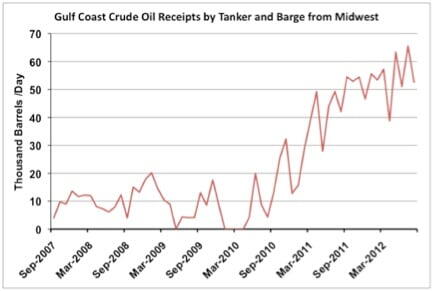
The EIA data does capture one crude by water transfer and that is between the Midwest (PADD 2) and the Gulf Coast (PADD 3). The chart below shows daily crude shipments by water between PADD 2 and PADD 3 started to increase significantly two years ago. During the past two years the volume surged 400 percent from 13 Mb/d in September 2010 to 53 Mb/d in August 2012. Although the EIA data does not provide a detailed breakdown, we can surmise that this crude is mostly travelling down the Illinois and Mississippi rivers into PADD 3. The crude is probably coming from North Dakota by train and being transferred to barges in St. Louis or points further north. We have also heard that Canadian crude has travelled from the Midwest down the Mississippi and that crude is being shipped from Tulsa, OK (Port of Catoosa) down the Arkansas River to the Gulf. These crude volumes being shipped by barge are not huge, but 50 Mb/d does represent about 7 percent of current Bakken production (728 Mb/d) or about 14 percent of the volume transported out of North Dakota by rail (~340 Mb/d).
About the song
Elvis Costello’s “Good Year For the Roses” was released in September 1981