With Alberta’s bitumen production rising to record levels of late, finding more ways to export this molasses-like heavy oil has become more important than ever. In early 2020, Gibson Energy and US Development Group embarked on the construction of a diluent recovery unit in Hardisty, AB, to greatly reduce the need for diluent and retain more of it for reuse. With the unit’s commercial start-up at the end of 2021, another unique pathway for transporting Canadian bitumen to the U.S. Gulf Coast — and, possibly, overseas markets — has become a reality. In today’s RBN blog, we provide an update on this venture and discuss where it might lead next.

Canadian crude output is rising, requiring new export routes. As traditional pathways face constraints, the U.S. Rockies—especially the Guernsey, WY hub—are emerging as key corridors for moving Canadian heavy crude to downstream markets, including the Gulf Coast.
The production of bitumen in Alberta’s vast oil sands continues to increase. Shipping all of that high-viscosity material requires blending with diluent, an extra-light hydrocarbon, with the resulting mix shipped in pipelines (usually referred to as dilbit) or transported in rail cars (called railbit). With Alberta’s production of bitumen reaching a record high of just over 2 MMb/d in November 2021, demand for diluent simply keeps rising and there never seems to be enough of the stuff.
In Part 1, which we posted just over a year ago, we took a closer look at diluent and concluded that demand for it was going to rebound off 2020 COVID lows of about 550 Mb/d (dashed red oval in Figure 1) to more than 800 Mb/d by the end of 2021 (dashed green oval), as bitumen production recovered along with oil prices and oil demand. With Western Canada’s native supply of diluent in the form of field condensate and pentanes-plus (natural gasoline) only in the 400-Mb/d range and expected to grow only modestly, increasing volumes of imported diluent were going to be needed. U.S. exports of diluent to Canada are shipped north on the Pembina Pipelines-owned Cochin Pipeline and the Enbridge-owned Southern Lights Pipeline, both of which originate in the Chicago area. Upon arrival in Alberta these imports are added to local diluent supplies and then shipped on separate pipelines to the oil sands for blending with bitumen.
About the song
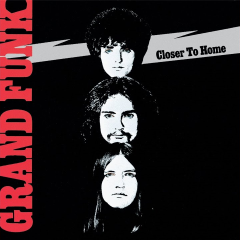
“I’m Your Captain (Closer to Home)” was written by Mark Farner and appears as the closing song on side two of Grand Funk Railroad’s third studio album, Closer to Home. Released as a single in July 1970, the song went to #22 on the Billboard Hot 100 Singles chart. An interesting point: the album cut of the song ran at 10:09, so the single was edited down to 5:31. After all of the progressive FM radio stations at the time started giving heavy airplay to the longer album version, the Top 40 AM stations followed suit. The song was very popular with U.S. troops serving in the Vietnam War at the time. Personnel on the record were: Mark Farner (lead vocals, guitar), Don Brewer (backing vocals, drums), Mel Schacher (bass), and Tommy Baker and the Cleveland Orchestra (orchestrations).
Closer to Home was recorded during March 1970 at Cleveland Recording Company in Cleveland, OH. Produced by Grand Funk Railroad's manager, Terry Knight, the album was released in June 1970. It went to #6 on the Billboard Top 200 Albums chart and has been certified Gold by the Recording Industry Association of America. Two singles were released from the LP.
Grand Funk Railroad, also referred to as “Grand Funk,” is an American hard rock band formed in Flint, MI, in 1969 by Mark Farner, Don Brewer, and Mel Schacher. The group has released 13 studio albums, four live albums, eight compilation albums, and 26 singles. Ten members have passed through the ranks of the band since its inception. Original members Don Brewer and Mel Schacher, along with Max Carl, Bruce Kulick, and Tim Cashion still tour as Grand Funk Railroad.