A small cadre of E&Ps active in the San Juan Basin’s Mancos Shale is anticipating breakout growth in natural gas production there if and when gas prices rise, and a well-known midstreamer is planning what could eventually be a high-capacity gas pipeline to the burgeoning Arizona market. Still to be determined, however, is whether the moonscape-like region along the New Mexico-Colorado border emerges as a mini-Haynesville or the optimism withers and dies under the hot desert sun. In today’s RBN blog, we discuss what producers have been saying about their results in — and hopes for — the Mancos and the plan by Tallgrass Energy to build a new, large-diameter pipeline out of the play.
The replay of our Fall 2026 School of Energy (September 9 & 10, Houston) is now available online!
Learn from RBN experts, participate in hands-on Excel modeling, connect with industry peers, and gain a stronger understanding of today's interconnected energy markets.
In our 2026 prognostications blog back in January, we said, “There’s been a lot of market buzz around a handful of niche gas plays that share a common profile: the gas is dry, wells are deeper than legacy development in the area, reservoirs are often overpressured, initial production (IP) rates are high, and economics look compelling.” We noted that in the San Juan Basin, “operators are ignoring legacy coalbed methane and targeting the deeper, horizontally drilled Mancos Shale. Our prognostication? These smaller ‘dry-gas islands’ ... are likely to command much more attention in 2026.”
In fact, there has been a lot of talk about the Mancos this year — and a major acquisition (following a big deal last year) — but it’s likely that the production breakout some are predicting may still be a year or two away (and maybe more).
First, a little history. Gas production in the San Juan Basin in northwestern New Mexico and southwestern Colorado has experienced a lot of ups and downs since the first commercially successful gas well was drilled there 105 years ago. In the years up to and just after World War II, the challenge was getting gas to market; the San Juan was hundreds of miles from large population centers and there was hardly any pipeline infrastructure in place. The completion of the El Paso Natural Gas (EPNG) pipeline to California in the early 1950s spurred a boom in conventional gas production in the basin, and (after a handful of mini-booms and mini-busts) there was a late-century surge in coalbed methane production from the uppermost Fruitland Formation (dark-brown layer on right side of Figure 1 below). By 2000, the San Juan Basin was among the U.S.’s top gas production areas, churning out nearly 4.5 Bcf/d of gross gas, or about 8% of total U.S. onshore production at the time.
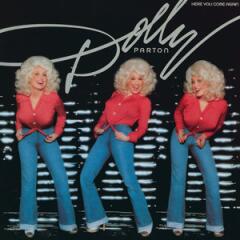
About the song
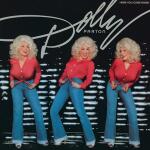
“Here You Come Again” was written by Barry Mann and Cynthia Weil and appears as the first song on side one of Dolly Parton’s 19th studio album of the same name. Parton, who wrote most of her own songs, was looking for a song to broaden her appeal to the pop market. Producer Gary Klein brought her the song, and she insisted on adding steel guitar on the recording for it to appeal to her loyal country audience. Released as a single in September 1977, it went to #1 on the Billboard Hot Country Singles chart and #3 on the Billboard Hot 100 Singles chart, making it her first significant pop crossover hit. It has been certified Platinum by the Recording Industry Association of America (RIAA). Personnel on the record were: Dolly Parton (lead, backing vocals), Al Perkins (pedal steel guitar), Dean Parks (lead guitar), David Foster (keyboards), David Hungate (bass), Ed Greene (drums), Jim Keltner (percussion), Jan Grassman, Myrna Matthews, Marti McCall, Zedrick Turnbough (backing vocals), and Harry Bluestone (string arrangements and orchestration).
The album Here You Come Again was recorded in June through August 1977 at Sound Lab in Los Angeles and produced by Gary Klein. Released in October 1977, it went to #1 on the Billboard Top Country, and #20 on the Billboard 200 Albums charts. It has been certified Platinum by the RIAA. Four singles were released from the LP.
Dolly Parton was an American singer, songwriter, musician, actress, philanthropist, and businesswoman. She began singing as a child, appearing on local radio and television programs in Eastern Tennessee. After moving to Nashville at 18, she signed her first record deal with Monument Records in 1964, which released her first single, “What Do You Think About Love,” in November 1964. She signed a publishing deal with Combine Publishing in February 1965 and began writing songs for other artists in addition to herself. She released 49 studio albums, nine live albums, six soundtrack albums, 222 compilation albums, and 199 singles and has sold more than 100 million records worldwide. Parton has won a Primetime Emmy Award, an American Music Award, four Billboard Awards, 10 CMA Awards, two Library of Congress Awards, and a MusicCares Person of the Year Award. She is a member of the Country Music Hall of Fame, Rock and Roll Hall of Fame, Gospel Music Hall of Fame and Grammy Hall of Fame, and has received Kennedy Center Honors. Parton was known for her charitable efforts, primarily through her Dollywood Foundation. Her literary program, Dolly Parton’s Imagination Library, provides free books to children and has sent more than 100 million books for free so far. Parton starred in eight motion pictures, including the hit “9 to 5,” as well as numerous television shows, including The Porter Wagoner Show, which ran from 1967 to 1974. We at Novi Labs are saddened by the death of Dolly Parton, who recently passed away in Nashville at the age of 80. We send our condolences to her family, friends, and fans.
"About the Song" -- written by Mickey McMahan , RBN Director of Musicology