LNG export projects looking to take a positive final investment decision (FID) need to sell a high proportion of their nameplate capacity under long-term contracts to ensure sufficient cash flows to underpin the project and obtain financing. U.S.-based projects (new and expansions) totaling more than 350 million tons per annum (MMtpa, 48.3 Bcf/) — against a current global market of 400 MMtpa (52.9 Bcf/d) — are vying for creditworthy offtakers from multiple markets in their pre-FID deliberations. The sense of urgency among project sponsors has been boosted by the Russia/Ukraine war and a potentially resurgent Chinese economy, both of which should promise a bright future for new projects. Plenty of those have reached FID in the last couple of years, but what is holding others back from taking the same step? In today’s RBN blog, we’ll look at some of the factors impacting those decisions and the long-term implications that flow from them.
Data from the International Group of Liquefied Natural Gas Importers (GIIGNL) shows that long-term sales and purchase agreements (SPAs) are in place for 73 MMtpa (9.7 Bcf/d) of LNG supply to be met by projects along the U.S. Gulf Coast. So far in 2023, three such projects have taken FID: NextDecade (17.6 MMtpa, 2.3 Bcf/d), Port Arthur (13 MMtpa, 1.7 Bcf/d), and Plaquemines Phase 2 (6.7 MMtpa, 0.9 Bcf/d) for a combined 37.3 MMtpa (4.9 Bcf/d), a significant amount in any year. But those three account for only 60% of the LNG signed up, with the rest divided among a number of pre-FID projects. As we discussed in Money’s Too Tight (To Mention), new LNG projects face a range of challenges in obtaining financing, especially where sponsors are looking to attract non-recourse financing, whereby loans are paid entirely from the project’s cash flow without appearing on the sponsor’s balance sheet. (For more on LNG projects under development, see our weekly LNG Voyager report.)

Visualize the infrastructure behind U.S. NGL movement.
The U.S. NGLs Map provides a comprehensive view of the transport, processing, and export networks moving NGLs across the U.S.
This has led project sponsors to look for greater equity investment, offering stakes in their project companies to third-party investors. A good example of a successful financing model is Port Arthur Phase 1. The finance structure of the project has the following elements:
- A $7 billion non-recourse loan provided by a group of 21 banks. This accounts for 54% of the total project cost of $13 billion.
- Sale of a 42%, non-controlling share in the project to KKR.
- Sale of a 30% share in the project to ConocoPhillips, which will manage the acquisition and delivery of pipeline gas to the plant and lift 5.4 MMtpa (0.7 Bcf/d) of the project’s13 MMtpa (1.7 Bcf/d) output.
- Sempra will retain a controlling 28% equity in the project.
About the song
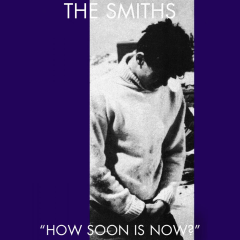
"How Soon is Now” was written by Johnny Marr and Morrissey and appears as the fifth song on side one of The Smiths’ compilation album, Hatful of Hollow. Smiths guitarist Johnny Marr has said the song is “possibly The Smiths’ most enduring record. It’s most people’s favorite, I think.” The song was originally released as a B-side of the single “William, It Was Really Nothing” in January 1985. The song was recorded at Jam Studio in London with John Porter producing. The unique tremolo guitar on the track was inspired by Bo Diddley and was achieved by running Marr’s Epiphone Casino guitar through four old Fender Twin Reverb amplifiers with the tremolo engaged and vibrating in time to the track. Released as a single in the U.K. in January 1985, it went to #16 on the U.K. Singles chart. Personnel on the record were: Morrissey (vocals), Johnny Marr (guitar), Andy Rourke (bass), and Mike Joyce (drums).
Hatful of Hollow is a U.K. compilation album of various tracks from The Smiths recorded in 1983-84. Producers on the album included John Porter, Roger Pusey, Dale “Buffin” Griffin, and The Smiths. Released in the U.K. in November 1984, the album went to #7 on the U.K. Albums chart. Sire Records eventually released the album in the U.S. in November 1993. Three charting singles were included on the LP.
The Smiths were an English rock band formed in Manchester in 1982 by singer Morrissey, guitarist Johnny Marr, bassist Andy Rourke, and drummer Mike Joyce. They released four studio albums, one live album, three EPs, 10 compilation albums and 24 singles. The band broke up in July 1987. Morrissey has released 13 studio albums and continues to record and tour. Johnny Marr is a successful solo artist and session musician, producer, and songwriter. He has collaborated with several artists, including The Pretenders, Bryan Ferry, Talking Heads, and Pet Shop Boys. He joined Modest Mouse for a three-year period and continues to record and tour. Andy Rourke and Mike Joyce continue to work as a rhythm section together and separately. They have worked with artists such as Sinead O'Conner, Suede, Buzzcocks, John Lydon, and Badly Drawn Boy.