Propane exports from AltaGas and Vopak’s Ridley Island Propane Export Terminal on the west coast of British Columbia jumped to 52 Mb/d in May, the highest since it began operations in May 2019 and exceeding the terminal’s original design capacity for the second time this year. The increased exports suggest expanded capacity at the facility and the potential for sustained higher exports from there even as Western Canada’s propane supplies plateaued in 2019 and then were hammered lower earlier this year as oil prices and demand collapsed. The resulting tighter balance in the greater Pacific Northwest region has boosted prices there, wreaking havoc on price spreads and disrupting rail movements to U.S. destinations that have relied on them for the past few years, from the Midwest to California. Moreover, Western Canadian export capacity is poised to nearly double by next spring, when a second nearby export terminal is slated to begin operations. With supply upside looking tenuous, but overseas exports set to rise further in early 2021, there is a serious squeeze emerging for propane rail exports to the U.S. Today, we consider the implications of what could be a much tighter propane market in Western Canada over the next few years.

Visualize the infrastructure behind U.S. NGL movement.
The U.S. NGLs Map provides a comprehensive view of the transport, processing, and export networks moving NGLs across the U.S.
A lot has changed in the Western Canadian propane market in the few months since we last discussed it in When Propane and Exports Collide. In that two-part blog series in March, we focused on the evolving plans for propane exports from Canada’s west coast. The May 2019 start-up of the AltaGas-Vopak-operated Ridley Island Propane Export Terminal (RIPET) just outside of Prince Rupert, BC, provided Canada with its first direct export access to Asian markets for its propane supplies. And a second propane export terminal — Pembina’s 25-Mb/d Prince Rupert facility just a short distance from RIPET — was under construction and targeting in-service online by third quarter of this year (that’s since been delayed to first quarter of 2021). Western Canadian propane supply at the time was about 230 Mb/d (not including y-grade), near decade-long highs after climbing steadily between 2016 and 2019. Growth in propane and other liquids supplies had largely overwhelmed what capacity there was for pipeline exports to U.S. markets, and what volumes were able to get to market by pipeline, rail, or truck, had been facing increasing competition from already-saturated markets downstream. That then spurred the development of overseas export capabilities, as Western Canadian producers looked to find alternative and higher-priced markets in far-away lands, particularly in Asia.
That part hasn’t changed — Asian markets have continued to attract Western Canadian propane. Our understanding is while RIPET's full, ultimate capacity is 80 Mb/d, logistical considerations — many outside of the operator's control — generally limit its reliable throughput to about half that volume. Still, propane exports from the terminal exceeded 50 Mb/d in both March and May of this year, and RIPET has stated it expects to be in a position to routinely send out 50 Mb/d or more by the end of 2020. We expect that in 2021 and beyond, the terminal will continue to ramp up its exported volumes by 5 to 10 Mb/d per year, assuming that economics and Asian demand for propane warrant those increases. As the right graph in Figure 1 shows, exports out of Petrogas’s Ferndale, WA, terminal have been consistently high in recent months as well. (AltaGas owns a 50% interest in the AltaGas Idemitsu Joint Venture, which owns 58.4% of Petrogas.)
About the song
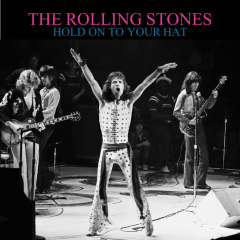
"Hold on to Your Hat" was written by Mick Jagger and Keith Richards and appears as the fourth cut on side one of The Rolling Stones’ 21st studio album, Steel Wheels. Jagger had most of this song written when he met up in Barbados with Richards to work on Steel Wheels in 1989. Personnel on the record were: Mick Jagger (lead vocal, rhythm guitar), Keith Richards (lead guitar), Ron Wood (bass), Charlie Watts (drums), and Chuck Leavell (keyboards).
Steel Wheels was recorded between March and June 1989 at AIR Studio in Montserrat and Olympic in London. Produced by The Glimmer Twins (Jagger and Richards), and Chris Kimsey, it was released in August 1989. It marked the renewal of Jagger and Richards’ working relationship and would launch the band’s largest world tour to date. It would also be bassist Bill Wyman's final full-length album with the Stones. He would depart the band for good in January 1993. Steel Wheels was released in August 1989 and went to #3 on the Billboard Top 200 Albums chart. Four singles were released from the album. It has been certified 2x Platinum by the Recording Industry Association of America.
The Rolling Stones are an English rock band formed in London in 1962. Seven members have passed through its ranks since its formation. The current lineup features original members Mick Jagger, Keith Richards, and Charlie Watts, along with long-time member Ron Wood. They have released 30 studio albums, 28 live albums, 26 compilation albums, three EPs, and 121 singles. The Rolling Stones have sold over 240 million records worldwide. They have won one Billboard Music Award, four Grammy Awards, three MTV Video Music Awards, and two World Music Awards. They are members of the Rock and Roll Hall of Fame and have a Grammy Lifetime Achievement Award. The band still records and tours to this date, with touring on hold due to COVID-19.