The aftershocks are still being felt from last Thursday’s decision by the Federal Energy Regulatory Commission (FERC) that interstate gas and liquids pipelines’ cost-based tariff rates can’t include anything for income taxes if the pipelines are owned by master limited partnerships (MLPs) — and most are. Many investors did freak out — no other phrase sums it up better — when they heard that news. Share prices for midstream companies plummeted in midday trading, and we imagine that many angry calls were made by investors to their financial advisers. “Why didn’t we know about this?!” In fact, although this proceeding had been simmering for a while, FERC’s action was harsher than expected by most experts. But the impact of the change is likely to be less far-reaching than the Wall Street frenzy would have you believe, at least for most MLPs. And, by the way, the issue at hand — whether and how to factor in taxes in calculating MLPs’ cost-of-service-based rates for interstate pipelines –– has been around for decades. Today, we discuss FERC’s new policy statement on the treatment of income taxes and what it means for natural gas, crude oil, natural gas liquid (NGL) and refined product pipeline rates; and for investors in MLPs that own and operate the systems.
It’s worth noting that Thursday was what the ancient Romans called the ides of March. That was a real bad day for Julius Caesar (“Beware the ides of March … You too, Brutus?”) For some pipelines and their investors, FERC’s abrupt chopping out of a big chunk of pipeline cost of service probably felt pretty similar to Caesar’s surgery. FERC had been working for a year and a half to respond to a July 2016 federal appellate court ruling saying that collecting income taxes in pipeline tariff rates — on top of how the return on equity investment is calculated for an MLP’s pipeline rates — amounts to a double recovery of cost. So FERC took a lot of comments, struggled with it, and ultimately on Thursday said, “Yep, it sure is.”

The RBN Crude Oil Analytic Suite gives you access to four weekly reports covering crude oil markets, including: Crude Billboard, Crude Permian, Crude TradeView, and Crude Voyager.
As covered in our Masters of the Midstream blog, MLPs are a type of U.S. corporate structure first used in 1981; their use was limited to entities involved in real estate and natural resources infrastructure by federal tax reform legislation in 1986. MLPs are, as their very name suggests, partnerships. Because the partnership is not a corporation, it pays no corporate taxes on its profits. Tax liabilities are instead “passed through” to individual unit holders who pay tax on their share of MLP profits at their individual tax rate. This structure has been extremely popular in supporting the growth of U.S. pipelines and other energy infrastructure for both natural gas and liquids such as crude oil, refined products and NGLs. So MLPs have come to own a significant portion of the interstate gas and oil pipelines in the U.S., all of which are regulated by FERC (and a fair share of intrastate pipes too, regulated by state agencies).
About the song
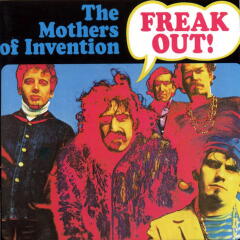
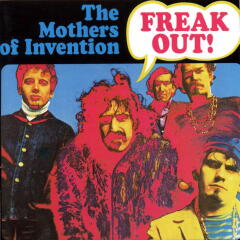
Freak Out is the debut album by the Mothers of Invention, recorded at Sunset-Highland Studios of T.T.G. in Hollywood, CA, for Verve Records and released in June 1966. The album represents the satirical expression of front man and main writer Frank Zappa's view on American pop culture and the freak scene in Los Angeles at the time. Freak Out was one of the earliest rock double albums released. It features Frank Zappa on guitar and vocals, Ray Collins on lead vocals and tambourine, Roy Estrada on bass and vocals, Jimmy Carl Black on drums and vocals, and Elliot Ingber on guitar. It received a Grammy Hall of Fame Award in 1999 and is listed at #243 on Rolling Stone Magazine's list of "The 500 Greatest Albums of All Time."
There’s another important “freak out” reference in popular music. "Le Freak (Freak Out)” was a hit by the American R&B band Chic, and appears on the group’s second album, C'est Chic. The single was released in September 1978 and quickly rose to #1 on the Billboard Hot 100; it also hit #1 on the Billboard R&B and Dance Club Songs charts. The song, written by Nile Rodgers and Bernie Edwards, has sold seven million copies to date.