The Federal Energy Regulatory Commission (FERC) took several steps in June to slash red tape and speed the construction of natural gas projects in the U.S. interstate and export markets. This is the latest in state and federal efforts to reduce the years-long legal battles around energy infrastructure and quicken the development of vital projects such as pipelines and LNG terminals. In today’s RBN blog, we’ll highlight the recent efforts to remake and improve the permitting process.
First, a bit of background. As we’ve long discussed in the RBN blogosphere, the often-arduous permitting process for large-scale energy projects can take years — even decades (see Don't Pass Me By). Almost everyone acknowledges the benefit of having interested parties and stakeholders weigh in on major proposals to build or expand infrastructure, and credible regulations and appropriate safeguards are essential to the process, but permitting delays do more than just stymie progress and drive up project costs, they also put additional stress on infrastructure that’s already in place and can prevent some projects from ever becoming a reality.

The main reason federal authorities are trying to speed the permitting process is that the U.S. is expecting a rapid surge in natural gas and electricity demand. This summer alone, U.S. natural gas demand is forecast to average 98.7 Bcf/d, up 1.7 Bcf/d from last summer. Much of that is linked to rapid increases in power demand for data centers and artificial intelligence (AI), as detailed in Smarter Than You and Storm Front. In addition, the U.S. Energy Information Administration (EIA) is forecasting natural gas exports to average 15.5 Bcf/d this summer, an increase of 3.2 Bcf/d from summer 2024. (For more, see our weekly NATGAS Billboard U.S. report.)
To address those concerns, FERC took two major actions on June 18:
Immediate One-Year Waiver of Order 871: FERC is making it easier for natural gas companies to continue project construction. Under Order 871, projects were put on hold while rehearing challenges were pending at FERC. By waiving that rule, FERC is allowing construction to continue for projects considered necessary — even if there are legal questions pending for FERC to address. This one-year waiver is temporary, but FERC is considering making it permanent, which would mean fewer regulatory roadblocks in the future. Getting rid of Order 871 does not affect court review of FERC’s decisions — pipelines could already move forward while those reviews were pending (sometimes with a lot of risk, as discussed below). But FERC’s action lets developers hit the ground running if they’re willing to gamble on prevailing on FERC rehearing, which can often take many months to resolve.
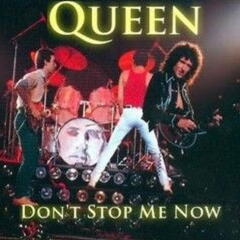
About the song
“Don’t Stop Me Now” was written by Freddie Mercury and appears as the sixth song on side two of Queen’s seventh studio album, Jazz. Recorded at Super Bear Studio in Berre-les-Alpes, France, in August 1978, the song was released as a single in January 1979. It reached #9 on the UK charts and went to #86 on the Billboard Hot 100 Singles chart. Due to its extensive use in advertisements, TV shows and films, "Don't Stop Me Now" has become one of Queen’s most popular songs over the years. Claimed by some to be the perfect “happy song,” some of us will always remember it, among other reasons, for the prominent scene in the classic zombie comedy Shaun of the Dead, where the protagonists pummel a zombie with pool cues to the beat of the song. The song has been certified 3X Platinum by the Recording Industry Association of America (RIAA) since its first release. Personnel on the record were: Freddie Mercury (lead vocals, piano), Brian May (guitar, backing vocals), Roger Taylor ( drums, backing vocals), and John Deacon (bass, backing vocals).
Jazz was produced by Roy Thomas Baker and recorded between July and October 1978 at Mountain in Montreux and Super Bear Studios in Berre-les-Alpes, France. Released in November 1978, the LP went to #6 on the Billboard Top 200 Albums chart. It has been certified 3X Platinum by the RIAA. Four singles were released from the album.
Queen is a British rock band formed in London in 1970 by singer Freddie Mercury, guitarist Brian May, drummer Roger Taylor and bassist John Deacon. May and Taylor had previously played together in the London-based rock band Smile. Queen has sold more than 250 million records worldwide and has released 15 studio albums, 10 live albums, 15 compilation albums, two soundtrack albums, two EPs, and 73 singles. The band has won four Brit Awards, four Ivor Novello Awards, a Grammy Award, and a Grammy Lifetime Achievement Award. They are members of the Rock and Roll Hall of Fame, Songwriters Hall of Fame and UK Music Hall of Fame. Brian May and Roger Taylor have continued to tour with supporting musicians as Queen. The band has featured both Paul Rodgers and Adam Lambert as their lead vocalist since the death of Freddie Mercury in 1991. Founding member John Deacon retired from the band in 1997. Queen, with Adam Lambert on lead vocals, last appeared live at five concert dates in Japan in February 2024.