The global push to decarbonize power generation, shipping and other energy-intensive sectors of the economy and the Biden administration’s efforts to heavily incentivize the development of low-carbon energy sources have resulted in a growing list of big clean ammonia projects in the U.S. Almost all of these proposed multibillion-dollar production facilities are located along the Texas-Louisiana coast, a region that offers easy access to natural gas supply, carbon sequestration sites, and export markets. In today’s RBN blog, we continue our look at the burgeoning market for “green” and (especially) “blue” ammonia with a review of the largest production facilities now under development.
The replay of our Fall 2026 School of Energy (September 9 & 10, Houston) is now available online!
Learn from RBN experts, participate in hands-on Excel modeling, connect with industry peers, and gain a stronger understanding of today's interconnected energy markets.
As we said in Part 1, the chatter around the potential for clean ammonia to become a significant energy source is finally morphing into the reality of clean ammonia project announcements, engineering-procurement-construction (EPC) contracts and final investment decisions (FIDs). There are two primary drivers behind the shift from talk to action: (1) the supercharged tax credits for carbon capture and sequestration (CCS) in the Inflation Reduction Act (IRA) and (2) the expanding efforts by power generators in Japan and South Korea in particular to make clean ammonia an important part of their fuel mix going forward. A third impetus is growing interest by global shippers, who see clean ammonia — and the clean hydrogen packed in each molecule — as a low-carbon bunker fuel worth pursuing.
Before we delve into the big-dollar clean ammonia projects we’ve been tracking, a reminder that clean ammonia is produced by reacting either blue or green hydrogen with nitrogen (supplied from an air separation unit) using the Haber-Bosch process (a catalyst, high temperature and high pressure). Blue hydrogen is produced by running natural gas through either a steam methane reformer (SMR) or auto thermal reformer (ATR) and capturing and sequestering most of the carbon dioxide (CO2) generated by the process — typically about half of the CO2 when an SMR is used and 90%-plus with an ATR. Green hydrogen, in turn, is produced by running water through a renewables-powered electrolyzer to produce H2 and oxygen — no CO2 is produced, so there’s no need for CCS.
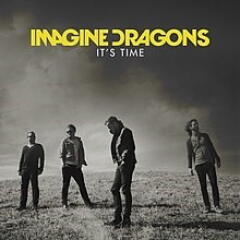
About the song
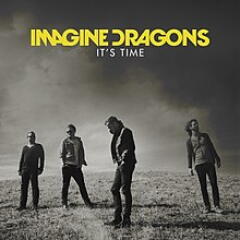
“It’s Time” was written by Ben McKee, Dan Reynolds and Daniel Wayne Sermon. It appears as the fifth song on Imagine Dragons’ fifth EP, Continued Silence. Released as the first single from the EP in February 2012, it went to #3 on the Billboard Hot Rock & Alternative Songs and #15 on the Billboard Hot 100 Singles charts. After the song was covered on the American musical comedy television series Glee, it started getting heavy rotation on other television shows and commercials. Later in the year, the song appeared on Imagine Dragons’ first full-length LP, Night Visions. It has been certified Platinum by the Recording Industry Association of America. Personnel on the record were: Dan Reynolds (vocals), Wayne Sermon (guitar, mandolin), Ben McKee (bass), Andrew Tolman (drums, backing vocals), and Brittany Tolman (keyboards, backing vocals).
Continued Silence was recorded in late 2011 at Westlake Recording Studios in West Hollywood with Alex da Kid producing. The EP was released in February 2012, and went to #1 on the Billboard Heatseekers chart and #40 on the Billboard 200 Albums charts. Four of the songs from Continued Silence would be included on the band's debut album, Night Visions. Two singles were released from the EP.
Imagine Dragons is an American pop rock band formed in Las Vegas in 2008. The core of the band has been members Dan Reynolds, Wayne Sermon, Ben McKee and Daniel Platzman. Ten members have passed through the group since its formation. They have released six studio albums, four live albums, 10 EPs, one compilation album and 27 singles and have sold more than 46 million albums and 55 million singles worldwide — making them one of the best-selling bands in history. Imagine Dragons has won three American Music Awards, 10 Billboard Music Awards, eight BMI Pop Music Awards, four Grammy Awards, one MTV Video Music Award and one World Music Award. They continue to record and will begin an international tour this month.