With its newly announced, $50 billion-plus combination with Range Resources, EQT Corp. — already the largest natural gas producer in the Marcellus/Utica — will overtake Expand Energy as the king of the gas jungle in the U.S. as a whole. But EQT’s planned acquisition of Range isn’t really about size. Instead, the transaction is largely aimed at supercharging EQT’s gas inventory and giving it an edge in lining up long-term gas-supply agreements with power generators and other big gas customers. It’s also about expanding opportunities to develop new pipelines to transport gas, especially to fast-growing Midwest demand centers. In today’s RBN blog, we’ll discuss the EQT/Range deal and its implications.
The NATGAS Production Tracker - Texas provides a DAILY update of natural gas production in Texas the New Mexico side of the Permian Basin. Quickly and easily view today’s supplies in the Lone Star state and download the full historical table when you need it.
Unless you took a mini digital detox on Monday, you probably heard that EQT Corp. and Range Resources have entered into a definitive merger agreement under which EQT will acquire Range in an all-stock transaction. The end result, as they put it: “America’s leading natural gas company with a pro forma enterprise value over $50 billion.” If, as expected, the deal closes in Q1 2027, the combined company will have more than 9 Bcfe/d of net production, more than 30 years of inventory across nearly 3 million acres, and more than 3,700 miles of midstream infrastructure. (EQT shareholders will own about 73% of the combined company and Range shareholders will own 27%.)
Figure 1 below shows EQT’s and Range Resources’ self-described “core acreage” (pink- and blue-shaded areas, respectively), most of which are in the NGLs-rich “wet” Marcellus/Utica in southwestern Pennsylvania (SWPA), northern West Virginia and southeastern Ohio. The companies also have significant — and highly complementary — core acreage in the “dry” Marcellus in northeastern Pennsylvania (NEPA). The dark-pink lines show the companies’ roughly 2,000 miles of gathering pipelines and most of its 1,250 miles of transmission pipelines, the standout of which is the 2-Bcf/d Mountain Valley Pipeline (MVP) from northern West Virginia to Station 165 on the Transco Pipeline in southwestern Virginia (dark-pink line to bottom of map). (EQT holds a ~53% stake in MVP and operates it; the other co-owners include NextEra Energy, AltaGas and Consolidated Edison.)
EQT’s and Range Resources’ Core Acreage and Pipelines

Figure 1. EQT’s and Range Resources’ Core Acreage and Pipelines. Source: EQT
During an October 26 conference call about the deal, EQT President and CEO Toby Rice and other top brass said that a primary driver of the transaction was Range Resources’ massive gas inventory in southwestern Pennsylvania. EQT is already the top producer in that part of the Marcellus/Utica — it boosted its position there in July 2025 with the purchase of Olympus Energy, and became an even bigger player in northern West Virginia a couple of years before that with the acquisition of Tug Hill’s gas production assets and XcL Midstream’s pipeline and processing assets.
We will leave a detailed analysis of EQT’s and Range’s gas production and inventories to our partners at Novi Labs — RBN’s corporate parent — who will be releasing their preliminary assessment later today and a detailed analysis next week. Instead, we’ll focus on what the planned merger is likely to mean for pro forma EQT’s efforts to secure long-term gas-supply deals with power generators and other large gas users — and for the buildout of the company’s growing gas transmission network.
For at least a couple of years now, EQT has been highlighting the development of new gas-fired power plants within and near its Appalachia production area, some of them tied to AI-related data centers. For example, in July 2025 the company announced two 20-year gas supply deals, one to provide up to 800 MMcf/d to a power-and-data-center complex in Shippingport, PA, and other to provide up to 665 MMcf/d to a similar facility in Homer City, PA. More recently, EQT said in July that it had entered into a 10-year agreement to supply up to 325 MMcf/d to Competitive Power Ventures’ (CPV) planned 2,100-megawatt (MW) Shay Energy Center in Doddridge County, WV.
Many more deals like these are likely, not just in Pennsylvania and West Virginia but especially in Ohio, which has emerged as an epicenter of new data centers and related gas-fired power projects. In fact, EQT just increased its estimate for Appalachian gas demand growth through 2035 — most of it from power generators — to 25 Bcf/d from the old 20 Bcf/d. As shown in Figure 2 below, most of that growth is expected to occur in the 2029-31 period, when a tsunami of new data centers is expected to come online. Note that only about 5 Bcf/d of those incremental gas needs have been secured so far (dashed red line), suggesting that EQT and other gas producers in the Marcellus/Utica will be scrambling to reach long-term deals with gas plant owners/operators.
Projected Appalachian Natural Gas Demand Growth (in Bcf/d)
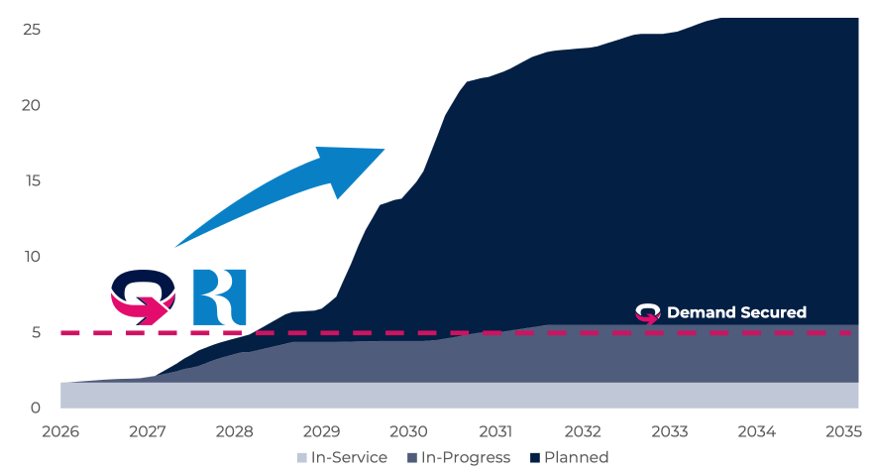
Figure 2. Projected Appalachian Natural Gas Demand Growth. Source: EQT
To deliver all that incremental gas, existing gas pipelines throughout the region will need to be expanded and entirely new pipelines built — and EQT plans to be in on that action too.
Q3 2026 Earnings Calls: Dow Says Closures Will Lead to Petchem Recovery
On Dow’s Q3 earnings call, management tied a petrochemical market recovery more to capacity closures than to demand growth.
First, a reminder that in July 2024 EQT “re-acquired” Equitrans, a midstream company that EQT had spun off in 2018 so it could focus on production. Equitrans was the lead developer of the 303-mile MVP we mentioned earlier — under EQT, that pipeline’s capacity is being expanded to 2.6 Bcf/d (from the current 2 Bcf/d). With Equitrans now fully owned by EQT, the company once again owns its gathering systems and other, smaller interstate pipelines near its Marcellus/Utica production.
During EQT’s October 26 call, company executives said that another important rationale for acquiring Range Resources is that a good bit of the E&P’s best inventory is in southwestern Pennsylvania, close by the gas hub in Clarington, OH, that is fast-becoming a central point for shuttling Marcellus/Utica gas west and south to power generators, local distribution utilities (LDUs) and other large gas customers in Ohio, Indiana, Kentucky and points beyond.
As we discussed a few months ago in Movin’ Out, EQT has been developing the Clarington Connector (dashed yellow line in Figure 3 below), a 20-mile, 400-MMcf/d pipeline that will run from the producer’s system in northern West Virginia’s Marshall County to Clarington in Ohio’s Monroe County.

Figure 3. EQT’s Clarington Connector. Source: Novi Labs
More recently, EQT has been pursuing the development of a much larger pipeline: the proposed Pennsylvania Ohio West Virginia Energy Reliability Pipeline — POWER Pipeline for short — which would run from an as-yet-unspecified location in southwestern Pennsylvania and/or West Virginia to the Clarington Hub. In a non-binding open season that ran from August 26 to October 26, EQT sought expression of interest for firm capacity on a pipeline with capacity of up to 1 Bcf/d that would come online by 2030.
Once more gas can get to Clarington, it could move along several existing and planned pipes that connect (or will connect) to the hub there, including Enbridge’s Texas Eastern Transmission (TETCO), Tallgrass Energy’s Rockies Express (REX), Energy Transfer’s Rover Pipeline, and Boardwalk Pipeline Partners’ planned Borealis Pipeline.
To sum up, as EQT sees it, the company’s pending acquisition of Range Resources isn’t about getting bigger, it’s about adding Range’s deep inventory of well-site natural gas to EQT’s own impressive stockpile, thereby putting the combined company in an even better position to secure the long-term, large-volume gas-supply deals with power generators. And, as a bonus of sorts, these supply deals will provide EQT with an expanded opportunity to develop new gas pipelines to connect its supply either directly to new power plants or to takeaway pipelines at the Clarington Hub.

About the song
“Roar” was written by Katy Perry, Lukasz Gottwald, Max Martin, Bonnie McKee and Henry Walter, and appears as the first song on Katy Perry’s fourth studio album, Prism. The song is about self-empowerment and finding your voice. Recorded in March 2013 and produced by Dr. Luke, Max Martin and Cirkut, it was released as the first single from the album in August 2013. It went to #1 on the Billboard Hot 100 Singles chart and has been certified 15X Platinum by the Recording Industry Association of America. Personnel on the record were: Katy Perry (vocals), Benny Bianco, Cirkut, Dr. Luke, Christian Karlsson, Greg Kurstin, Magnus, Max Martin, Vincent Pontare, Stargate, and Greg Wells (programming), and Steven Wolf (drums).
Prism was recorded during 2012 and 2013 at Luke’s in the Boo in Malibu, Playback in Santa Barbara, Secret Garden in Montecito, Rocket Carousel in Los Angeles, Conway in Hollywood, and MXM in Stockholm. It was produced by Max Martin, Dr. Luke, Katy Perry, Cirkut, Klas Ahlund, Stargate, Benny Bianco, Bloodshy, Greg Kurstin, and Greg Wells. Released in October 2013, it went to #1 on the Billboard 200 Albums chart and has been certified 5X Platinum by the RIAA. Five singles were released from the LP.
Katy Perry (Kathryn Elizabeth Hudson) is an American pop singer, songwriter, record producer and television personality. At 16, she released her first album, the gospel, Katy Hudson. After signing with Capitol Records, she released her highly successful debut album with the label, One of the Boys, in June 2008. She has released seven studio albums, a compilation album, seven EPs, and 43 singles. She has sold over 151 million records worldwide. She has won five American Music Awards, five Billboard Music Awards, a Brit Award, and seven MTV Video Music Awards. She served as a judge on the television talent show American Idol for seven seasons. She has appeared in nine motion pictures. Perry released a compilation album, The Ones That Got the Plays, in May. She completed her Out of the Office Tour in July.
"About the Song" -- written by Mickey McMahan , RBN Director of Musicology