


Condensate production in the Utica Shale’s volatile oil window in eastern Ohio has more than doubled over the past three years, and plans by the handful of E&Ps that focus on the super-light crude oil suggest that output will increase further this year and next. Who are these producers, why do they see such promise for condensate growth in the Utica, and how are they measuring their success? In today’s RBN blog, we continue examining rising condensate production in eastern Ohio with a look at the leading E&Ps in this space.
To truly understand Cushing — what it does and how it works — you need to know the hub’s assets and how they fit together. RBN’s Cushing Crude Oil Playbook provides the first one-stop, comprehensive guide to the hub’s assets.
As we said in Part 1, the Marcellus/Utica region in Ohio, Pennsylvania and West Virginia is now one of the world’s most prolific and vital natural gas production areas, with output currently topping 35 Bcf/d and decades of reserves yet to be tapped. The overlapping shale plays generate hundreds of thousands of barrels of NGLs per day consumed in the Northeast and Midwest, piped or railed away to other U.S. and Canadian markets, or sent to the Marcus Hook or Repauno LPG export terminals near Philadelphia to be shipped overseas.
What’s less well-known is that parts of the Utica play (mostly in a few counties in eastern Ohio) also produce relatively modest amounts of crude oil, almost all condensate with an API value (or viscosity) of 55 to 59 degrees (and sometimes as high as 65 degrees). More recently, at least a couple of E&Ps in the Utica have been producing small volumes of heavy condensate with an API value closer to 50 degrees — still far lighter than West Texas Intermediate (WTI), which has an API of about 40 degrees.
Condensate production in eastern Ohio has been on a tear since the winter of 2021-22, topping more than 100 Mb/d in recent months. Pronouncements from the producers active in that slice of the Utica Shale indicate output could rise by tens of thousands of additional barrels per day — or maybe even double again, to past 200 Mb/d — in the next few years.
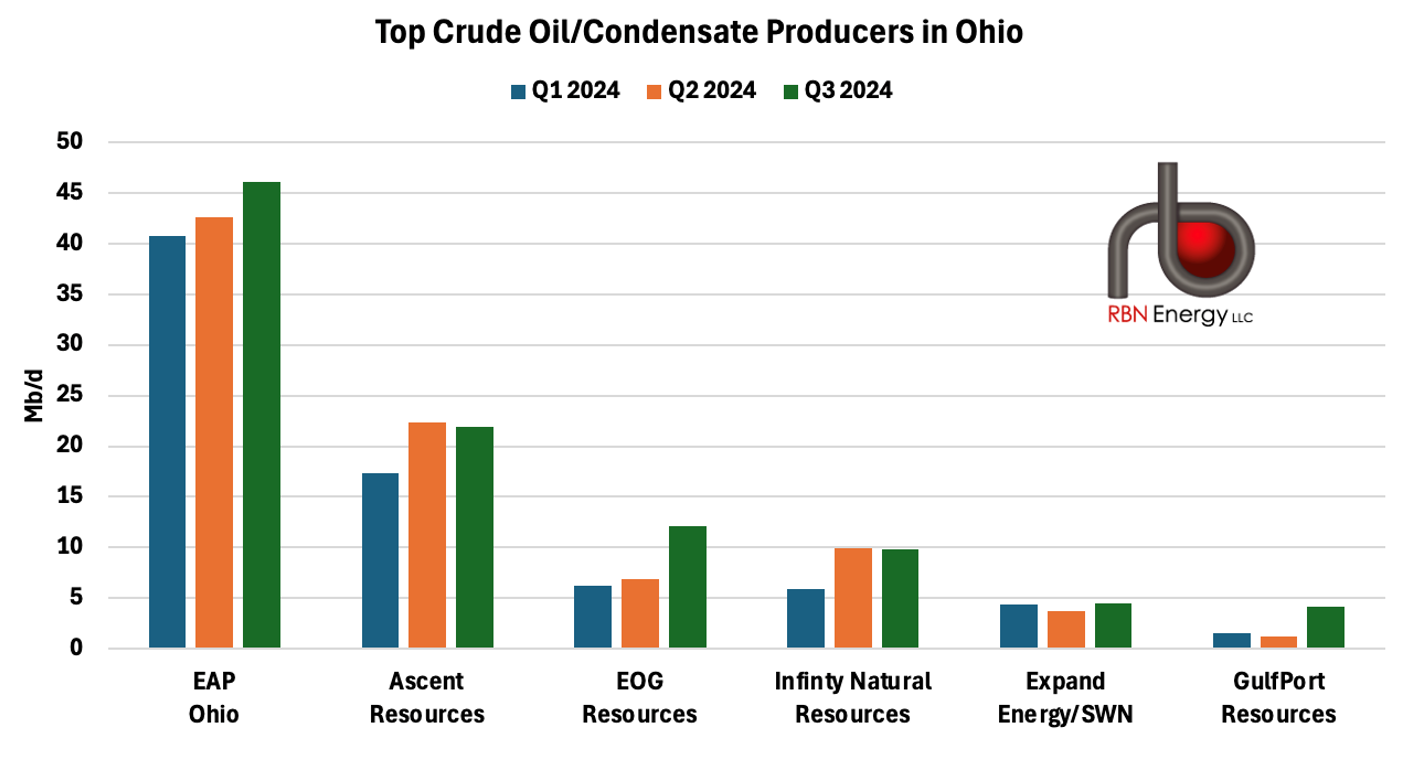
Figure 1. Top Crude Oil/Condensate Producers in Ohio. Sources: Ohio Department of Natural Resources, RBN
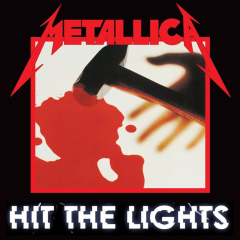
About the song
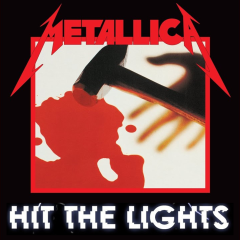
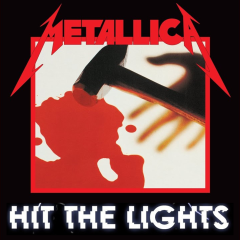
“Hit the Lights” was written by James Hetfield and Lars Ulrich and first appeared as the 10th song on the June 1982 Metal Blade compilation release, Metal Massacre. The album was produced by Metal Blade founder and owner Brian Slagel. It also featured cuts by Los Angeles metal bands Steeler, Ratt, and Malice. Metallica‘s name was misspelled as “Mettallica” on the label. Personnel on this version were: James Hetfield (vocals, guitar), Lloyd Green (guitar), Ron McGovney (bass), and Lars Ulrich (drums).
A second version of “Hit the Lights” appears as the first song on side one of Metallica’s debut studio album, Kill ’Em All. Lead guitarist Dave Mustaine was replaced by Kirk Hammet as recording for Kill ’Em All commenced, but it is rumored he played lead guitar on this song. Credited personnel on the album were: James Hetfield (vocals, rhythm guitar), Kirk Hammett (lead guitar), Cliff Burton (bass), and Lars Ulrich (drums). Kill ’Em All was recorded in May 1983 at Music America in Rochester, NY, and produced by Paul Curcio for Megaforce Records. Originally released in July 1983, the LP was re-released in 1988, when the band had four albums under its belt and a huge following. That time, the album went to #120 on the Billboard 200 Albums chart and has been certified 3X Platinum by the Recording Industry Association of America. Two singles were released from the LP.
Metallica is an American heavy metal band formed in Los Angeles in 1981 by James Hetfield and Lars Ulrich but based in the San Francisco Bay area for most of its career. They are considered one of the pioneering groups of thrash metal along with Slayer, Anthrax, and Megadeth. They have released 11 studio albums, eight live albums, one soundtrack album, three EPs and 49 singles and have sold more than 125 million records worldwide. Metallica has won two American Music Awards, five Billboard Awards, nine Grammy Awards and two MTV Video Music Awards. They were inducted into the Rock and Roll Hall of Fame in 2009. Eight members have passed through the band since its formation. Band founders Hetfield and Ulrich, along with lead guitarist Kirk Hammett and bassist Robert Trujillo, continue to record and tour.




Comments
This is a major problem for refineries producing asphalt or petcoke. It's paraffinic with little to no asphaltenes.
It is also a problem for pipelines due wax content depositing on the walls of pipe thus reducing throughput capacity