The four deepwater crude oil export projects under development along the U.S. Gulf Coast are getting closer to receiving their regulatory go-aheads after years of planning and millions of dollars spent. In fact, Enterprise’s Sea Port Oil Terminal (SPOT) received its license in April. These projects have sparked commercial and wider market interest because of the many benefits they may provide — including the ability to fully load 2-MMbbl Very Large Crude Carriers (VLCCs) without any reverse lightering. In today’s RBN blog, we highlight key insights from our new Drill Down Report on the four projects, the potential benefits and the challenges they face.
To say the U.S. crude oil market has undergone a transformation over the last 15 years would be an understatement. The Shale Revolution enabled producers to unlock volumes that were unimaginable to many not long ago, especially in the most prolific U.S. production area: the Permian Basin. As the production of mostly light sweet crude from domestic shale plays grew, U.S. refineries by the mid-2010s were consuming their fill. But even as production kept growing and refineries became satiated, U.S. crude oil exports were largely limited to Canada, causing concern at the time that the Shale Revolution could hit a wall. Then, in December 2015, the Obama administration opened the door for crude exports. Export volumes took off — soaring from less than 500 Mb/d in 2015 to more than 2 MMb/d in 2018 and more than 4 MMb/d in 2023. Despite a recent slowdown, we expect exports to continue growing along with U.S. production throughout the 2020s, propelling market interest for new, efficient export terminals along the Gulf Coast.
U.S. crude exports and the proposed deepwater export terminals are among the many issues to be discussed at RBN’s 18th School of Energy, a two-day immersion in oil, gas, NGL and refined products markets, infrastructure and exports, to be held June 26-27 in Houston.
Production and export growth over the past eight-plus years prompted an unprecedented build-out of crude oil pipelines between production basins and market centers (especially between the Permian and the Gulf Coast — see our Permian pipelines series for more) and fostered the development of several crude export-focused marine terminals from South Texas to Louisiana. Most of these onshore export terminals are along the Texas coast, as are the four prospective offshore terminals, which makes sense, given that their main focus is on exporting the U.S.’s ample volumes of West Texas Intermediate (WTI) or West Texas Light (WTL), with the majority of the volumes delivered straight from the Permian.
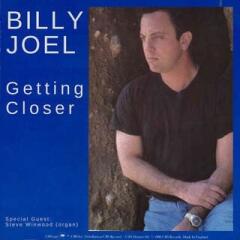
About the song
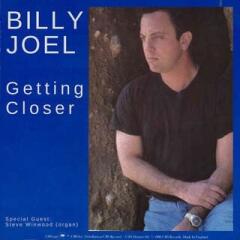
“Getting Closer” was written by Billy Joel and appears as the fourth song on side two of his 10th studio album, The Bridge. It was the B-side to the single “A Matter of Trust,” released in July 1986. The song describes the battle between recording artists and the music business, a battle that Joel is well acquainted with. Steve Winwood guests on organ on the song. Personnel on the record were: Billy Joel (lead, backing vocals, acoustic piano, Fender Rhodes electric piano), David Brown, Russell Javors, John McCurry (guitars), Neil Jason (bass), Liberty DeVitto (drums, percussion), and Steve Winwood (Hammond B3 organ).
The Bridge was recorded in 1985-86 at Power Station and Chelsea Sound (North) in New York City and produced by Phil Ramone. Two of Joel’s major influences, Ray Charles and Steve Winwood, appeared on the album. It was the last album of Joel’s to carry the logo of Artie Ripp’s Family Productions. Ripp is one of the main subjects that Joel refers to in “Getting Closer.” Released in July 1986, the album went to #7 on the Billboard 200 Albums chart and has been certified 2x Platinum by the Recording Industry Association of America. Four singles were released from the LP.
Billy Joel is an American singer, songwriter and pianist. Nicknamed “The Piano Man,” from his hit song of the same name in 1973, he began his professional career playing in the bands The Hassles and Attila. He signed his first record deal as a solo artist with Artie Ripp and his Family Productions in 1971. He has released 13 studio albums, seven live albums, 18 compilation albums, and 82 singles. He has sold more than 160 million records worldwide. He has won five Grammy Awards, has received Kennedy Center Honors, and a Gershwin Prize. He is a member of the Rock and Roll Hall of Fame and has a star on the Hollywood Walk of Fame. He continues to record and tour. His latest single, “Turn the Lights Back On,” was released in February. In addition to solo shows, Joel will be doing co-billed concerts with Stevie Nicks, Rod Stewart and Sting over the summer months and into the fall of 2024.