
Shale producers have become very good at drilling longer laterals and squeezing more wells onto a pad. But there’s a catch: longer laterals and tighter well spacing can boost production, but crowding too many wells into the same rock can leave them chasing the same barrels. The challenge is figuring out how much reservoir each well has to itself, how neighboring wells affect its performance and where additional drilling starts delivering smaller returns for the investment. In today’s RBN blog, we explore how drainage areas help explain those underground interactions and how producers use them to balance well spacing, completion intensity and recovery to improve the economics of shale development.

To truly understand Cushing — what it does and how it works — you need to know the hub’s assets and how they fit together. RBN’s Cushing Crude Oil Playbook provides the first one-stop, comprehensive guide to the hub’s assets.
Let’s start with some basics about hydrocarbon formations and how they’re drilled. As we noted near the beginning of the Shale Revolution in Tales of the Light Sand Laterals, vertical or directional drilling is old school. You do the seismic analysis, mark your “X” on the map, send in the rig and drill straight down. Unlike a conventional vertical well, a horizontal well eventually follows a curved path to enter the target formation and then extends laterally through it, as shown in Figure 1 below. Over time, much longer laterals have been developed, some of which now stretch to three or four miles. Longer laterals can boost a well’s estimated ultimate recovery (EUR) and improve drilling economics by reducing the number of wells needed to access large swaths of a formation, reducing capital costs associated with drilling, drilling pads, pipelines and all the other associated surface equipment (see Follow That Dream).
Schematic of Horizontal Drilling Strategy
About the song
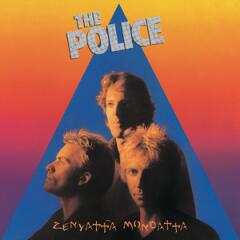
“Don’t Stand So Close to Me” was written by Sting and appears as the first song on side one of The Police’s third studio album, Zenyatta Mondatta. The song is about a schoolteacher’s guilt about having lustful thoughts about one of his students. The lyrics give a nod to Vladimir Nabokov’s 1955 novel, Lolita. Released as the first single from the album in September 1980, it went to #10 on the Billboard Hot 100 Singles chart. It received a Grammy Award for Best Rock Performance by a Duo or Group with Vocal in 1982. Personnel on the record were: Sting (lead, backing vocals, bass, synthesizers), Andy Summers (guitar, guitar synthesizer, backing vocals) and Stewart Copeland (drums, backing vocals).
Zenyatta Mondatta was recorded between January and August 1980 at Wisseloord in Hilversum, Netherlands, and produced by Nigel Gray and The Police. Released in October 1980, it went to #10 on the Billboard 200 Albums chart and has been certified 2X Platinum by the Recording Industry Association of America. Two Top 10 singles were released from the LP.
The Police were an English rock band formed in London in 1977. Their core lineup featured Sting (Gordon Sumner) on lead vocals and bass, Andy Summers on guitar and Stewart Copeland on drums and percussion. They went on their first U.S. tour as their first single, “Roxanne,” was climbing the charts. (As a side note, your Director of Musicality’s band, The Benders, opened for The Police at the Cain's Ballroom in Tulsa, OK, in May 1979 on that tour.) The band went on hiatus from March 1984 to June 1986, when they played three concerts for Amnesty International. After that, all the members pursued solo careers. In 2007, the band reunited for a one-year tour. After the final concert of the tour in August 2008, they announced that there would be no more recordings or tours from The Police. They released five studio albums, three live albums, four soundtrack albums, seven compilation albums, an EP, and 26 singles. They have sold over 75 million records worldwide. The Police have won two Brit Awards, five Grammy Awards, and an MTV Video Music Award. They were inducted into the Rock and Roll Hall of Fame in March 2013. All of the band members continue to have successful solo ventures.
"About the Song" -- written by Mickey McMahan , RBN Director of Musicology