A new, AI-based analysis suggests that while Bakken crude oil production is humming along at a steady 1.2 MMb/d, about 75% of the shale play’s top-quartile locations have already been drilled and only 6,100 well sites — about six years of inventory at the current drilling pace — could generate a good return at the prices we’ve seen the past couple of years. That raises a long list of questions. Are the Bakken’s best days behind it? Which producers are well-positioned from a best-rock perspective, and which are less so? And what would happen if crude oil prices were to settle in below $60/bbl? In today’s RBN blog, we’ll discuss highlights from Novi Labs’ fresh take on the U.S.’s second-largest onshore production area.
Canadian crude output is rising, requiring new export routes. As traditional pathways face constraints, the U.S. Rockies—especially the Guernsey, WY hub—are emerging as key corridors for moving Canadian heavy crude to downstream markets, including the Gulf Coast.
Last year, in You Don’t Know Me, we recapped the Bakken’s extraordinary rise during the early years of the Shale Revolution. From 2009 to 2015, crude oil production in western North Dakota and the eastern edge of Montana increased 6X, to 1.2 MMb/d — a growth rate so outrageous that more than two-thirds of the oil produced there in 2013-14 needed to be loaded into tank cars and railed out. (Takeaway pipeline capacity didn’t catch up ’til 2017.) A mid-decade price crash trimmed Bakken production to less than 1 MMb/d, but by 2019 E&Ps had pushed the basin’s output to a record 1.4 MMb/d. Then came Covid, another price crash and another rebound — this time only to the 1.2-MMb/d level where production stands today.
As shown in Figure 1 below, the vast majority of Bakken crude production comes from four North Dakota counties: McKenzie (dark-blue layer), Williams (magenta layer), Dunn (red layer) and Mountrail (orange layer).
Bakken Crude Oil Production by County
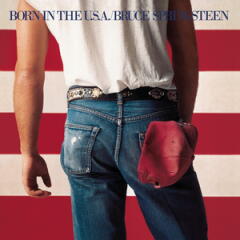
About the song
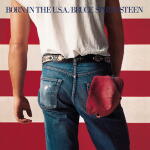
“Glory Days” was written by Bruce Springsteen and appears as the fourth song on side two of Springsteen’s seventh studio album, Born in the U.S.A. Released as the fifth single from the LP in May 1985, it went to #5 on the Billboard Hot 100 Singles chart. It has been certified Platinum by the Recording Industry Association of America. The song was recorded at the Power Station in New York City in May 1982. Personnel on the record were: Bruce Springsteen (lead vocals, lead guitar, acoustic guitar), Roy Bittan (piano, synthesizer), Clarence Clemons (sax, percussion, backing vocals), Danny Federici (organ), Garry Tallent (bass, backing vocals) and Steven Van Zandt (rhythm guitar, acoustic guitar, mandolin, backing vocals).
Born in the U.S.A. was recorded at The Hit Factory and Record Plant in New York City between January 1982-March 1984. Produced by Jon Landau, Chuck Plotkin, Bruce Springsteen and Steven Van Zandt, the album was released in June 1984 and went to #1 on the Billboard 200 Albums chart. It is Springsteen’s biggest-selling album to date, with sales of over 30 million copies worldwide. It has been certified 15X Platinum by the Recording Industry Association of America. Seven Top-10 hit singles were released from the LP.
Bruce Springsteen is an American singer, songwriter and musician. Nicknamed “The Boss,” his career has spanned six decades. Signed to Columbia records in 1972 by Clive Davis, he has released 20 studio albums, 23 live albums, eight compilation albums, one soundtrack album, seven EPs and 73 singles. He has sold more than 150 million records worldwide. He has won 20 Grammy Awards, two Golden Globe Awards, an Academy Award, and a Tony Award. He is a member of the Rock and Roll Hall of Fame and the Songwriters Hall of Fame. He has received Kennedy Center Honors and a Presidential Medal of Freedom. In December 2021, Springsteen sold the masters of his entire catalog and the music publishing rights to Sony Music for $500 million. Springsteen and his E Street Band continue to record and tour.
"About the Song" -- written by Mickey McMahan , RBN Director of Musicology