


Production volumes in the Alberta oil sands continue to inch up as production expansion projects sanctioned in better times — almost all of the projects small in scale — come online. However, several major pipeline projects remain on the drawing board; taken together, they would appear to provide far more pipeline takeaway capacity than the oil sands will need. Which raises two questions: how much incremental pipeline capacity is needed, and which pipeline project or projects are most likely to advance? Today we continue our series on stagnating production growth in the world’s premier crude bitumen area, the odds for and against a rebound any time soon, and the need (or lack thereof) for more pipelines.
In Part 1, we started with a reminder that while the three oil sands areas in northern Alberta — the giant Athabasca deposits and the smaller Peace River and Cold Lake areas — contain proven reserves equivalent to more than 160 billion barrels of crude oil, simply having vast hydrocarbon reserves in the ground isn’t enough. Production costs and the cost of delivering product to market need to be competitive if an area is to continue drawing investment — at least over the long-term in the case of areas with higher upfront development costs like the oil sands and the Gulf of Mexico (see Don’t You Forget About Me).
Oil sands producers have been especially hard-hit by the collapse in oil prices, in part because their hydrocarbon-extraction process is more complicated and costly than their shale-play counterparts, and because the oil sands are far away from most major refinery centers. And it’s not only a matter of having to transport product longer distances — oil sands producers also need to either add diluent to their bitumen to allow it to flow through pipelines, or transport high-viscosity bitumen in special, high-cost coil rail cars that can be heated before unloading, and none of that comes cheap.
About the song
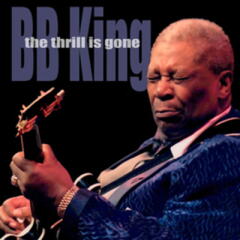
“The Thrill Is Gone,” a blues classic, was a 1951 hit for Roy Hawkins (who co-wrote the song with Rick Darnell) and an even bigger hit for B.B. King in 1970. King’s recording earned him a Grammy for Best Male R&B Vocal Performance, and in 1998 his version of the song won a place in the Grammy Hall of Fame.






Comments
Good write-up, Housley!
It may be worth noting that the Aframax tankers currently being used, and to continue to be used if the Trans Mountain expansion goes ahead, are limited to approx. 500,000 bbl of dilbit because of the relatively high density of dilbit and because of shallow waters under the Second Narrows bridges spanning the tidal passage between Vancouver's inner and central harbours.
Regards,
Mike Priaro, P.Eng.
Calgary